
- ABOUT
- RETHINK, REFRESH, REDO
- REVERSING THE LENS
- REASONS FOR OPTIMISM
- SOLUTION OF THE WEEK
- 2026
- 2025
- 2024
- 2023
- GET IN TOUCH
About
Friday three is ILC’s fortnightly newsletter that aims to deliver timely, thought-provoking and readable content on ageing, health and longevity.
For several years, the weekly newsletter maintained a consistent structure but was relatively dry in content – mainly broadcasting the ILC’s work and events. From 2023 the newsletter has been much more collaborative sharing stories about the work of other organisations and individuals. The pieces about the ILC’s work are contextualised within broader sector developments, public debates and real-world impact. And In 2025, we also decided to lengthen each story, so it allowed for more of a longer, more in depth read and move to a fortnightly mailing.
Over the last few years, the newsletter has doubled its regular readership from an average opening rate of 27% at the start of 2023 to 62% in 2026.
However, it remains true to its origins – three curated topics delivered every other Friday – creating a reliable touchpoint for our audience.
Since January 2023 the editor has chosen an annual theme for the first story to encourage reader engagement:
2023: “Solution of the week” – this theme allowed ILC to highlight examples of policy and practice which could help us adapt to increased longevity.
2024: “Reason for optimism” As the global and domestic news agenda became increasingly grim, we sought to share good news stories – and incredibly managed to find 52 relevant and positive stories about our increasingly long lives.
2025: “Reversing the lens” The nature of our work at the ILC means we tend to take a bird’s-eye view of global and national populations. However, the “smaller picture” is often just as interesting. This theme for the first story throughout 2025 allows the ILC to focus on the “individual,” ranging from people to countries. From time to time, we also seek a personal perspective to share with our readers.
2026: "Refresh, rethink and redo" We have chosen this as the theme for Friday three's regular first feature in 2026. Readers have been asked to let us know how they might rethink familiar narratives, refresh or reuse ideas or evidence that deserve more attention or suggest ways to redo approaches that are no longer fit for purpose.

9 January 2026
Rethink, recycle and redo – keeping New Year's resolutions
Another new year. Another chance to start again. We promise ourselves that this will be the year we go to the gym, eat better, sleep more, learn something new. We make plans, download apps, maybe even buy new trainers.
In early January, motivation is still high. By February, it has often gone.
A study in the late 1980s tracked 200 people who had made resolutions over two years. It found that 77% had kept their New Year’s resolutions in the first week, while only 19% were still maintaining it after two years. More recent research suggests that a mere 9% of us will have stuck to the resolutions we’ve made by the end of the year.
This isn’t because we are weak or lazy. It’s because we ask too much of ourselves, too quickly, and we misunderstand how behavioural change really works – especially when we think about living well for longer.
Rethink the goal
Many resolutions fail because they are framed as sudden transformations. “Every day.” “From now on.” “Completely different.” That mindset is at odds with sustainable change. Living longer and better is not about dramatic resets. It is about small, steady shifts that you can live with over years, not weeks.
Another problem is volume. We try to change everything at once – diet, exercise, work, relationships, finances. Each goal makes sense on its own, but together they compete for our time and energy. So, our attention and motivation are spread thin and progress stalls.
Very often, we make resolutions because everyone else around us is and not necessarily because we really want to. A better place to start might be to choose one thing that really matters. Something that would make daily life a little happier, easier or healthier if it changed.
Refresh how change fits into daily life
Resolutions often disappear not because they are hard, but because they are forgotten. Life carries on as normal. The same routines, the same pressures, and the same tiredness. The environment matters as much as motivation. Instead of relying on willpower, build reminders into everyday life. Put the goal somewhere you see it. Link it to an existing habit. Keep it simple enough to repeat even on busy or low-energy days.
At every age, consistency beats intensity. What you do most days counts far more than what you might do perfectly for a few weeks.
Redo your focus from outcomes to habits
Big targets can be inspiring, but they can also be discouraging when progress feels slow. A healthier way to think about change is to focus on the process – the small actions you can repeat. Walking some or all the way to work. Leaving your phone somewhere else when you go to bed. Cooking one meal with just leftovers each week. These may sound modest, but over time our healthier habits compound.
Another option: don’t make any resolutions at New Year at all.
Not making a New Year’s resolution won’t automatically make someone happier or healthier. But the evidence does suggest that rigid, unrealistic resolutions often fail and can hurt motivation or self-esteem; and overall happiness and health are shaped by sustained patterns – not a single annual pledge.
Behavioural science helps explain what makes change stick. The Behavioural Insights Team (BIT), founded by David Halpern, designed a simple framework called EAST – make behaviours easy, attractive, social and timely. In plain terms, people are more likely to keep going when change fits into everyday life, feels normal and happens at the right moment. Small steps, fewer barriers and seeing others do the same thing all make a difference. Living better is less about willpower and more about shaping daily routines and environments so positive choices are easier to stick with for longer.
However, if better sleep is one habit you would like to rethink, refresh or retry this year, join us and our Partner, the University of Surrey Centre of Excellence on Ageing, on Thursday 15 January 2026 for our lunchtime webinar on sleep and healthy ageing. We will explore why good sleep matters more as we age, what gets in the way and what practical changes really help, drawing on the latest evidence. You can find out more and register here.
We have chosen ‘rethink, refresh and redo’ as the theme for Friday three's regular first feature in 2026. We would like you to let us know how you might rethink familiar narratives, refresh or reuse ideas or evidence that deserve more attention or suggest ways to redo approaches that are no longer fit for purpose.
23 January 2026
Rethink, recycle and redo – is retail due a redesign?
Last year, Pizza Hut announced 68 restaurant closures. While we take no joy in job losses or more closures on the high street, might this also reflect changing food habits?
We often hear that people are making healthier choices – yet the evidence suggests otherwise.
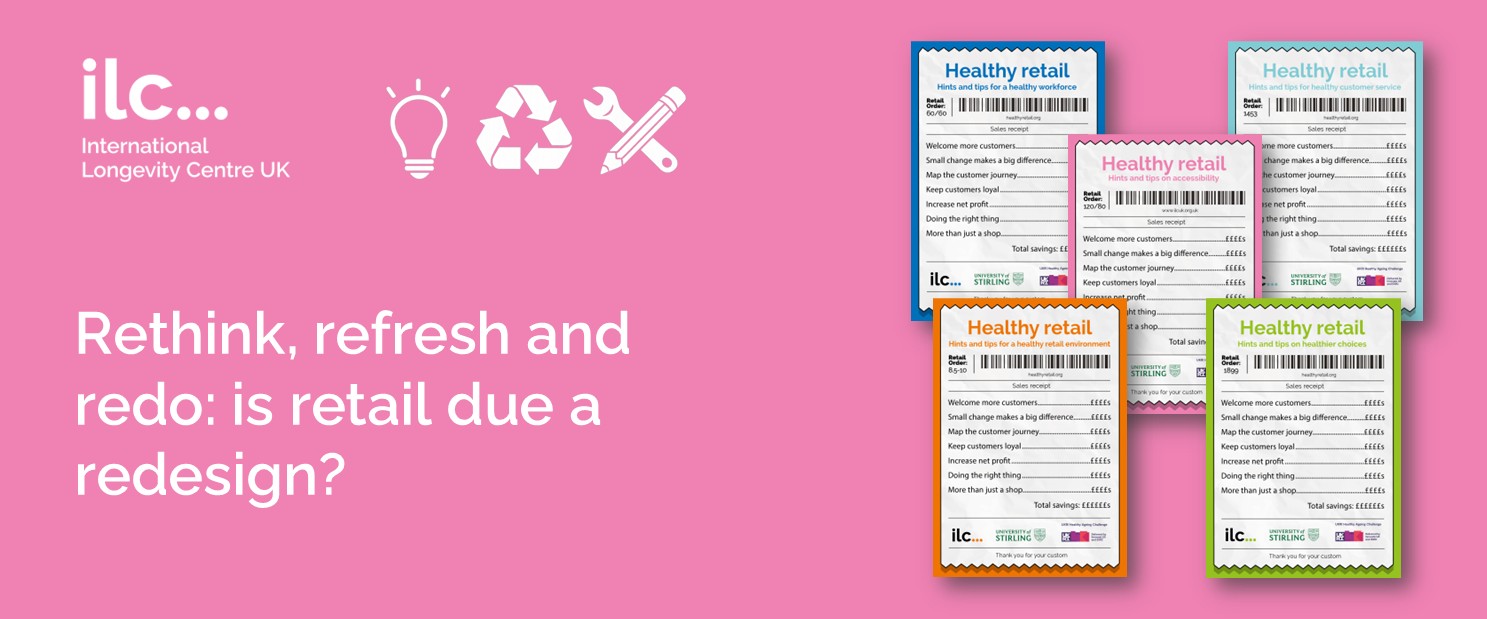
At the ILC, we spent 2022–2024 exploring the role of retail in supporting healthy ageing through our Retail Impact Project – part of the UK Government’s Healthy Ageing Challenge, supported by UKRI and the University of Stirling.
Through our project, we wanted to help retailers better understand what healthy ageing really means – and inspire action to make our shops, high streets and retail workforces fit for a 100-year life.
From small independents to major brands, we found inspiring examples showing that healthy retail isn’t just good for people and communities – it’s good for business.
Our work culminated in a Healthy Retail Summit, bringing together retail leaders, policymakers and innovators to explore the opportunities of an ageing society. With older consumers already responsible for over half of UK spending – rising to an estimated 63p in every pound by 2040 – it’s an opportunity the sector can’t afford to ignore.
According to the UK Government’s National Diet and Nutrition Survey, published in June 2025, it turns out that most of us aren’t making the healthiest choices:
- Less than one in five adults meet the ‘5 A Day’ target
- Most consume too much saturated fat and sugar
- Almost everyone fails to meet fibre recommendations
- Many aren’t getting enough vitamin D
Income makes some difference – but poor diet quality persists across all groups.
Interestingly, the survey found that average energy intakes were below estimated needs – probably because we don’t always tell researchers what we really eat.
And as the founder of behavioural science practice within the Ogilvy Group, Rory Sutherland, notes, technology can also shape our consumption. Ordering through an app can make it easier to add extras, buy more than we intended and turn an occasional treat into a routine. The design of retail environments matters because small prompts, defaults and choices affect what ends up in our baskets.
That means the retail sector can be part of the solution. Shops can make healthier options easier to find and afford. Restaurants can offer portions and menus that work for changing appetites and dietary needs. High streets can provide toilets, seating, good lighting and safe, accessible spaces. Employers can support workers to stay healthy and remain in work for longer.
A redesign does not need to mean a complete rebuild. It can mean testing small changes, listening to customers and recognising that the population is changing. The most successful businesses will be those that understand longer lives as a commercial opportunity rather than a niche concern.
You can explore ILC’s five guides and short films for the retail sector, covering products and services, places, technology, work and skills and inclusive design, via the button below.
6 February 2026
Rethink, refresh and redo – recovering our neighbourhoods
As part of a wider government push towards place-based regeneration, the Independent Commission on Neighbourhoods (ICON) launched its first-phase findings last month.
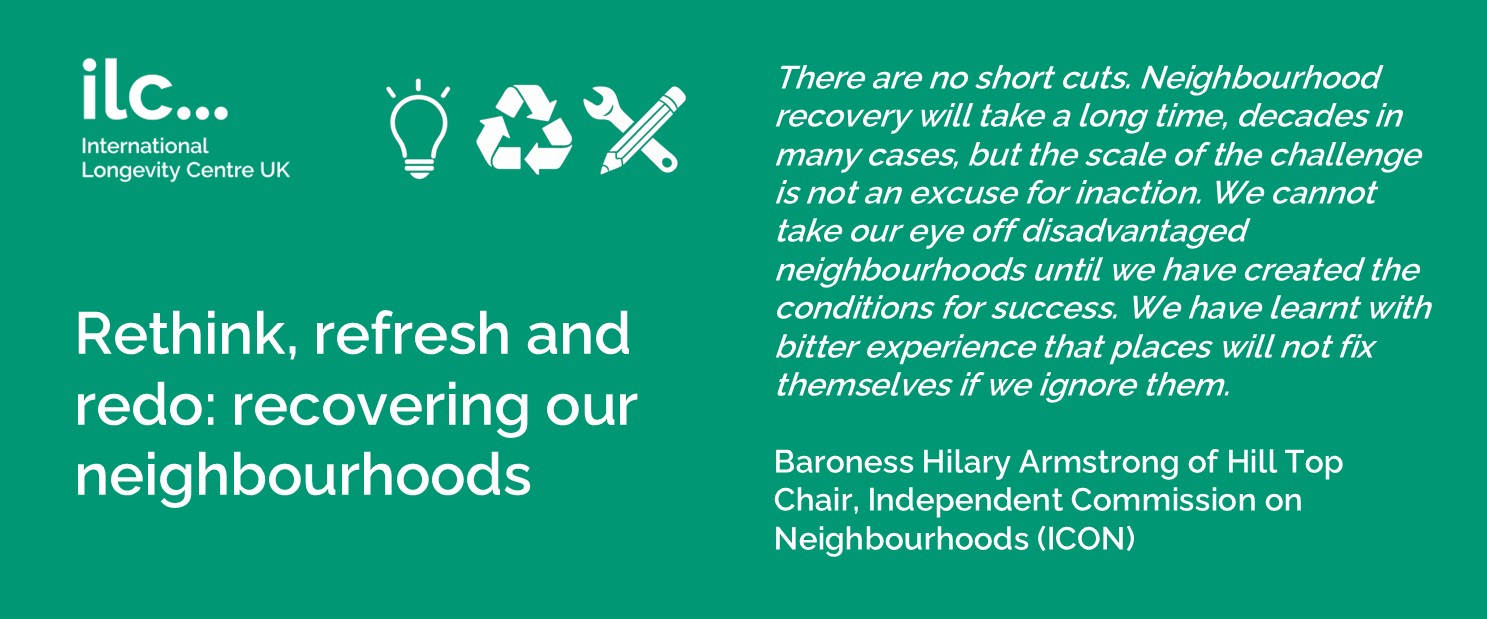
The Commission has identified 613 ‘mission critical neighbourhoods’ across England – places facing persistent and overlapping disadvantage. Its report, No Short Cuts, argues that these areas need sustained investment, local power and long-term commitment rather than another sequence of short-lived programmes.
People living in these neighbourhoods are more likely to experience poorer health, lower incomes, worse housing and weaker access to jobs and services. These disadvantages accumulate across the life course. They shape how children start life, whether adults can build secure careers and how people experience later life.
The report calls for a new approach, including cross-government collaboration, joined-up public services and stronger community leadership – ending the siloed approaches taken since the end of programmes such as the New Deal for Communities.
Drawing from extensive consultations with residents and community groups, the Commission’s findings demonstrate the need for investment and power to be placed in the hands of local people who best understand their own communities. No Short Cuts makes clear that neighbourhood renewal cannot be done to communities. It must be built with them.
The Commission sets out economic, social, political and moral arguments for action, making the case that the welfare cost of inaction will be higher in years to come than a clear investment now. Current welfare spending in mission critical neighbourhoods is more than double the national average, while the estimated lost economic output is £4.5 billion a year.
This matters for healthy ageing. The places where we live influence whether we can walk safely, meet other people, reach health services, find decent work and afford a secure home. A neglected neighbourhood can shorten lives long before anyone reaches old age.
The challenge is not a shortage of ideas. Britain has decades of evidence about what supports neighbourhood recovery. The challenge is sustaining action beyond a spending round, a ministerial term or a pilot project.
Recovering neighbourhoods will require government to rethink how it funds places, refresh the relationship between national and local power and redo public services around the lives people actually lead.
ILC Policy Intern Molly Holmes has explored these questions in a new blog. You can read the Commission’s report and find out more about Molly and other members of the ILC team here.
20 February 2026
Rethink, refresh and redo – turning ageing into growth across G20
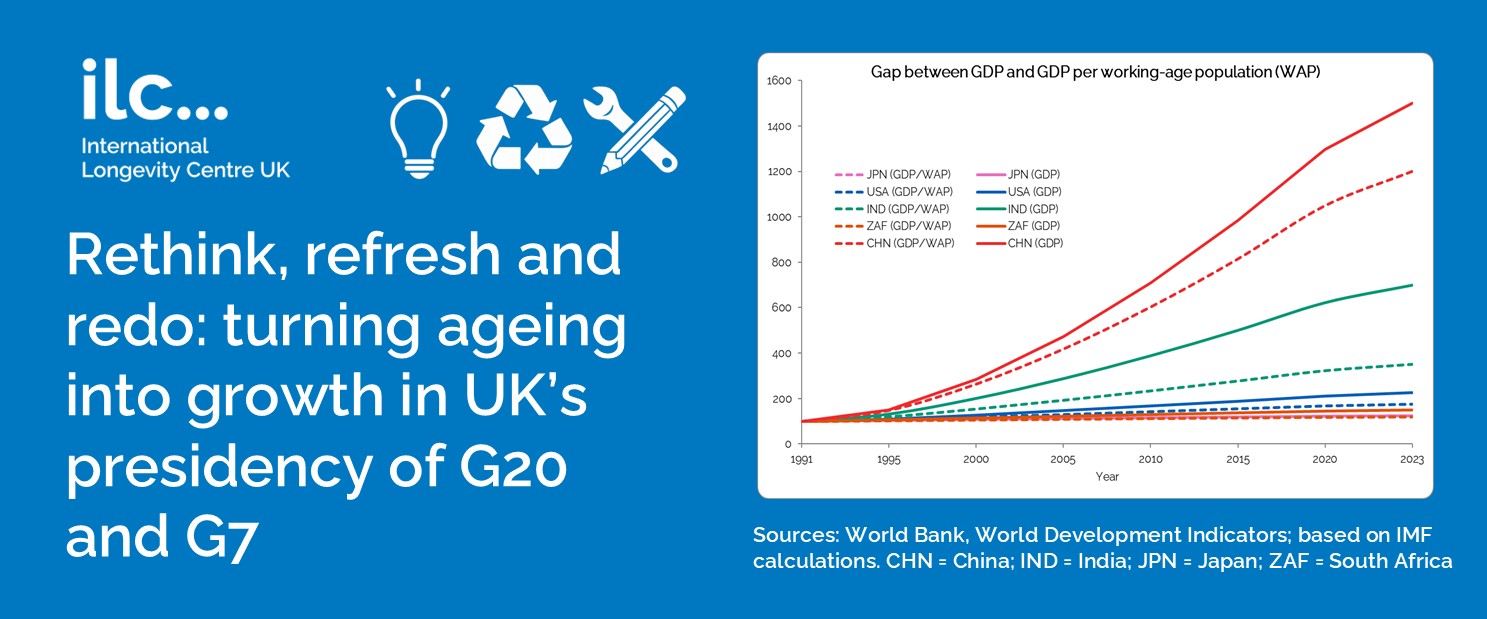
The UK’s Chancellor, Rachel Reeves, faces unprecedented fiscal challenges. The country needs growth at the same time as it responds to population ageing, pressure on public services and a workforce that is changing rapidly.
This is not a uniquely British problem. Across the G20, governments are grappling with longer lives, falling birth rates and slower growth. Yet finance ministries still too often treat ageing as a cost to be contained rather than an economic transition to be managed.
The UK will host the G20 in 2027. That creates an opportunity to put the economics of longevity at the centre of the global agenda – not as a specialist health or pensions issue, but as a question of growth, productivity and resilience.
Finance ministries already recognise the pressure. The OECD warns that, in the absence of reform, population ageing will slow improvements in living standards and increase spending on pensions, health and care. But the same demographic change also creates new markets, new forms of work and a powerful incentive to invest in prevention and productivity.
Longer working lives can support growth, but only if people are healthy enough to work and employers are willing to recruit, retain and retrain them. Older consumers already account for a growing share of spending, but many products and services are still not designed for them. Investment in health and prevention can reduce future costs while helping people contribute for longer.
The G20 has the reach to shift this debate. Its members account for most of the world economy and are at very different stages of demographic change. Japan, Germany and Italy are already among the oldest countries in the world. India, Indonesia and South Africa have younger populations but are ageing quickly. China is explicitly building a silver economy as part of its national development strategy.
The UK should use its presidency to bring finance ministers, central banks, employers and investors together around a practical longevity growth agenda. That means better data, shared measures of the longevity dividend and policies that support longer, healthier and more productive lives.
ILC’s Future of Ageing conference will continue this conversation, bringing together leaders from government, business and civil society to look at what acting now really means. We are also developing a new programme on the economics of longevity and would welcome partners who want to be involved.
If you would like to be involved, please do get in touch.
13 March 2026
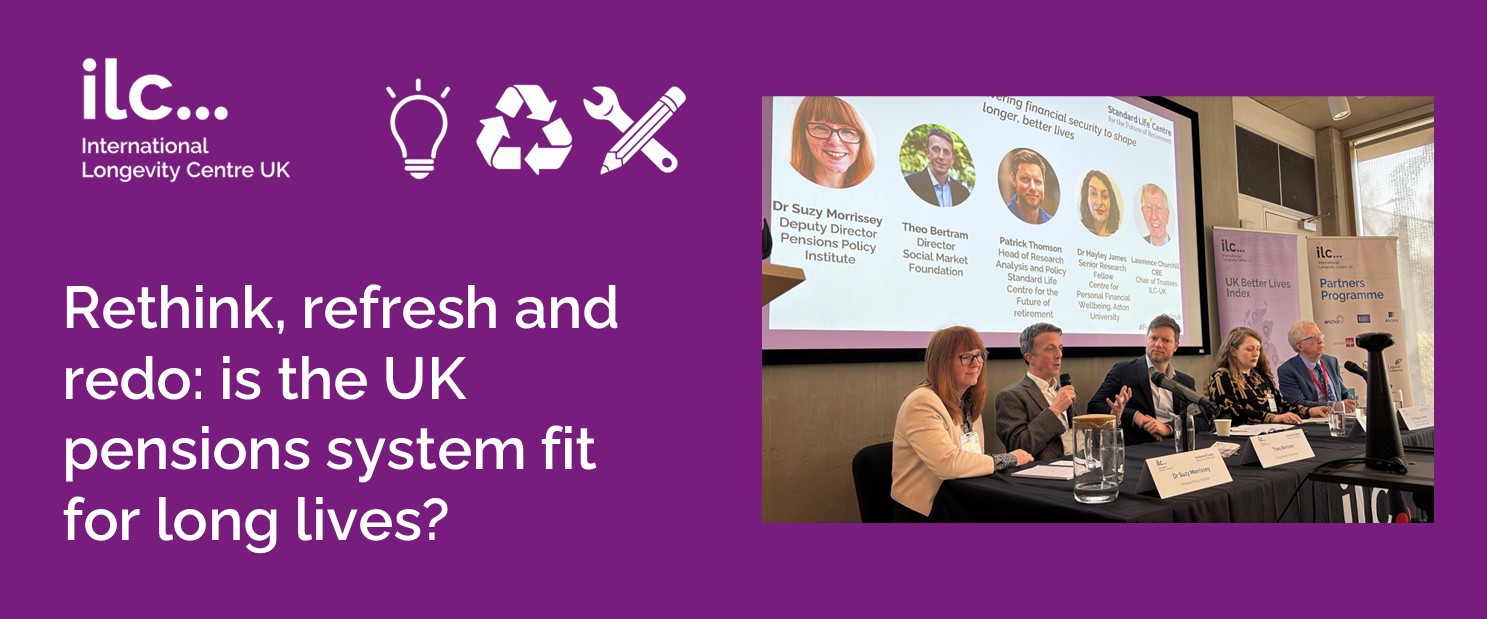
Rethink, recycle and redo – is our pensions system fit for long lives?
Pensions are the policy issue many of us would rather ignore. The decisions are complicated, the consequences feel distant and the politics are difficult. But longer lives mean the question cannot be postponed indefinitely.
At ILC’s Future of Ageing conference this week, speakers returned repeatedly to the gap between the retirement people expect and the one many are likely to experience. Automatic enrolment has brought millions more people into pension saving, but contribution levels remain too low and large groups are still left out.
The system was designed around a labour market and a life course that no longer exist. People move between jobs more often, spend time out of paid work caring for others, work for themselves and reach later life with very different levels of housing wealth, savings and health.
Generation X is approaching retirement after the decline of defined benefit pensions but without enough time to benefit fully from automatic enrolment. Women continue to retire with significantly less private pension wealth than men. Many self-employed people save nothing into a pension at all.
The state pension remains the foundation of retirement income, but debate about its future is trapped between affordability and adequacy. Raising the State Pension age may improve the public finances, but it cannot be the only answer when healthy life expectancy varies so widely between places and groups.
Working longer can help, but only where work is available, flexible and compatible with people’s health and caring responsibilities. A pension policy that assumes everyone can simply stay in work for longer risks widening inequality.
We need to rethink what a decent retirement looks like, refresh automatic enrolment so it reaches more people and redo the support available when people turn savings into income. Better defaults, clearer guidance and products that protect against the risk of living longer than expected all have a role.
The debate also needs greater honesty. Longer lives cost more. A sustainable system will require some combination of higher contributions, later retirement, higher taxes and different expectations about what the state provides. Pretending otherwise only makes future choices harder.
You can read more about ILC’s pensions work and Lawrence Churchill’s challenge to the state pension system in his blog via the button below.

27 March 2026
Rethink, recycle and redo – what Apple at 50 tells us about tech
The tech giant Apple turns 50 on 1 April and Emily Evans, ILC’s Senior Communications and Engagement Manager, reflects on what its story tells us about technology, longevity and trust.
I recently attended an Apple event at Battersea Power Station. There was no obvious sales pitch. Instead, the emphasis was on creativity, accessibility and what people could do with the technology.
I’ve long used Apple Macs, but I don’t have an iPhone and use other platforms for music and podcasts. So there was a lingering sense of: what’s the catch? But in that moment, you couldn’t help but feel Apple had used its soft power well, without any need for the hard sell.
On 1 April 1976, Steve Jobs, Steve Wozniak and Ronald Wayne formed a company that would reshape technology, design and culture. Their impact has been enormous – not simply because they made computers smaller and faster, but because they changed how technology felt and who it appeared to be for.
Steve Wozniak, now 75, left the company in 1985 but remains close to the tech world and a fan of Apple’s spirit. Ronald Wayne designed the first logo, drafted the original partnership agreement and wrote the Apple I manual – earning him a 10% stake in the company. But just eleven days later, he sold his share for $800.
Apple’s history is full of reinvention. It moved from personal computers to music players, phones, watches, services and health technology. It has survived the departure and return of its founder, changing markets and repeated predictions of decline.
That willingness to rethink and redo is especially relevant as societies age. Technology can help people stay connected, manage health, work flexibly and live independently. But only if it is designed around real people rather than an imagined young, confident and digitally fluent user.
Accessibility is not a niche feature. Voice control, larger text, hearing support and simple interfaces can benefit millions of people across the life course. Features initially designed for disabled users often become useful to everyone.
Trust matters too. Technology companies have extraordinary power over our data, attention and everyday choices. They can look like angels when they make life easier and gangsters when their incentives are hidden or their systems exclude people.
Apple at 50 is a reminder that technologies and companies can outlive their founders, their original products and the assumptions on which they were built. The challenge for the next 50 years is to make sure innovation supports longer lives rather than leaving people behind.
You can read ILC’s report AI: Generating opportunities for long lives, published in May 2025, via the button below.
10 April 2026
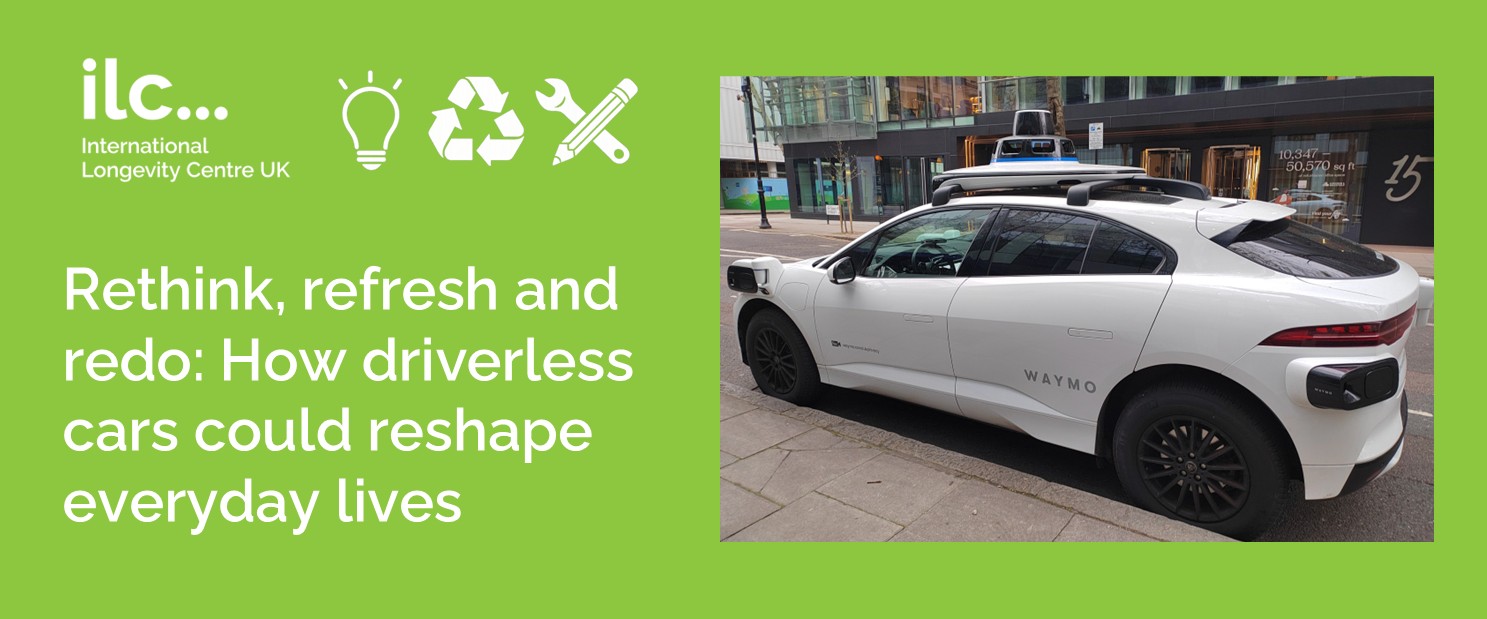
Rethink, recycle and redo – how driverless cars could reshape our lives
In his latest blog, David Sinclair, ILC's Chief Executive, argues that autonomous vehicles will do more than change how we travel – they could reshape when, where and why we go out, particularly in places beyond our big cities.
In recent weeks, many of us on the ILC team have spotted an increasing number of autonomous vehicles on the streets of London. Trials are scaling up in line with the implementation of the Automated Vehicles Act, and soon we will be able to book robotaxis as easily as we order a takeaway. There's always a mix of excitement and scepticism about new transport technologies. But the more interesting question is not whether the technology works. It's what it does to how we live our lives.
ILC has previously argued that keeping people mobile for longer is central to wellbeing. Losing the ability to drive is not just about getting from A to B. It's about losing spontaneity, seeing people less often and thinking twice before saying yes. Autonomous vehicles could change that. They could extend our “driving lifespans” and help more of us stay connected to the people and places that matter.
But the biggest impact is unlikely to be in London. If you live in a city with strong transport options, the gain is relatively small. The real shift will be felt in places where transport simply does not work well. Across the UK, smaller towns and rural areas are often poorly served. Public transport is infrequent and taxis are unreliable, particularly in the evening. The result is simple – people do less and go out less often.
Autonomous vehicles could help fill that gap. They could make it easier to get to appointments, connect with public transport, or simply go out without worrying about how to get home. At the moment, taxi companies and Ubers are no panacea outside big cities. Ageing workforces and thin margins mean patchy coverage, and in many places there just are not enough drivers. In places like Bognor, where David lives, if you can't get a taxi, you often don't go out at all.
It's not just about convenience – it's about participation. Driverless technology could change how often we go out and whether we stay connected to our communities. There may be wider effects too. If transport becomes more reliable in underserved areas, it could change where people choose to live and make more places attractive.
Of course, technology on its own will not solve everything. Access, affordability and design will matter, and if services are not inclusive, the benefits will be uneven. That's why there's a role for government. We may need to incentivise provision in smaller towns and rural communities and encourage shared journeys rather than simply adding more vehicles to already congested roads.
The instinctive reaction for many people is that they would not trust a driverless car. But from his experience of the excitment around Waymo driverless taxis in San Francisco, David believes people's curiosity quickly overcomes their fear. The technology is coming. The question is whether we shape it to work for everyone, or whether it reinforces the gaps that already exist.
You can read David’s full blog via the button below.
24 April 2026
Rethink, refresh and redo – respiratory health for the 100-year life
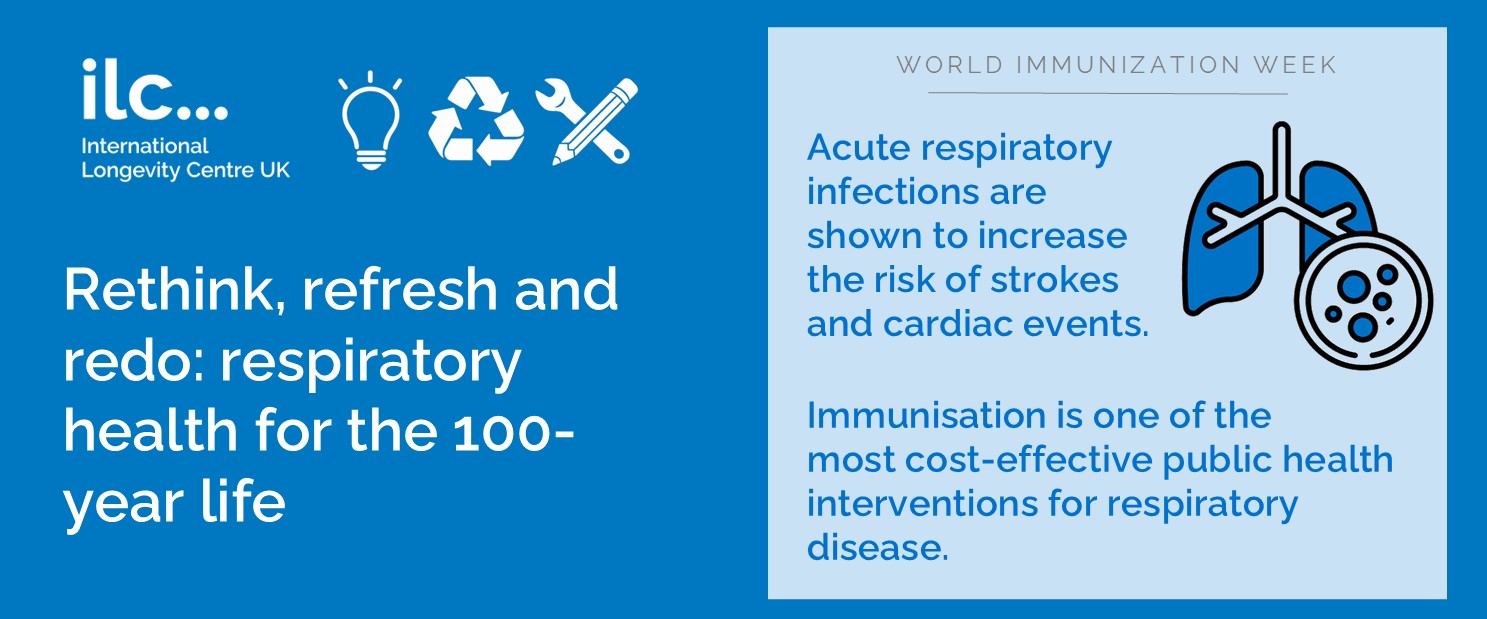
The theme for this years' World Immunisation Week is For every generation, vaccines work and over the past 50 years, vaccines have saved more than 150 million lives. The question now is whether vaccination systems are fit for societies where people are living longer and spending more of those years in poor health. Respiratory diseases have increasingly emerged as a major global health challenge. Well before the COVID-19 pandemic, the World Health Organization had already identified this as a pressing issue, highlighting the need for sustained, long-term strategies to address the growing burden.
Preventable respiratory diseases like pertussis (or ‘whooping cough’) illustrate the lag in our health systems. Cases have risen sharply across Europe, including a 1,600% increase in England in 2024. Nearly six in ten confirmed cases are now in people aged 15 and over. Symptoms in adults are often misdiagnosed or missed altogether, allowing infections to circulate and increasing risks for infants. In adults, pertussis also causes significant quality-of-life issues, often for months. What is still treated as a childhood disease is now a feature of adult health.
Respiratory infections, more widely, are a major and under-recognised driver of poor health in later life. Across Europe, influenza alone is associated with around 40,000 deaths each year. Respiratory syncytial virus (RSV) leads to more than 150,000 adult hospitalisations annually. These infections can increase the likelihood of non-communicable diseases – for example, the risk of a heart attack is around six times higher in the week following a confirmed influenza infection.
By 2100, one in three people in the EU will be aged over 65. Life expectancy has risen from around 67 in 1950 to more than 80 today. Healthy life expectancy has not kept pace. For those born now, more than half of the years lived beyond 65 are expected to be spent in poor health. Preventable respiratory illness is a significant part of that gap.
The economic case for action is well established. Vaccination is one of the most cost-effective public health interventions available, with evidence from the Office of Health Economics suggesting that every £1 invested can deliver up to £19 in return. Pertussis alone is estimated to cost the UK hundreds of millions of pounds each year in healthcare and wider economic impacts.
Coverage and delivery remain uneven. Some places have no clear recommendations for older age groups. Where adult vaccination programmes exist, uptake is inconsistent. Sources of data are limited, and European Centre for Disease Prevention and Control does not routinely collect coverage data for adults. Within countries, lower-income groups and marginalised communities are less likely to be vaccinated and more likely to experience worse outcomes.
Health systems must focus on population immunisation across the life course. Adult immunisation is often fragmented, with limited awareness among both the public and healthcare professionals. In the case of pertussis, clinicians frequently do not suspect it in adults. Testing can be costly and access uneven. Booster uptake is low, in part because there are few systems in place to prompt it.
Many countries recognise the value of adopting a prevention-focused model of health care, but vaccination – one of the most well-established preventative interventions is not yet embedded within it. The shift towards community-based care and earlier intervention creates an opportunity to change that. Immunisation across the life course helps people stay healthy for longer, and avoids the costs of treating illness later.
Rethinking vaccination means recognising it as part of maintaining functional ability over longer lives, not just preventing acute illness. Refreshing delivery means moving towards active systems – recall, follow-up and routine engagement with adult populations. Redoing measurement means setting clear targets for adult uptake and treating vaccination as a core component of health system performance.
Whether our long lives are lived in good health depends in part on how seriously prevention is taken. Vaccination is central to that.
ILC's latest blog written to mark World Immunisation Week can be found here You can download ILC’s report, From the 100-day cough to the 100-year life: Pertussis, prevention and the future of life course immunisation, via the button below.
8 May 2026
Rest, repair and revitalise – sleep, longevity and the global economy
Sleep is often treated as a personal lifestyle choice, but it is actually a systemic, population-level crisis.
Good quality sleep is a fundamental pillar of healthy ageing, yet it remains one of the most overlooked factors in public health and workplace policy. In the UK alone, 16% of adults get less than six hours of sleep a night, effectively losing an entire night's worth of rest every week.
This chronic deficit carries profound consequences, as the lack of high-quality sleep significantly raises the risk of cardiovascular disease, cognitive decline, depression, and metabolic syndromes like type 2 diabetes. High-quality sleep is also a vital tool for maintaining the functional capacity of immune cells as the body ages.
Furthermore, contrary to popular belief, healthy older adults are actually less prone to daytime sleepiness than younger demographics. Ultimately, excessive sleepiness or unexpectedly long sleep durations in later life are often early clinical warning signs of underlying health deterioration or cognitive decline, as Prof Derk-Jan Dijk, Professor of Sleep and Physiology, Director, Surrey Sleep Research Centre, pointed out.
Sleep deprivation is also shaped by structural factors that go well beyond individual behaviour. The working environment plays a significant role, and this is perhaps nowhere more visible than in the experience of night shift workers. Night work forces the body to operate against its natural circadian rhythm, the internal clock that governs alertness, digestion, hormone release, and cellular repair. The result is sleep that is shorter, more fragmented, and less restorative per hour than sleep taken at night. Over the years and decades, this deficit compounds. Night shift workers face elevated risks of cardiovascular disease and diabetes, as Ben Lumley, Co-Head of Programme, Night Club, said.
This is a structural workplace issue. HR departments need to treat sleep as a professional health priority, not a private lifestyle choice. Historically, corporate culture has glorified sleep deprivation as a sign of dedication – a ‘badge of honour’. As Yvonne Sonsino, previously Trustee at the International Longevity Centre UK, notes, if senior leaders reward constant availability, wellbeing programmes will not succeed. When leaders model boundaries and prioritise recovery, employees are more likely to do the same.
Alongside shift work, alcohol is another significant and often misunderstood factor. While alcohol reduces the time it takes to fall asleep, it functions purely as a short-term sedative rather than a restorative aid, according to Jessi Kullar, Senior Public Affairs and Stakeholder Engagement Manager, Drinkaware. It specifically blocks Rapid Eye Movement (REM) sleep, which is essential for memory consolidation, mood regulation, and complex cognitive function. As the night progresses, continued consumption disrupts the broader sleep-wake cycle, leading to significantly exacerbated sleep fragmentation during the second half of the night.
This creates a self-reinforcing vicious cycle: disrupted sleep prompts the use of alcohol for relaxation, which in turn causes further sleep fragmentation.
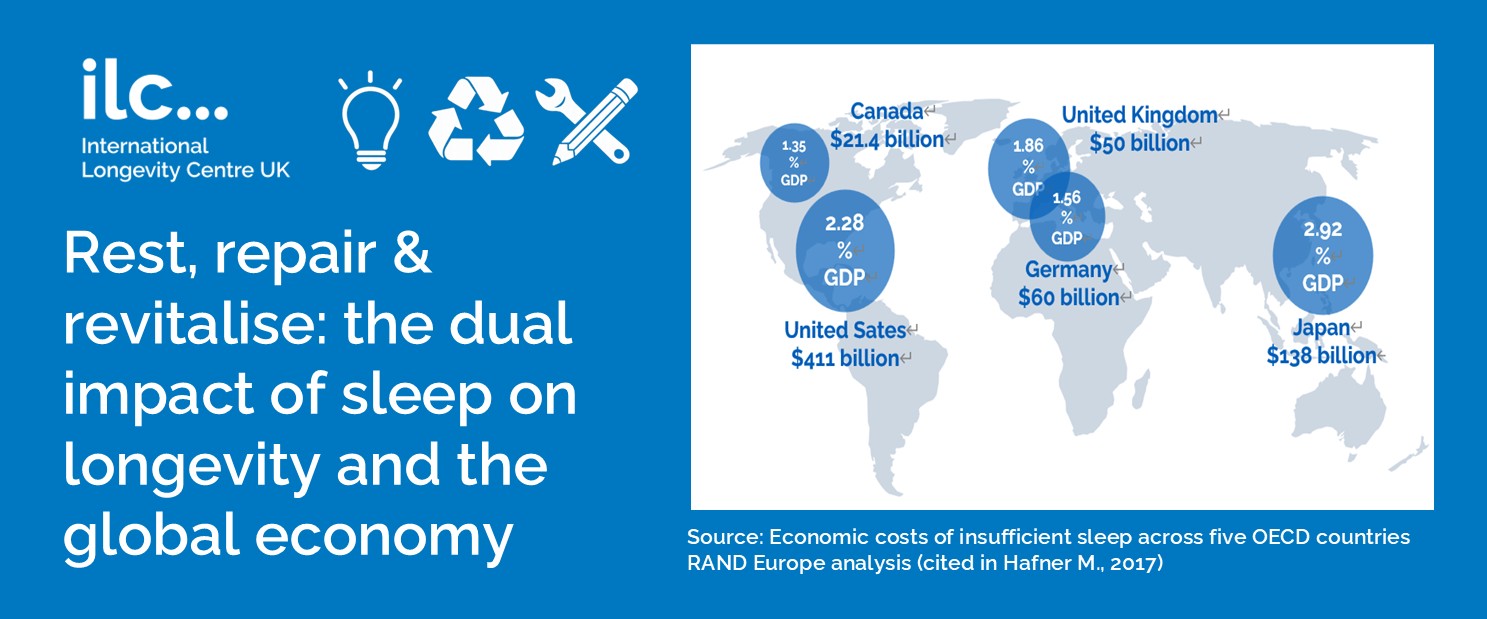
The economic case reinforces this urgency. In the UK, sleep deprivation costs an estimated £50 billion a year through lost productivity, accidents and healthcare costs. Across OECD countries, the impact runs to hundreds of billions in lost GDP. These losses reflect reduced workforce participation, lower productivity and impaired long-term cognitive development. Addressing sleep deprivation is therefore not just a health issue, but a matter of economic growth.
To explore the evidence further, check out ILC's newest report, Sweet Dreams: The importance of good sleep for healthy ageing. Based on our webinar with ILC Partner University of Surrey Centre of Excellence of Ageing, the report written by Akane Li, our excellent Policy Intern, looks at the physiology of sleep, the structural drivers of deprivation, and key recommendations for the future. You can read the full report via the button below or catch up on the webinar here and related blog post here.
If you're interested in joining ILC's Partners Programme please contact Patrick Swain here.
22 May 2026
Rethink, refresh and redo – work, place and the politics of a long life
British politics still treats work, health and ageing as separate policy conversations. But the local election results suggest voters increasingly experience them as one and the same.
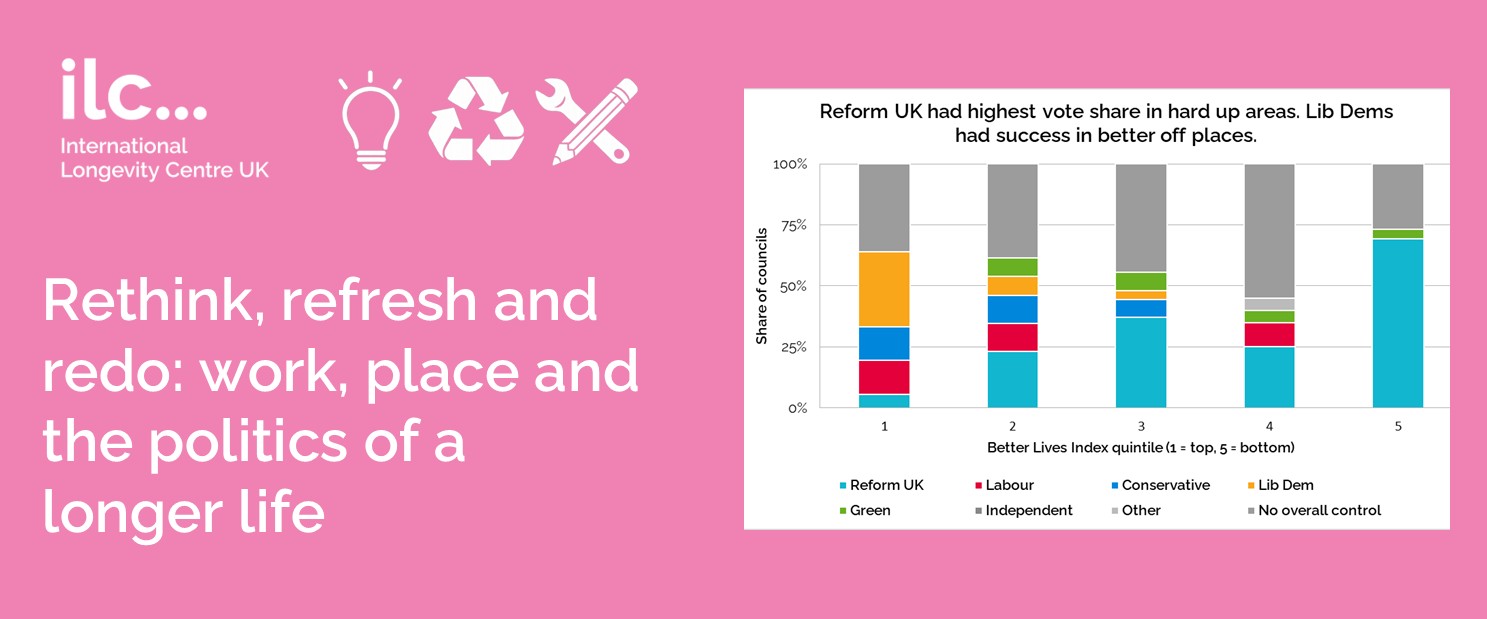
ILC's analysisof the May 2026 local elections in England shows that over two-thirds of councils in the worst-off parts of the country are now controlled by Reform UK. In the best-off areas, it is one in eighteen. These are not simply places where people are angry at parties. They are places where growing up and growing old is hardest – where child poverty is higher, healthy life expectancy is lower, and avoidable deaths are more common. The ILC's UK Better Lives Index puts numbers to what many people in those communities already know.
It is tempting to read this as a story about political volatility. It is more usefully read as a story about what insecurity does to people over time.
In a new guest blog, Jack Eddy argues that work and longevity are too often treated as separate policy conversations. ‘Work sits in the growth file – productivity, participation, wages. Longevity sits elsewhere, under ageing, pensions and health. That division is tidy, but false.’
The ILC’s UK Better Lives Index helps explain why. It ranks 359 local authorities across indicators spanning the life course – from child poverty and life expectancy through to avoidable mortality and economic activity among older workers. It is designed to show how health, work and place interact across a whole life, not sit in separate policy silos.
Getting people into work is important but it is not the same as giving them a secure life. As Jack points out while unemployment impacts health, poor-quality work can be just as harmful. People with low job security or job satisfaction are much more likely to report poor health. A shift cancelled at short notice is not only a labour-market event. It becomes a childcare problem, a rent problem, a food-budget problem and, eventually, a health problem. Manchester has an economic activity rate of 68.1% – not weak by national standards – yet still ranks 321st on the Index, with child poverty at 40.7% and avoidable mortality at 395.8 per 100,000. Work exists there. Security, too often, does not.
The policy debate has too often treated any job as a good job. But insecurity at work shapes everything from family finances to physical and mental health. The recent Employment Rights Act marks a genuine shift in how the state recognises that reality. From Statutory Sick Pay reforms to the new Fair Work Agency, it acknowledges that unpredictable work makes ordinary life harder to organise – and, over time, harder to sustain in good health.
But the Act is a floor, not a ceiling. Employment rates alone tell us very little about whether people can build stable and healthy lives. An economic model built around insecure hours, unpredictable shifts and fragile household finances will continue to damage health over time. The Health Foundation estimates insecure work rose from 3.1 million workers in 2014 to 3.5 million in 2022 – around 11% of the workforce.
The local election results should sharpen the policy agenda. Tanya Singh, ILC's Senior Research Fellow, who conducted ILC’s local election analysis said ‘People want the basics of a good life – healthier, longer lives free from poverty, decent jobs for younger and older workers alike, affordable housing and clean, safe local environments. The message from voters could not be clearer – deliver the ingredients for better lives, and quickly, or be punished at the ballot box.’
A place-based approach to job quality, health and security is not a luxury. In too many parts of Britain, it is the difference between a long life well lived and one cut short. And delivering this is what voters want.
The UK Better Lives Index is made possible by support and educational grants from the Hallmark Foundation, Edwards Lifesciences and Pfizer. You can read Tanya Singh's full analysis of the 2026 local elections via the button below and Jack Eddy's blog post here.
5 June 2026
Rethink, refresh and redo – the cost of not starting early
Nearly one million young people are now not in education, employment or training (NEET).
Britain spends much of its time worrying about labour shortages, economic growth and the pressures of an ageing population. And yet so many young people are sitting on the sidelines – many of them the very workers, taxpayers and carers our ageing society will need.
Alan Milburn's interim review brings together the scale of the challenge. Around 60% of young people who are NEET are economically inactive rather than unemployed. Many are struggling with poor health, caring responsibilities or a loss of confidence. Others simply cannot find a way in.
What they are not is lazy. A survey carried out for the review found that 84% of young people who are NEET want a job, education or training. Nearly a third have good GCSEs or equivalent qualifications. More than one in five have Level 3 qualifications. Fifteen per cent have degrees.
This is not a generation opting out. It is a generation struggling to get started. In One hundred not out, ILC argued that longer lives are shaped by the opportunities and experiences we accumulate throughout life. Poor health, low earnings and insecurity in later life do not appear overnight. They build up over decades.
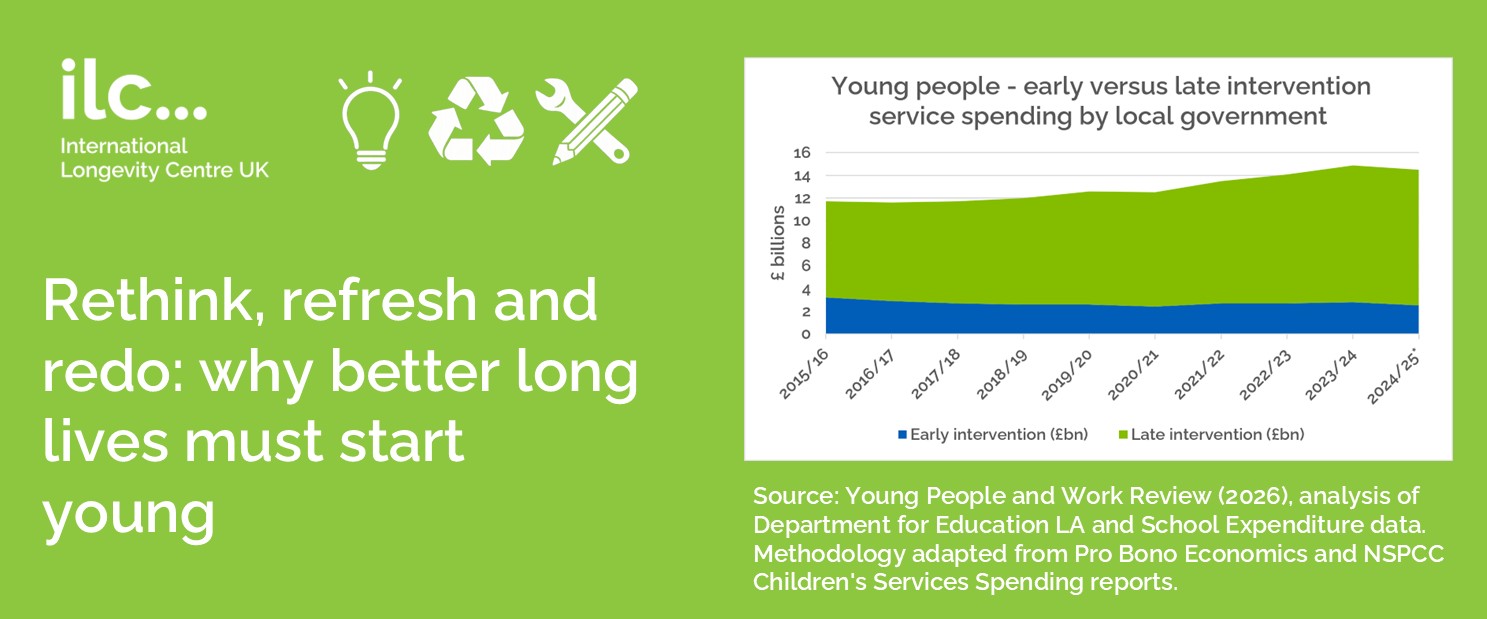
The Milburn review estimates that the economic and social cost of young people being NEET could be as high as £125 billion a year. That is not simply lost wages and tax revenue. It includes higher spending on welfare, health and other public services, as well as the long-term consequences of people never being given a proper foothold in the labour market.
The UK also compares poorly internationally. The proportion of young people who are NEET is higher than the OECD and EU averages. While many comparable countries have improved since the pandemic, the UK has moved in the wrong direction.
The same economy is failing people at both ends of working life. Too many young people cannot get started, while employment among people aged 55–64 has stalled and many older workers are pushed out before they are ready. The result is a shorter working life at a time when the country needs more people to participate.
Starting early matters. A first job builds skills, confidence, earnings and pension saving. Missing that first step can shape health and financial security for decades. Support must therefore go beyond short courses or pressure to take any available job. It needs to address mental health, transport, caring responsibilities, housing and the quality of work on offer.
The review calls for a stronger youth guarantee and more joined-up support. That is welcome. But it will only work if government, employers, education providers and local services share responsibility for creating real routes into secure work.
Rethinking the NEET challenge means seeing it as a life-course and growth issue. Refreshing support means starting with the person rather than the programme. Redoing the system means making sure no young person is allowed to disappear between education, health services and employment support.
The cost of not starting early is paid throughout life – by individuals, communities and the economy. You can read Alan Milburn’s interim report via the button below.

26 June 2026
Rethink, refresh and redo – what if culture is infrastructure?
I've just returned from Guangzhou after five days on the World Cities Culture Forum Leadership Exchange Programme, alongside colleagues from the Greater London Authority. The trip was supported by Bloomberg Philanthropies and we were there as guests of the Guangzhou Academy of Social Sciences to learn from the city's approach to the silver economy (i.e. the growing market for goods, services and opportunities created by an ageing population). China has designated this longevity dividend a national development priority. Guangzhou is building the ecosystem to match.
In the UK we tend to think of infrastructure as roads, railways, housing, utilities and digital networks. We might add hospitals, schools and public services. Culture usually sits somewhere else entirely – an optional extra.
Across more than 30 presentations and 20 site visits, culture appeared not as a separate policy area but as a tool for delivering economic development, urban regeneration, healthier ageing and stronger communities. Guangzhou's vocabulary is markets, industrial chains and consumer segments, not care and cost. Today, adults aged 50 and over generate more than 40% of household spending in China and are on track to account for almost 60% by 2050.
We saw this in the renewal of Yongqing Fang, where historic streets, Cantonese opera and small businesses have been used to create a destination for residents and visitors. We saw it in community centres where older residents propose activities, teach classes and shape the services they use. And we saw it in the Guangzhou Cultural and Arts Centre, which combines public provision, commercial activity and co-creation on a remarkable scale.
The language used was revealing. We heard about ‘proactive ageing’ and ‘productive ageing’, not simply support for older people. A choir of around 1,000 members, retired professionals mentoring younger people and older residents sharing traditional skills were not presented as worthy side projects. They were part of the city’s cultural and economic life.
Technology was woven through this approach, from autonomous vehicles and digital public services to products designed for the silver economy. But the strongest impression was not of technology replacing human connection. It was of culture and technology being used together to make participation easier.
One speaker put the challenge simply: ‘The needs are not to be found. It is someone to talk to.’ Loneliness and isolation are not solved by a single service. They are reduced when people have somewhere to go, something to contribute and a reason to leave the house.
That is why culture should be understood as infrastructure. Libraries, arts centres, museums, parks, markets and community venues support health, connection, skills and local economies. They help places adapt to longer lives. Yet in the UK they are often the first things cut when budgets are tight because their value is dispersed across departments and difficult to capture in a single balance sheet.
Guangzhou is not a model that can simply be copied. The political, economic and cultural context is very different. But its willingness to connect ageing, culture, regeneration and growth offers a useful challenge to our own policy silos.
Rethinking culture means recognising the outcomes it already delivers. Refreshing investment means looking beyond individual projects to the local ecosystems that sustain participation. Redoing policy means treating culture as part of the infrastructure for healthy, productive and connected long lives.
The visit was made possible by the World Cities Culture Forum, Bloomberg Philanthropies, the Guangzhou Academy of Social Sciences and our colleagues at the Greater London Authority. You can see more reflections from the exchange via the link below.
10 July 2026
Rethink, refresh and redo – from fiscal risk to economic opportunity
By 2075-76, if today's policies remain unchanged, the Office for Budget Responsibility (OBR) expects public debt to reach almost 300% of GDP – up from around 95% today, effectively trebling relative to the size of the economy. State pension spending rises from 5% to 9% of GDP over the same 50-year period. Health spending climbs from 8% to 13% of GDP, while adult social care spending increases by half, from 1.2% to 1.8%. Overall, day-to-day government spending rises from 40% to 49% of GDP. By the end of the projection, net interest payments alone account for more than half of the increase in government borrowing – in effect, borrowing to pay the interest on previous borrowing. This is not a prediction of what will happen. It is the OBR's baseline projection of what happens if today's policies stay largely unchanged.
The OBR is careful to say these scenarios are not destiny. Long-term projections are highly sensitive to their starting assumptions, which is why the report tests a range of policy choices rather than presenting a single future. Uprate the state pension by earnings instead of the triple lock, and the projected rise in spending is around a fifth smaller. Uprate non-pension welfare by CPI rather than earnings, and it is around two-fifths smaller. Constrain health cost pressures so they grow no faster than the economy, and almost three-fifths of the increase in primary spending disappears. Each of these represents a rethink of a policy setting that currently runs on autopilot. Each also comes with trade-offs in poverty, incentives and fairness that the OBR is explicit are for politicians to weigh, not economists.
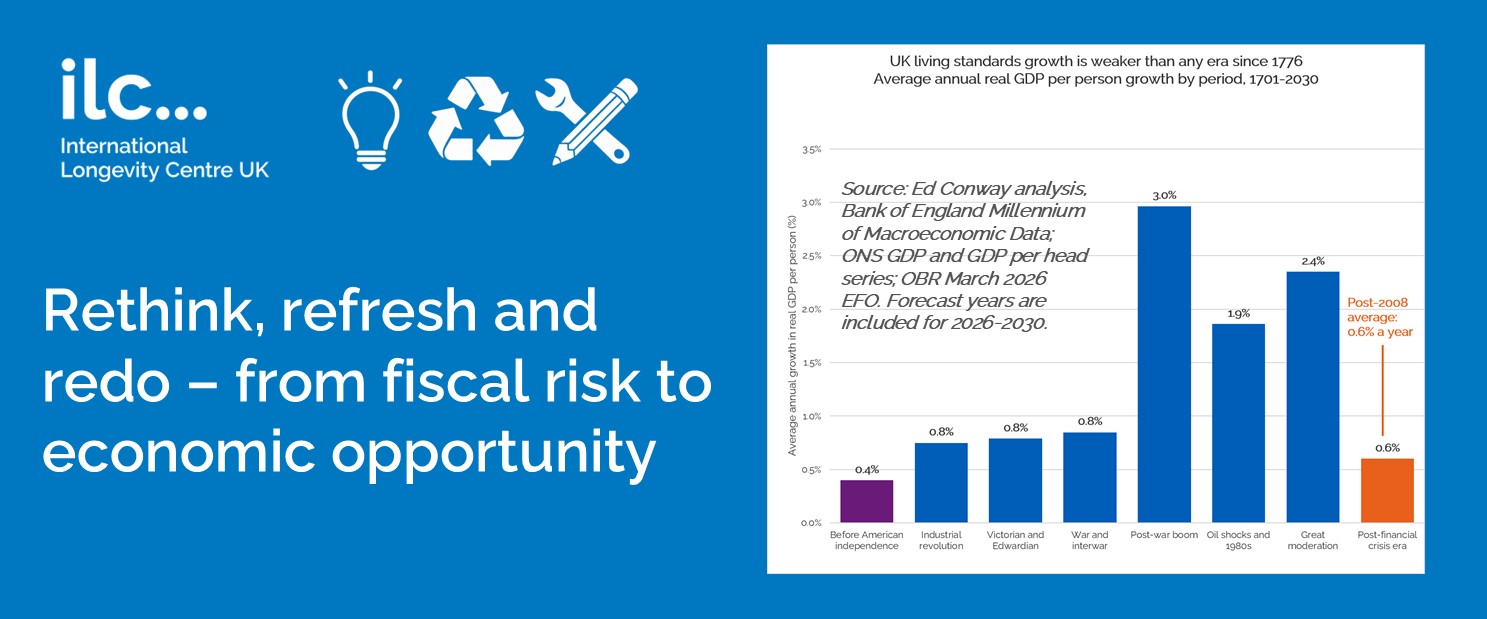
Sky's Economics Editor, Ed Conway, brought together the report and new Bank of England analysis on AI investment to explore the economic challenges facing Andy Burnham's new ministerial team. Drawing on the Bank of England's long-run macroeconomic dataset, built on historical estimates by Stephen Broadberry and colleagues and combined with ONS outturns and OBR forecasts, he showed that the UK is now experiencing its weakest sustained period of economic growth since before American independence in 1776. Weak growth means weaker tax revenues arriving just as the costs of an ageing population accelerate.
But ageing is too often described only as a fiscal pressure. Longer lives also create a major economic opportunity. Older workers bring skills and experience that employers cannot afford to lose. Older consumers account for a growing share of spending. Better health and prevention can keep more people active, independent and economically engaged for longer.
ILC's new briefing on the longevity economy argues that the Government should act early. That means helping older workers stay in and return to work, tackling the health and caring pressures that push people out and giving businesses the confidence to invest in products and services for longer lives. It also means treating prevention as economic infrastructure rather than a discretionary health cost.
The choice is not between accepting the costs of ageing and cutting support. It is between allowing poor health, insecurity and exclusion to shrink the economy or investing in the conditions that let people contribute throughout longer lives.
Population ageing is one of the defining economic facts facing the new Government. With the right policies, it is one of the UK’s biggest economic opportunities.
Your Friday three – 14 March 2025
Reversing the lens – demographics and German democracy
As the dust from the German elections settles and coalition negotiations begin, ILC's Head of Policy and Influencing, Lily Parsey, takes a closer look at how Germany's changing demographics influenced the results.
The election results reveal a striking shift in the country's political landscape, most notably a surge in support for the far-right Alternative für Deutschland (AfD), which doubled its vote share to become the second-largest party in the Bundestag.
This result has sparked widespread debate, with many questioning what has fuelled this rise – the war in Ukraine, the cost-of-living crisis, or a broader sense of disenfranchisement? One major factor that has come under scrutiny is demographics. Many blame younger voters for the decline in support for mainstream parties, with just one in four (25%) of 18–24-year-olds voting for the two parties that are now set to form the next government, and voters in the 30–44 age bracket contributing the highest share of votes to the far-right at 26%.
But is it really about age – or is there more going on?
While many have focused on age as a dividing line in this vote, it is important to note that a higher proportion of 18–24-year-olds (25%) voted for Die Linke (Left Party) than for the AfD (21%). And both gender and education levels are much stronger indicators of voting behaviour than age: men were 41% more likely to vote for the AfD than women, and people with a "basic" level of education were more than twice as likely to vote for the far-right as those with a "higher" level of education.
A lot has been written about the disenfranchisement of men – and particularly young men – in politics, including a recent op-ed in the UK's The Observer newspaper. As can be seen from the map above, the division between former East and West Germany is pretty stark. Despite years of investment and a solidarity tax (the so-called "Soli") that West Germans pay to support the East, decades of inequality and slower economic growth in the East have left many feeling left behind. This division suggests that economic and social deprivation – rather than demographics alone – plays a crucial role in shaping political preferences.
One of the more unexpected and underreported trends in this election was the movement of over 100,000 voters from the far-left Die Linke (Left Party) to the far-right AfD. Many of these voters may well be casting a "veto vote", driven by dissatisfaction with the status quo rather than wholehearted support for the far-right's agenda.
This disillusionment is compounded by a lack of confidence in the centrist parties, with young people especially feeling that their concerns – whether about the economy, the climate crisis or social justice – are not being adequately addressed by the political establishment.
But while it's not all down to age, one thing is clear: mainstream parties across Europe must do more to engage with younger and disenfranchised voters. To remain relevant and counter the growing influence of the far-right, the more centrist parties must adapt their policies to meet the demands of a changing electorate and tackle the underlying issues of deprivation and frustration that have driven so many to the extremes of the political spectrum.
Your Friday three – 28 March 2025
Reversing the lens: brick by brick – can the skills gap be bridged?
Alongside a gloomy economic forecast and the serious negative impact assessment of the welfare cuts, the "spring" in the Chancellor's Spring Statement, delivered earlier this week, was the promised £2 billion investment in social and affordable housing. More homes and improving British infrastructure are key parts of the UK Government's growth strategy. Construction represents around 6% of gross domestic product and underpins growth in other sectors. The Office for Budget Responsibility (OBR) said that the planning reforms included in the Government's National Planning Policy Framework (NPPF) will lead to 170,000 additional homes built over the forecast period.
However, the UK's construction industry faces a significant challenge: a critical skills gap – so we thought we'd take a closer look.
Recent official figures reveal a concerning 38,000 unfilled construction vacancies for the period December 2024 to February 2025. The sector has historically faced challenges in attracting and retaining skilled labour and is reliant on contractors and subcontractors. The industry struggles with diversity, particularly in gender representation. This limits the potential talent pool and makes it even harder to attract new talent.
Consider the current skills landscape: the latest official data showed that in 2022 there were approximately 2,600 people who met the skills requirements for bricklayers, 2,200 for carpenters and joiners, and 13,000 for plasterers. All of this is compounded by an ageing workforce and fewer younger entrants. Many skilled workers are already nearing retirement age. The Construction Products Association projects that 25% of the construction workforce (500,000 employees) will retire within the next 10 to 15 years.
This makes the Government's ambition to build 1.5 million homes – at a rate of 370,000 a year – appear insurmountable. However, to ensure the construction industry has the capacity to deliver the plan to get Britain building, the Government has committed a £625 million package for construction skills, expected to provide up to 60,000 more skilled workers during this Parliament.
But what more is needed to bridge the gap? Importing skills is one solution – but such an approach is politically unpopular and potentially unsustainable. Should we be so reliant on traditional skills such as bricklaying in the construction industry? Possibly not. Speaking at the New Statesman Igniting Growth conference this week, Mike Reader MP, Chair of the All-Party Parliamentary Group on Infrastructure (APPGI), commented, "I don't think we have a skills problem – we have a methodology and productivity problem."
The ILC has long argued for a comprehensive workforce strategy that looks across the whole economy. We can't keep plugging the gaps as issues arise from sector to sector. Whether it's construction or care workers, we must ensure we create quality jobs that people can – and want to – stay in. This means supporting healthy workplaces, supporting carers and creating flexible conditions that suit people's needs. We need to remove barriers to people returning to work – whether following time out caring, dealing with a health need or taking parental leave. And we need to consider the role of technology and automation in addressing labour market gaps.
The good news is that Sir Charlie Mayfield – appointed by the Secretaries of State for Work and Pensions, and Business and Trade in November 2024 to lead the independent Keep Britain Working Review – is very clear on this. He's said, "It is already evident that tackling this issue will not be achieved by small changes. It requires system change." Let's hope, this time, the Government listens.
Your Friday three – 8 August 2025
Reversing the lens – a look at nightlife from the back of the queue
David Sinclair, ILC's Chief Executive, spent the weekend in Hull – his old university stomping ground. On Saturday evening, he managed to persuade his 18-year-old daughter to go to a club with him and a friend. They'd felt a bit too nervous to go without someone a little younger.
But they needn't have worried. Spiders in Hull turned out to be one of the most inclusive spaces he had ever experienced. No one paid them any attention – people were just enjoying themselves. And so did he, "From Green Day to Hole, it was as if the 2000s and 2010s had never happened."
The crowd was surprisingly age-diverse. When David used to go, it was mostly people in their early 20s. This time, there were many in their 30s, a few in their 40s – and he doesn't think he was the oldest person in the room.
ILC is currently working on a project exploring the night-time economy. Already, the team is identifying a number of barriers that prevent people from getting out at night. David's experience at the weekend reflected some of these early findings:
- Cost: A taxi to Spiders – barely a mile away – was disproportionately expensive due to surge pricing. But drinks in the club remain incredibly affordable (£2.50 to £4 for a cocktail – Gangalactic Garglebuster, anyone?).
- Transport: Uber makes it easier than it was when David was a student, but they couldn't get one after the club and had to walk back to the hotel. The walk, through an old industrial area to the east of the city, could feel intimidating if walking alone.
- Self-imposed ageism: David assumed he might be too old. Perhaps he was. But no-one else seemed to care.
- Noise: Yes, it was loud – but that was expected.
- Seating: There were plenty of places to sit.
David noted that the last time he went to Spiders was before the smoking ban. Waking up the next morning without reeking of cigarettes was a welcome change.
But today, key aspects of the night-time economy are struggling. There aren't enough staff, and not enough young people to fill the clubs. The sector hasn't yet adapted to demographic change. For most people, the night-time economy doesn't revolve around clubbing – or certainly not often. The future of towns and cities is likely to involve less alcohol and more spaces that facilitate relationships, hyperlocal services, technology, immersive environments and learning experiences.
ILC wants to play a part in designing the night-time economy of the future. The team is working with the Greater Manchester Combined Authority (GMCA) to feed into its night-time economy strategy.
What do you think? How can we rethink the night-time economy – and what's your idea of a perfect night out?
Your Friday three – 5 September 2025
Reversing the lens – a look at good work and health in Denmark
Some of the ILC team visited Copenhagen for a few days this week. At the FIP World Congress of Pharmacy and Pharmaceutical Science, Arunima Himawan presented to a packed audience on medication adherence and polypharmacy at a panel session on the complex process of deprescribing.
The next evening, we held a fascinating roundtable dinner discussion on healthy ageing and prevention with Danish and EU experts from WHO Europe, the European Environment Agency and Denmark's National Institute of Public Health and the Committee for Health Education. Despite Denmark ranking first on our Healthy Ageing and Prevention Index for environmental performance, it was clear from experts in the room that greater attention to the link between health and the environment is needed. A dominant issue was the work span metric – and the tension it highlights between paid work as a driver of economic growth and the limited recognition in international metrics of the value of other purposeful activity such as education, unpaid care and volunteering.
While the ILC is already a great place to work, there is always room for improvement, and our head of operations, Lyndsey Gorely, was keen to find out how Danish employers manage to ensure a positive work-life balance. She compared experiences with Line Maria Eckermann, project manager for health at Novo Nordisk, and caught up with Pernille Taarup, head of HR and Management at The Danish Chamber of Commerce and Meg Parker, head of operations at the B2B marketing company SparkForce.
Denmark's approach rests on something deceptively simple: trust. Employers and employees expect to work together on health and wellbeing, and the legal framework backs that up. In Denmark, the psychosocial work environment is treated much like any other safety issue. Employers are required to plan and organise work so its impact is safe and healthy – including workload and time pressure, and there is a clear focus on work-life balance. In the UK, many organisations still worry that getting involved feels intrusive. Perhaps that is why in 2024 only around 55% of people in a typical UK workplace reported a high state of wellbeing at work.
Novo Nordisk offered a concrete example of what this can look like in practice. The company tracks employee feedback through its annual Evolve survey and has set a target to reduce reports of work-related physical pain by 5% year on year. Alongside ergonomics, its public materials describe support for mental health and open conversations about pressure at work. None of this reads as a perk – it is framed as part of how work is designed and led. Line highlighted the importance of encouraging activity during the working day, noting that whilst this may mean an employee could end up working fewer hours that week, their productivity is improved.
Culture and routines play a part too. Danish workplaces often work to a 37-hour week with clear boundaries around time off. This makes it easier to build healthy habits into the day and to balance work with caring – a priority for people at every age.
In UK workplaces, we might want to reflect on whether:
- People feel it is legitimate to talk about workload and pressure – and if managers have the support to adjust the work, not just signpost help.
- We're tracking the outcomes that could really matter, such as incidents of work-related stress or musculoskeletal pain and recovery time.
- Our everyday defaults make healthy choices easy – from protected breaks and free time to chances to move at work.
While larger employers arguably have the resource to prioritise staff wellbeing too many in the UK and in other European countries reportedly don't. Across the EU, only four in ten larger establishments have an action plan on stress, and just over half have procedures on bullying or harassment. Even where risks are recognised, many employers say it is still hard to talk openly about them, which stalls action.
For charities, there is a practical governance angle. The Charity Commission is clear that funds must be spent in the best interests of the charity. When it comes to staff bonding events, HMRC's annual function exemption allows spending up to £150 per person in a tax year – provided the event is annual and open to all staff – without creating a taxable benefit.
The lesson from Denmark is more about long established culture and permission but good strategies can foster these. When employers and employees trust each other to design healthier work – and when managers are empowered to act on the basics – wellbeing improves. In her August 2024 article, Yvonne Sonsino, now an ILC Trustee, set out some strategies and practices that can help corporations create an inclusive and supportive environment for employees of all ages.
Your Friday three – 19 September 2025
Reversing the lens – best UK places to be born, grow up & grow old
Where is the best place to be born, grow up and grow old in the UK? That's the question at the heart of our newest project: the UK Better Lives Index. This brand-new tool brings together data on health, wealth and opportunity across all four devolved nations of the UK, so we can offer a fresh perspective on how place shapes our lives at all ages, and how inequalities permeate across the life course. This project is possible through the support of and grants from Edwards Lifesciences, the Hallmark Foundation and Pfizer.
The Times has already reported on the findings, noting that Hart in Hampshire tops the Index thanks to long life expectancy, low child poverty and strong incomes. But not everywhere shares Hart's good fortune. In Oldham, Pendle and Bradford, more than 40% of children grow up in poverty. In Blackpool, life expectancy at birth is just 76 years – nine years lower than in Richmond upon Thames. Across the bottom fifth of areas, rates of avoidable mortality are almost double those in the best.
The picture is no brighter in later life. Economic inactivity among 50–64-year-olds averages 34.5% in the lowest-ranked places, compared with 21.5% in the best. Pensioner poverty also varies dramatically, with nearly 40% of older people in Tower Hamlets claiming pension credit, versus just 4% in Hart.
Yet the Index also points to potential. ILC analysis shows that if all areas matched the best employment rates for older workers, the UK economy could gain £109 billion. Even modest improvements would deliver nearly £20 billion. These benefits aren't confined to wealthy regions – Ashfield and Burnley alone could boost local output by over a third.
With the right mix of policies and investment, every place has the potential to support longer, better lives. That means tackling child poverty where it is entrenched, closing gaps in life expectancy, and enabling more older people to stay in work. It also means recognising the strengths that already exist in communities and building on them to deliver growth that works for everyone. But to meet this potential we must act now.
We'll be fully launching the UK Better Lives Index in November, where we'll showcase the online tool, explore the findings behind the data and discuss how policy can shape healthier, longer and more equal lives across the UK. Do join us on the morning of Monday 3 November 2025 in the City of London where M&G are kindly hosting the event at their offices at 10 Fenchurch Avenue, London.
Your Friday three – 3 October 2025
Reversing the lens – a closer look at political party conferences
Party conferences still look the same: banners, ministerial speeches, fringe meetings on everything from protecting IP in the creative industries or women's sport to the role of vaccinations in prevention – and everything in between. There are also cameras, limp sandwiches and queues at security, as well as passionate activists taking time off work for their political Glastonbury. While politics has shifted beyond recognition, the format hasn't changed in decades – but the feel has.
It's all more polished and corporate now. Big consultancies, banks and tech firms dominate the exhibition hall. Costs have soared, pricing out many small charities and voluntary groups. The grassroots presence that once gave conferences their texture and unpredictability is thinner. Research shows how these gatherings have become professional lobbying marketplaces rather than genuine member-led forums.
From year to year, you tend to forget how unsettling it can be to battle through the protesters spanning the political spectrum just outside the secure area – you're immediately hit by leaflets on every possible issue, campaign songs at deafening volume, and, this year more than usual, some pretty confronting images and tactics. It's a full sensory onslaught before 7.30am.
Once inside the bubble, it's long days and later nights: catching up with people you only see once a year, darting between fringes, trying to talk to as many MPs, peers, advisers and journalists as possible. Social batteries drain fast. Cheap wine and beer flows freely – but isn't a great networking strategy when you've got three more 7.00am starts to survive. Then there's the dance of timing: when to interrupt a clearly exhausted frontbencher with your 30-second pitch, how to stand out from hundreds of others doing exactly the same.
From an ILC point of view, this time of year is a bit of a slog – but a valuable one. At the Labour conference this week in Liverpool, as described below, we shared early insights from the UK Better Lives Index, urging action to shape a healthier, happier future for everyone and showing how prevention, place-based investment and fairness across the life course can deliver real change.
As at the Liberal Democrat Conference, last week – and very likely at the Conservative Party Conference next week – "us against Reform UK" emerged as the unifying message. Many conversations circled back to the risk of a populist "change" offer filling the vacuum if voters don't feel delivery. Many bemoaned the lack of a clear values-based purpose for this government but there was also a hunger to see politics connect with the lived experience of everyday life. Wayne Swan, Australia's former Deputy PM, put it plainly: "It should not be getting the voters to like you, but making them feel that you like them."
It's a reminder that politics isn't really about what happens in the bubble – the resignations, leadership gossip, social media clips. Most of what dominates the "conference lens" means little to voters. And if an election were tomorrow, the polls suggest Reform might emerge as the biggest single party because people are desperate for change and aren't yet feeling change in their own lives.
There are policy areas, like neighbourhood health hubs, which promise positive change but progress will take time to land. And people are not in the mood to be patient. Many argue the government needs to go further and faster.
Political Party Conferences are exhausting and imperfect. But they're still the lifeblood of British Politics and have been regular events from the early 1900s, if not before. They remain one of the few places where policy ideas, networks and influence gather in one spot – and small charities, like the ILC, who approach them strategically gain a great deal from them.
If you are already thinking about next year's party conferences and want to work with us please do get in touch with Emily Evans, ILC's Senior Communication and Engagements Manager.
Your Friday three – 31 October 2025
Reversing the lens – an intervention preventing memory loss
On Tuesday last week, we were delighted to launch Queen Mary University of London's APPLE-Tree dementia prevention study, a project focused on helping people reduce their risk of dementia through lifestyle change, social connection, and community support.
The APPLE-Tree project is led by researchers at Queen Mary University of London and funded by the ESRC and NIHR. The ongoing six-year study has followed 748 people who were concerned about their memory but did not have dementia. Half took part in ten facilitated group sessions delivered via video call, supported by informal "tea breaks" and one-to-one catch-ups. The groups focused on small, sustainable lifestyle changes – eating more healthily, keeping active, connecting socially and cutting back on smoking and alcohol.
Over two years, participants who joined the APPLE-Tree sessions showed small but significant cognitive improvements compared with a control group. The gains were comparable to those achieved through much more intensive interventions. Crucially, the programme was run by non-clinical facilitators – making it far more scalable than many traditional models of dementia prevention.
Professor Claudia Cooper, Chief Investigator on the project, said that lifestyle and preventable health changes "can make a difference now". Yet, as she noted, "people with memory concerns have told us they feel in limbo – between health and dementia, and don't know where to go for help." She argues that new neighbourhood health services – being developed as part of the government's 10-year health plan to shift care from hospital to community settings – could provide the ideal setting to offer preventive support, with APPLE-Tree as one possible model.
Dr Harriet Demnitz-King, who co-authored the study, added that its low-intensity, remote format "could enable wide-scale implementation to support adults with memory concerns". Participants themselves also highlighted the benefits that are less easily measured. One, Cecilia, described the groups as "exactly what I needed – an opportunity to connect with people with similar worries" and a space where practical advice and mutual support made day-to-day changes feel achievable. Speaking at the launch of the research, she said the programme had "changed my life" and called for more people to have access to this kind of support.
The ILC supported the dissemination of the study and helped organise its launch. We held an in-person event in the House of Lords, hosted by Lord Weir of Ballyholme, to mark the publication of the findings and highlight why dementia prevention matters more than ever.
Both Professor Cooper and Dr Demnitz-King presented the findings at the event which was chaired by Professor Sir Mark Caulfield from Queen Mary University. Other speakers included Dr Jeremy Isaacs (National Clinical Director for Dementia at the NHS), Professor Emily Oliver (University of Newcastle), Fiona Carragher (Alzheimer's Society), and Cecilia Hammond, an APPLE-Tree participant.
As the UK ages, it is vital to invest in prevention for conditions that become more common as we grow older – but are not an inevitable part of ageing. In the UK, an estimated 982,000 people are living with dementia and the cost of the disease has already reached £42 billion – and is projected to more than double to £90–£95 billion by 2040.
At ILC, we've long argued that helping people live well for longer means investing as much in prevention and care as in treatment. Proactive approaches like APPLE-Tree not only support healthier ageing but also reduce pressure on our health and care systems in the long term.
Your Friday three – 14 November 2025
Reversing the lens – a look at the GM night time economy
How can a city region famed for its world-class nightlife make sure everyone can enjoy it – at any age? We worked with the GM Ageing Hub and GM Night Time Economy teams at Greater Manchester Combined Authority (GMCA) to explore how Greater Manchester can create a night time economy that works for all ages. Our research draws on surveys, interviews and workshops to illustrate what encourages people to go out, the obstacles they face, and how to make evenings more inclusive and vibrant. Our Dusk to dawn report, published today, argues that the region could unlock a significant longevity dividend by rethinking what happens after dark.
Greater Manchester is a city region that includes Manchester, Salford, Bolton, Bury, Oldham, Rochdale, Stockport, Tameside, Trafford and Wigan. This region is ageing and changing. While it boasts world-class culture, sport and hospitality, much of the night time economy still caters mainly to younger people, with late nights focused on alcohol - and not all parts of the region are equal when it comes to amenities.
The city region's night time economy supports nearly half a million workers and generates over £6 billion in value each year. Yet, for too long the assumption has been that older people aren't interested in going out at night. Greater Manchester residents told us they want to go out and enjoy themselves, but face barriers – from safety concerns and poor transport to inaccessible venues and simply having no one to go with.
People want different things. "I'd like to go out more in Manchester city centre," said one participant. "But venues increasingly feel like places for 30- to 50-year-olds with plenty of disposable income." While others found getting out and about difficult: "Everything closes early. You want to stay out, but there's nowhere to go and the buses stop running." And another: "Because of my mobility issues," another respondent told us, "I don't want to go to crowded places anymore or mix with people I don't want to."
But people also described what would draw them out. "My dream night out would start with a small, local meal with my closest friends before heading to a gallery or a similar space for some sophisticated drinks," said one. "I'd then want to see some live music in a cool (but not overcrowded) bar... I'd like to get moderately tipsy, not drunk, and enjoy walking home with my friends."
Others wanted simpler pleasures: "Nice meal followed by dancing at a gig, no trouble, bus home." Another said: "I just want somewhere warm, friendly and safe to go – somewhere you can see familiar faces and not feel out of place." Others spoke about wanting better transport and earlier, quieter options, especially on Sundays, described as "the loneliest day of the week."
ILC Chief Executive, David Sinclair, said: "The night time offer in parts of Greater Manchester is world class – but in other parts, it's not, and it needs to evolve. With an ageing population, we can't rely on young people alone to keep our bars, venues and restaurants thriving. This isn't about partying all night – it's about creating reasons to stay out, connect and belong."
The report sets out seven prototype ideas to make nights out more appealing and accessible. They include The Square Deal – bundled food, entertainment and transport offers at clear price points; Friends for the night – intergenerational 'Gig Buddy' schemes and chatty cafés; Healthy nights, vibrant towns – more non-alcoholic and healthy food options; and Sunday Funday – livelier town centres and extended Sunday buses.
Cllr Bev Craig, Leader of Manchester City Council and GMCA portfolio lead for Economy, Business & Inclusive Growth, said: "Designing nightlife around health, inclusion and accessibility doesn't just make social sense, it makes economic sense too."
If we listen to what people want – and avoid making assumptions about who the night time economy is for – we can design evenings around inclusion, safety and shared experience. In doing so, Greater Manchester's nightlife can truly work for everyone, from dusk to dawn.
Your Friday three – 28 November 2025
Reversing the lens – an ILC take on the Budget 2025
Ben Franklin, ILC Deputy Chief Executive, has been reflecting on the Chancellor's Budget 2025 – a Budget that calmed nerves in the short term but did little to tackle the long-term pressures facing an ageing society.
This week's Budget was always going to be a balancing act. With the government under intense pressure from the markets, from restless backbenchers and from polls that remain stubbornly bleak, Rachel Reeves needed to offer reassurance without provoking a backlash.
Aside from the OBR's blundering early release of its economic and fiscal forecast, there was perhaps less drama in what was delivered than anticipated. The Chancellor made good use of semantics to avoid a formal breach of the manifesto pledge on income tax, and a collection of smaller tax changes alongside continued freezes to allowances has generated a degree of "fiscal headroom" by the end of the forecast period. The mechanism is simple: wage inflation and nominal GDP growth will drive more tax revenue without having to change bands or thresholds. In response, the bond markets are quiet.
But outside the political theatre, the fundamentals remain troubling. The standout announcement – the abolition of the two-child cap, expected to lift 400,000 children out of poverty – is a welcome and significant social policy shift. Yet the Budget does not address the deep structural issues that continue to shape the UK's economic outlook. Even as the deficit falls as a share of GDP, the overall stock of debt will remain close to 100 percent of GDP for the rest of the Parliament. Debt interest payments alone are set to grow from £106 billion in 2024–25 to £137 billion by 2029–30.
And as Ben argues, the Budget largely sidesteps the biggest drivers of future public spending: health and social care, support for pensioners and the rising costs of poor health among working age adults. In an ageing society, these omissions matter. The pressures on the NHS and on adult social care remain acute. Universal credit and disability spending continue to climb. Yet nothing announced this week resembled a plan for managing these pressures over the long term.
Growth prospects were similarly downbeat. The OBR's significant downgrade to productivity growth places a heavy weight on the government's fiscal plans. There is little in the Budget that the OBR believes will shift productivity or reverse the decline in labour market participation, driven in part by long-term sickness and population ageing. With productivity low and participation forecast to fall, the UK faces another period of slow growth and persistent fiscal strain.
Some elements of the government's wider programme remain promising – including commitments to public investment, planning reform to accelerate housebuilding, and support for early years and childcare. These could deliver returns over time. But without a comprehensive plan for healthy ageing, prevention and longer working lives, the economic strategy feels incomplete.
In the end, this was a Budget defined by constraint more than ambition. It steadies the ship but does not chart a new course. Without a clearer plan to raise productivity, expand the workforce and get ahead of rising age-related spending, the UK risks drifting through another Parliament marked by low growth, high debt and ongoing fiscal pressure.
Your Friday three – 19 December 2025
Reversing the lens – a look at fear, hope and long lives
Much of ILC's work, and the wider debate about long lives, understandably centres on health care, pensions and lifestyles. What we tend to shy away from are the harder-to-measure, more uncomfortable emotions – particularly fear. Not fear as a single moment or event, but as a persistent backdrop shaping how people live, behave and age. In 2025, many of us have experienced several overlapping fears at once: economic insecurity, fear of crime and violence, worries about health and care, climate anxiety and a wider sense of global instability. And a closer look at the available evidence suggests this matters for long lives at a population level.
The research evidence rarely talks about "fear" in isolation. Instead, large cohort studies – such as analysis of data from the US National Health Interview Survey – measure psychological distress, perceived stress or feelings of safety and control. Across countries and cohorts, the pattern is consistent: people reporting higher levels of ongoing distress face a higher risk of earlier death. The more anxiety and strain people feel, the higher their risk of dying earlier – even when their distress is not severe enough to be diagnosed as a mental illness. Fear and insecurity are therefore not marginal issues – they shape outcomes across whole populations.
One of the clearest insights from the evidence is that chronic exposure does the damage. Living for long periods with uncertainty, threat or low control creates cumulative "wear and tear" on the body, often described as allostatic load. This affects stress hormones, blood pressure, inflammation and metabolic function. Over time, these changes increase the risk of cardiovascular disease and other conditions that drive gaps in life expectancy between places and groups.
Place matters too. Feeling unsafe can restrict everyday behaviours – walking, socialising, using public space – undermining physical activity, social connection and mental wellbeing. Economic insecurity is particularly powerful. Job loss, financial strain and insecure work are consistently linked to worse health and higher mortality risk. These fears often cluster, reinforcing disadvantage across the life course.
But 2025 has not been only a year of fear. From the promise of medical breakthroughs to the shared joys of nature, music and sport, it has also been a year of hope and moments of light. In his love letter to Anne Elliot in Persuasion, Captain Wentworth wrote, "I am half agony, half hope" – a line that feels especially resonant in this, the 250th anniversary of Jane Austen's birth. That mixture of anxiety and optimism perhaps sums up the resilience and strength of humanity that has kept us all going this year.
There is also research evidence showing that hope and psychological wellbeing can protect our health. Hope is not about pretending everything is fine – it is about feeling you have some control, a sense of purpose and a belief that there are ways forward. Longitudinal studies suggest that people who feel more hopeful about the future tend to experience better health, wellbeing and life outcomes over time. Hope is associated with healthier behaviours, coping better with stress and stronger social connections, all of which matter for long lives. While the links are complex and not always straightforward cause and effect, the pattern across studies is strikingly consistent.
This means there are two clear lessons for policy on longer lives. Reducing fear means improving the conditions that give people security and control: stable incomes, safe and accessible neighbourhoods, trustworthy services and social connection at every age. Cultivating hope means ensuring people can imagine a future worth planning for. Better long lives are about creating societies where those years are lived with less fear – and with something, always, to hope for.
5 April 2024 – Reasons for optimism - more holistic occupational health
According to the Encyclopaedia Britannica, modern occupational medicine probably started in the 17th century with an Italian physician Bernardino Ramazzini, who advised his colleagues to ask about their patient's occupations to help understand the cause of a patient's complaint.
Initially, occupational health programmes were directed toward the treatment of injuries or diseases that resulted from or during work. However, during the Industrial Revolution it was soon apparent prevention was more economical than treatment. Even so, for decades preventing ill-health at work has tended to focus on protection against physical injury by machinery or toxic materials.
During the First and Second Industrial Revolutions, concern about the general health of workers grew, not only because of an interest in their welfare but also because it was good business. Attention to occupational health improved industrial relations, reduced staff turnover and absenteeism and lead to increased productivity.
Most workers globally don't even have access to basic occupational health services, which include prevention of occupational risks, health surveillance, and training in safe working. And there is inadequate knowledge and reporting of occupational ill-health.
However, Scandinavian countries such as Denmark lead the way in adopting a more holistic approach to healthy workplaces fostering greater autonomy and trust, valuing equality over hierarchy and prioritising work-life balance. Partly due to the work of organisations like What Works Wellbeing (which is sadly closing at the end of April), the UK too is waking up to the importance of wellbeing at work, not just physical health and safety.
The ILC's report "One hundred not out" called for a more holistic approach to mid-life MOTs and the development of Occupational Health and Learning Hubs alongside all JobCentres Plus to ensure access for all employees and self-employed people. Similarly, the Society for Occupational Medicine and Policy Exchange are calling for universal access to occupational health services. And, perhaps, policymakers are now listening.
Earlier this year, the UK Government announced the establishment of a New Occupational Health Taskforce chaired by Dame Carol Black to "review occupational health services available to employees across businesses of all shapes and sizes and then create a framework to support better employee health and wellbeing."
If you have any positive stories or solutions for ways policy needs to adapt to sustain our ageing populations, please tell us via the button below.
12 April 2024 – Reasons for optimism - a less obese future?
Across the world, 2.8 million people died last year as a result of being overweight or obese. In the UK almost two-thirds of us are overweight or living with obesity.
But as we discussed this week at our Futures workshop supported by Brightwell, perhaps there are reasons for optimism.
The proportion of children, aged 10 and 11, living with obesity fell last year.
New effective weight management drugs that reduce appetite and helps us manage diabetes are now available in the UK on the NHS and privately.
What and when we eat is changing. Last year we ate less meat than at any point since records began. There has been a 14% drop in meat consumption over the past decade which has potential benefits for both health and the environment. Evidence from the US suggests more of us are eating earlier in the evening which too could have significant health benefits.
We are likely to follow the example of Rio City Council and ban some ultra processed foods while incentivising the manufacture of functional foods packed with protein, vitamins and minerals to provide medical nutrition. The functional food industry is estimated to grow to $228 billion by 2030.
It's hard to foresee a similarly quick turnaround in how much exercise we do, after all, across the world, 1 in 3 women and 1 in 4 men do not do enough physical activity to stay healthy. But we may well see pills that mimic the benefits of exercise. The evidence about the most effective ways to lose weight is improving. AI alongside human coaching appears to deliver more successful weight loss outcomes, for example.
Our attitudes towards alcohol are changing. 9 million people in the UK planned to take a dry January last year. Younger people seem to be drinking less alcohol and driving demand for low alcohol drinks. The top selling beer at Whole Foods is non-alcoholic. Scientists are even developing alcohol substitutes that allow for social drinking but don't have the same negative health impact.
We shouldn't be complacent. And there is a chance that at a global level, the incidence of obesity will increase even if prevalence falls. But there are reasons for optimism. If you have any positive stories or solutions for ways policy needs to adapt to sustain our ageing populations, please tell us via the button below.
19 April 2024 – Reasons for optimism - a vote for a smoke free future
This week a majority of MPs across all UK political parties voted in favour of measures under the Tobacco and Vapes Bill which means people born in or after 2009 will never be able to legally buy cigarettes, leading to an effective ban.
At ILC, we've been unapologetically in favour of the so-called 'nanny state'. Of course, this isn't through a desire to reduce freedoms. As the UK's Health Minister, Victoria Atkins, said, 'There's no liberty in addiction,' and the government has a responsibility to regulate externalities. Our environment, social norms, and market failures sometimes nudge us into making ill-advised choices.
While the costs of smoking to the NHS have been part of the recent debate, there has been less focus on the economic costs of smoking. Analysis by Professor Les Mayhew found that if current or ex-smokers had never smoked, overall earnings could be 1.9% higher, boosting the UK economy by £19.1 billion every year.
In the UK, we only work for around 31 years of our lives. In 2023, around 1.5 million people were pushed out of work between the ages of 50 and state pension age mainly due to ill health and caring responsibilities. And smoking is expensive for individuals too, with average smokers spending around £2000 a year.
But it's not just an economic cost. Smoking is responsible for nearly 77,600 deaths a year in England alone. While tobacco use has been declining in the UK for decades, 14.1% of UK adults still smoke, and many former smokers are living with the long-term effects of smoking, such as cardiovascular conditions and cancer. And there are concerning trends. Research by Dr Sarah Jackson at University College London showed that despite an overall decline in smoking, since 2013 the proportion of women aged 18-45 from higher socioeconomic backgrounds who smoked rose from 12% to 15%. In 2022-23, the NHS saw an estimated 408,700 hospital admissions due to smoking, up from 389,800 in 2021-22 (an increase of 4.8%).
ILC's Up in Smoke report found:
A typical life-long smoker aged 30 can expect to lose about 10 years of life expectancy compared to someone who has never smoked.
Men who have never smoked enjoy 5 extra years of life free from disability than current or ex-smokers, and this rises to 5.8 years for women.
In 2019, we argued that the government should:
Raise the legal age for purchasing tobacco to 21 (and gradually introduce further raises in the future).
Reduce tobacco affordability by increasing UK tobacco tax each year in stages.
Reduce the size of the illicit market by introducing a tobacco licensing system.
Support local cessation programmes and behaviour change campaigns.
Despite the political noise, the Government's legislation to phase out smoking is popular with voters. Polling shows public health is particularly important to the Redwall group of voters who swung to the Conservatives in 2019 and parents who never want their children to smoke.
The Tobacco and Vapes Bill represents significant progress in preventing ill-health. While the UK might not top our Healthy Ageing and Prevention Index or win gold in our healthy ageing Olympics, the smoking ban is the kind of bold solution to preventing ill-health that our Going for gold project is looking for.
26 April 2024 – Reasons for optimism - Gen Z's future might be rosier than expected
Earlier this year, the labour market figures from the Office for National Statistics (ONS) showed a concerning 4.5% increase in the economic inactivity rate among people aged 16-24. The ONS release coincided with the publication of research by the Resolution Foundation, which found that over one in three (34%) of young people aged 18-24 reported symptoms indicating that they were experiencing a common mental health disorder.
Somewhat predictably, this led to the branding of Gen Z by several commentators as 'lazy and feckless' and 'entitled layabouts'. More sympathetically, books like Jonathan Haidt's 'The Anxious Generation' describe and evidence a cohort suffering from unprecedented levels of mental ill-health.
Perhaps every new generation can expect similar labels and concerns from their so-called elders and betters but, as with all stereotypes, such assumptions are invariably simplistic. The Gen Z cohort is both huge, close to two billion globally. As The Economist recently noted, roughly four-fifths of the world's 12- to 27-year-olds live in emerging economies. Young people in Jakarta, Mumbai, and Lagos tend to be richer, healthier, and more educated than their parents, and thanks to technology, they are better informed and connected. The 2024 World Happiness Report found that young people in Central and Eastern Europe and Latin America were significantly happier than older people.
Even in countries like the USA and the UK, where too many young people suffer from depression and anxiety and are supposed slaves to their smartphones, perhaps the future is rosier than predicted. Those born between around 1997 and 2012, who are still in school or college, are studying more seriously and pursuing more vocational and marketable academic skills than many in previous generations. And those already in work are enjoying low unemployment rates and greater bargaining power, so can demand higher wages and better work-life balance. While housing costs might be prohibitive, the flip side of remaining in the nest is that young people can save more.
There's evidence that young people are socialising less and are more lonely but are also drinking less. Young voters' concerns about climate change, equality, and fairness should make politicians and businesses more likely to act. And, just perhaps, they might be prepared to pay more for improved public services.
A US survey of undergraduates and emerging professionals highlighted that:
- More than 80% of career entrants had already given some thought to planning for retirement, and nearly two-thirds would turn down jobs that didn't offer a company-administered retirement plan.
- Nearly nine out of ten college students consider learning and development opportunities 'important' or 'essential' when considering jobs.
- Just under 90% say flexible schedules and a mix of remote and in-person work are 'essential' or 'important', while 70% say they are more likely to apply to a job that offers a flexible schedule.
- Over 70% say it's 'very' or 'moderately' important that their employer makes a positive impact on environmental, social, and governance issues.
Our research shows that people under 40 only hold 3.98% of the UK's wealth, down from 7.5% a decade ago; however, Gen Z will represent a third of the workforce by 2030 and will hopefully reverse this trend.
3 May 2024 – Reasons for optimism - potential for public health, locally
As the votes are counted in councils across England, we look more closely at the role local government plays in public health. ILC's One hundred not out report emphasises the need to "ensure local authorities have the funding and powers they need to take action to make every place a great place to live a long life." The Health and Social Care Act 2012 represented a significant extension of local government powers and duties relating to public health and presented a unique opportunity to actively promote health and wellbeing within the community.
Many local councils consider the NHS Health Check as key to adult health improvement, since it provides a way of engaging people in early conversations about their health and lifestyle, as well as to identify and refer those at-risk into locally commissioned health improvement and treatment programmes. The check is offered to people aged between 40 and 74; in England around 15 million people are currently eligible for free NHS Health Checks. Research shows the programme is cost effective, prevents illness and has the potential to save hundreds of lives.
According to the Local Government Association (LGA), over the last decade, local councils have invited around 23.5 million eligible people to have a Health Check but just 11 million have taken up the offer. To increase uptake, local authorities have sought to expand the range of providers by offering an NHS Health Check in pharmacies, major retailers and via the voluntary sector. Last year, informed by a pilot in Cornwall, the Department for Health and Social Services announced plans to roll out an NHS Digital Health Check service from this spring, which could also help reduce the burden on providers and increase uptake. Improving uptake is key; the NHS Health Check data heat map shows in 2022/23 just under 3 million people were invited yet only 1.1 million people took up their health checks.
In addition, there are many innovative initiatives up and down the country from health visitor programmes to smoking cessation schemes. Since January this year, the LGA has published a series of reports highlighting best practice case studies including the examples below.
Derbyshire's health visiting services' partnership with Citizens Advice helped address post-pandemic issues families were dealing with beyond the team's direct capacity. Families and staff needing additional support could raise a concern with health visitors or a school nurse and be referred to Citizens Advice from within their homes. Through minimal investment, this approach helped families clear significant debt and access £1.7m in previously unclaimed benefits.
North East Lincolnshire has invested in an Evidence to Impact programme to provide secondary school aged children with the tools to make informed choices around smoking and vaping. The INTENT programme was developed by psychologists at Leeds University. It works out at less than £1 per pupil and has had a significant impact: 25.6% of pupils who received INTENT were less likely to report having ever smoked than those who did not participate in the programme.
In Somerset, the SPLASH (Somerset Preschool Lifestyle Activity and Skills for Self Help) programme represents an innovative shift in addressing childhood obesity by focusing on under-fives. It aims to develop family-focused early intervention and prevention strategies, emphasising the importance of mental wellbeing alongside physical health.
While many overstretched local authorities face an uphill battle to meet their minimum legal obligations, such examples illustrate the potential for local government to support the prevention of ill-health. Now we need central government to ensure that they are properly resourced to do so.
10 May 2024 – Reasons for optimism - potential benefit of AI for pensions systems
The latest Mercer & CFA Institute Global Pension Index 2023 report features a comprehensive chapter on AI's considerable potential to enhance investment returns and improve retirement outcomes. Of course, artificial intelligence is nothing new and traditional AI systems have been integral to investment markets since the early 1980s. The development of Generative AI offers a whole new world of potential opportunities as well as risks, challenges and ethical considerations.
- Putting the very real risks and challenges aside, AI offers numerous opportunities to enhance the operations of pension plans including:
- Automation of routine and repetitive tasks - increasing accuracy and efficiency while potentially reducing complaints.
- Enhanced risk assessment - allowing more thorough data analyses related to financial fraud, cyberattacks, third-party interactions, employee behaviour, and political developments.
- Improved fraud detection - with the global growth of DC pension schemes, improving the detection of identity fraud becomes increasingly important.
- Behavioural modelling - for example, in response to tax changes, contributions, withdrawals, retirement rates, and changing economic conditions.
- Future planning - helping to identify opportunities and challenges arising from demographic shifts, economic and/or policy change and labour force trends.
- Improve consumer engagement and understanding by helping to standardise and clarify communication across pension systems and, if regulation allows, provide personalised, tailored advice considering each customer's unique circumstances and preferences.
Provision of real-time information on demand.
Despite the complexity of financial decisions, it is crucial for individuals to fully understand their options based on comprehensive and personalised information. AI could play a pivotal role in improving long-term outcomes in retirement by enhancing member engagement and increasing investment returns within pension plans.
Nevertheless, developing and implementing effective AI tools will be costly and will require time, transparency, careful policy implementation, rigorous governance and of course, human input and oversight, to realise these benefits fully. Any missteps in AI application by the industry could undermine the long-term confidence that pension plans rely on, possibly irreparably. But get this right, the prize for both consumer and company could be enormous.
If you have any reason for optimism or solutions for longer lives, please do let us know via the button below.
17 May 2024 – Reasons for optimism - combating cancer
Globally, cancer kills around 10 million people a year and is a leading cause of death globally, according to the World Health Organization. Death rates from cancer were falling before the pandemic and over the last 40 years, cancer survival rates in the UK have doubled. But COVID-19 caused a large backlog in diagnosis and treatment. There is some good news, however. Recent medical advances are accelerating the battle against cancer. Some of the latest breakthroughs in the fight against cancer include:
- Faster treatments. Last year NHS England began a roll out of a cancer treatment injection which takes just seven minutes to administer, rather than the current time of up to an hour to have the same drug via intravenous infusion. This both speeds up the treatment process for patients and frees up time for medical professionals.
- Less invasive treatments. Liquid biopsies are an easier and less invasive solution to traditional surgical biopsies where blood samples can be tested for signs of cancer. However, liquid biopsies are less able to detect early stage cancerous cells but the latest synthetic biopsies can force cancer cells to produce readily detectable biomarkers reveal themselves during the earliest stages of the disease.
- A new generation of non-invasive and lower cost screening tests. US researchers have developed a test that identifies 18 early-stage cancers by analysing a patient's blood protein. In a screening of 440 people already diagnosed with cancer, the test correctly identified 93% of stage 1 cancers in men and 84% in women.
- Use of AI to analyse large amounts of data and help diagnose, treat, and prevent cancer. In India, the Centre for the Fourth Industrial Revolution (C4IR) are using AI-based risk profiling to help screen for common cancers like breast cancer, leading to early diagnosis. And researchers at the Massachusetts Institute of Technology (MIT) have developed a new AI deep learning model called 'Sybil' that can predict lung cancer risk up to six years in advance through a single low-dose chest scan.
- New methods of predicting the risk and prognosis of cancer based on genetic and molecular factors. DNA analysis of cancer tumours by Cambridge University Hospitals in the UK, is revealing new clues about the causes of cancer. By analysing genomic data, oncologists are identifying different mutations that have contributed to each person's cancer.
- Targetted treatments known as precision oncology. In the UK, the 100,000 Genomes Project, studied just under 14,000 tumour samples from cancer patients integrating genomic data to more accurately pin-point effective treatment. Such treatments mean less harm to healthy cells and fewer side effects.
- Preventative treatments. NHS England is hoping that a drug in tablet form could halve the chance of women developing breast cancer. Anastrozole is being made available to nearly 300,000 women identified as high or moderate risk of developing breast cancer. The drug has already been used for many years as a breast cancer treatment but has now been repurposed as a preventive medicine.
In 2015, the ILC published a report investigating the wider social and economic impact of cancer in the UK. Almost a decade on, more people are living with cancer but more are surviving which gives a reason for hope. If you have any optimistic suggestions or solutions for longer lives, please do let us know via the button below.
24 May 2024 – Reasons for optimism - the dedication of MPs
The sudden announcement of a UK General Election on 4th July and the consequent dissolution of Parliament sent everyone involved in politics, from MPs and bill managers to journalists and event organisers, scurrying. Cancelling long-planned meetings, receptions, and finding replacement speakers for politicians heading to their constituencies causes mere headaches, but washed-up legislation represents much more serious opportunities lost, impacting thousands. However, the mood of the country, reflected by the polls, indicates that people are very ready for change.
With over one in six MPs standing down, the General Election represents a reset moment regardless of voter preference on the day. This rejuvenation of the political landscape means new candidates with fresh ideas and a willingness to adopt innovative solutions for better lives, including those set out in our report, One Hundred Not Out: Route Map for Long Lives. Whether addressing the challenges of our ageing population, improving public services, or enhancing economic opportunities, new leaders will bring fresh perspectives, invigorating national discourse and policy.
But as this Parliament is washed up and MPs pack up their cramped parliamentary quarters, perhaps never to return, we reflect on the dedication and service of many of our elected representatives. Where headlines are dominated by scandal and sensationalism, it is easy to overlook the tireless efforts of backbench MPs who work diligently on behalf of their constituents. These unsung heroes navigate the capricious whims of voters and the relentless scrutiny of the tabloids, all while championing the causes of those who might otherwise go unheard.
For example, Dame Diana Johnson, the Labour MP for Kingston upon Hull North, has tirelessly campaigned for the rights of those affected by the contaminated blood scandal, seeking accountability and compensation for victims. Similarly, James Arbuthnot, now Lord Arbuthnot of Edrom, who served as the Conservative MP for North East Hampshire until 1997, arguably played a crucial role in seeking justice for victims of the Post Office scandal.
Florence Eshalomi, the Labour and Co-operative MP for Vauxhall where ILC's office is located, is another passionate advocate for her constituents. Elected in 2019, she has endured ignorance and racism from fellow MPs, and like many of her female colleagues, unwarranted social media abuse. Yet she has quickly made a name for herself by championing issues such as housing, social justice, and equality. While still very young, Eshalomi cared for her mother, a teacher forced to retire early due to ill health. Equally, also in the face of adversity, Kim Leadbeater, the Labour MP for Batley and Spen, has shown a deep commitment to public service. Elected in 2021, Leadbeater was determined to continue the legacy of her sister, the late Jo Cox, who was brutally murdered while promoting unity and resilience within the same constituency.
Perhaps someone who best symbolises the indomitable spirit and commitment to public service of many of our MPs is Craig Mackinlay, Conservative MP for South Thanet. Mackinlay, this week, returned to the Chamber with four prosthetic limbs following a battle with sepsis contracted in September 2023.
While far from perfect, we thank the class of 2019 and wish them luck. And looking forward, we hope for more talented and dedicated individuals determined to make a positive difference to our long lives.
31 May 2024 – Reasons for optimism - positive movers on the Healthy Ageing and Prevention Index
This week the ILC were proud to launch the second wave of its Healthy Ageing and Prevention Index alongside the WHO's World Health Assembly in Geneva. In its latest iteration the Index measures how well 153 countries across the world are ageing, looking at life span, health span, work span, income, environmental performance and happiness.
Our Index allows us to compare how sustainable different countries are, both in terms of longer lives and the extent to which their governments are investing in efforts to prevent ill health and support healthy ageing. With two published sets of data, from 2019 and 2022, we can now also track progress over time allowing meaningful insights into what must happen to keep people well for longer.
So, comparing the pre-pandemic 2019 data with that in 2022, which countries have been the biggest movers? The countries that have seen the biggest movement overall and on the specific individual metrics are diverse:
- Botswana has moved up the most on our Index climbing 24 spots from 109th place to 85th.
- Nepal has seen the biggest improvement in lifespan from 69.56 years to 70.5 years.
- Bangladesh the biggest improvement in health span from 64.3 years to 66.2 years.
- Serbia has seen the biggest improvement in work span from 27.41 years to 29.57 years.
Also dramatically:
- Ireland has shown the biggest increase in income from $75.28K to $97.32K per GDP/capita.
- India has seen the biggest improvement in happiness from 2.38 to 4.68 on a scale of 0 to 10.
- Afghanistan the biggest improvement in environmental performance from 25.5 to 43.6 on a scale of 0 to 100.
It is perhaps no surprise that those at the top of the table remain those who are wealthier and have relatively small populations. Iceland now replaces Switzerland as the top-ranked country but the Scandinavian countries, Singapore, New Zealand and Australia have consistently performed well. On average and relative to other countries, people in the UK are living longer, healthier and richer lives than before the pandemic. However, over this three-year period, we've seen a drop in work span, environmental performance, and happiness and as a result the UK global ranking on ILC's Healthy Ageing and Prevention Index remains largely unchanged since 2019 (ranked 14th).
There is much to learn from the countries at the top of the table. At the launch Dr Karin Tegmark Wissell, Director General of the Public Health Agency of Sweden spoke about what Sweden is getting right to rank so highly in our Index, and what is needed next to continue making progress – particularly on mental health and loneliness.
There are many lessons we can learn from those countries who have made such progress on healthy ageing. From them we know what action governments must make and, in this election year, call for investment in prevention, work and the environment, so that everyone and not just the privileged few can benefit from longer and healthier lives.
7 June 2024 – Reasons for optimism - words for us to remember
Human beings possess a unique power: the ability to communicate using words. This not only sets us apart from other species but also allows us to transcend time, bridging the past, present, and future. Words have an unparalleled capacity to stir emotions, convey wisdom, and make history come alive for successive generations. This week the voices of the men and women involved in the D-Day landings 80 years ago, provide a poignant example of the evocative power of language.
Words have a unique ability to stir emotions in ways that images often cannot. Lyrics, poetry or anecdote can evoke the subtleties of human experience, transforming the mundane into the magical. In every language, humans use words to paint scenes in the mind's eye, eliciting feelings of wonder, nostalgia, or even sorrow. Words have the power to make us feel deeply, to connect us with experiences beyond our own, and to find beauty in the ordinary. This transformative power of language enriches our lives, making everyday moments more profound and meaningful.
But from election debates to job adverts, we need to use our words with care and respect those we're trying to communicate with. At the same time, words carry different meanings for different people and depends on context. For example, an employer recruiting for a "digital native", might, at best, inadvertently put off skilled applicants born pre-1990 and, at worst, be deliberately masking age-bias. In our report "One hundred not out", a title with intended meaning but not necessarily understood by all, we state, "ageism serves no one's interests in an ageing society: we can't afford to underestimate younger or older people" and that "maintaining age-based assumptions is a folly."
Great writers such as Shakespeare, Austen and Cervantes, epitomise the enduring power of words to explore and express the human condition. While their exploration and insights into the themes of love, hate, passion, and despair remain as relevant today as they were in centuries past; language evolves and can't be set in aspic. Words are meaningless unless they are listened to - and heard.
We're privileged this D-Day anniversary to hear, firsthand, the very old recount experiences of a time when they were very young - perhaps for the last time. Such accounts of bravery, sacrifice, and camaraderie serve not only as historical records but also as sources of inspiration and reflection. Far more than narrate events; their voices, with inflections from a different age, impart lessons on resilience, the cost of freedom, and the human spirit's capacity to endure. Soon those voices will be quiet but thanks to their diaries and their families as well as the work of writers and digital archivists their stories will hopefully endure and ensure that the significance of such events is never forgotten.
14 June 2024 – Reasons for optimism - a step towards taking fun and play seriously
It's hard work keeping track of global observances. The UN currently observes 218 international days, and this number grows every year. But the first-ever International Day of Play this week seems well worth reflecting on.
When we think about planning for an ageing society, a lot of attention is rightly paid to providing safety, health, care, and financial stability to older people. But that doesn't mean we should forget about the fun stuff! Encouraging creativity, physical activity, and social interaction across the life course is also crucial. We need to ensure that, whatever your age, you have something to get out of bed for, whether that's a music festival, an art class, or a walking group.
But stigma, as well as limited availability and accessibility, is still a big barrier to play in later life and means not everyone can make the most of opportunities to engage in fun activities throughout their life courses.
The concept of play in childhood is clearly understood by most, and in most cultures. We subconsciously realise that play is beneficial for children, which is why many of us seem to accept it more readily. But in our teens, the narrative starts to change. We're told to "grow up" or "act our age." However, from the home corner in our nursery class all the way through to rolling dice in our care home, playing is a significant part of the human experience. And perhaps, rather than dismissing the notion of adult play, we should be paying more attention to its benefits at all ages.
Fun and happiness are vital to our wellbeing and a reasonable objective for policy and financial investment, but there's a tendency to see fun as too 'unserious' to be pursued by public policy.
In 2022, we spent significantly less on fun than in 2012.
In 2021/22, people in the top 10% income bracket spent almost seven times more than those in the lowest 10% on sports activities.
Not only is fun undervalued, but there is frequently an adverse approach to it. Universities and colleges offering creative or less traditionally academic courses that students enjoy, and which often lead to lucrative careers, are too often derided and dismissed as "Mickey Mouse" degrees. Meanwhile, young adults and those living on low incomes have perhaps for centuries been targeted as irresponsible spenders if they "waste" their time and money on having fun.
Those in ill health face access barriers to fun, while ageism tells older people that play is for kids. Yet play can give those with severe physical and cognitive deterioration, because of old age or illness, moments of real joy, just like they had as children.
Having fun can mean anything, from spending your free time blasting away aliens on your console, to kicking a ball about in the park. And play, in its many weird and wonderful forms, can offer common ground that brings adults together, from chess during the Cold War to English football fans perhaps cheering on Scotland during this evening's Euro 2024 opening match.
We know money makes the world go round, and there's an argument that play needs to be taken more seriously because it can help here, too. Studies, such as research by Portsmouth University, show that being playful can make businesses better, with effects such as reduced absenteeism, greater commitment, more creativity, better team building, and general happiness. And ILC research found that by 2040, older people could be spending 63p in every pound in the UK economy, boosting GDP by 2% every year, if barriers to spending in later life are removed.
We all have different ideas of what constitutes fun and forcing it is not the answer. However, our One hundred not out report has numerous ideas of how we can secure our infrastructure for leisure and fun and encourage providers to adapt what they do to suit the needs of an ageing society.
Ikigai is a Japanese concept that means your reason for being. Assessments have been systematised to cover: what you love; what you're good at; what you can be paid for; and what the world needs. If we had a national 'ikigai' movement that values the importance of purpose across our long lives, and if policymakers acknowledged the intrinsic role of fun, then perhaps all of us would start to take fun and playfulness more seriously. An annual day dedicated to play might just be the starting point we need.
If you have a positive story or a solution for long lives, please do let us know via the button below.
21 June 2024 – Reasons for optimism - people in the UK have a strong appetite for saving
In the previous newsletter, we briefly mentioned some early findings from new research on the intergenerational contract, supported by M&G, that was published at our Retirement Income Summit last week.
The ILC and M&G commissioned a YouGov survey of over 2,000 adults. The results highlighted that few people believe that wealth in the UK is fairly distributed, raising concerns about intergenerational fairness and the future of the intergenerational contract.
The good news is the findings showed a significant appetite for saving across all age groups. When asked what they would do with a hypothetical £10,000 windfall, most people said they would put at least some of this money towards savings.
This appetite for saving was particularly strong among young adults: nearly 3 in 4 respondents aged 18 to 24, and half of those aged 25 to 49, said they would put some of this money into savings. And more than a quarter in this age group said they would use some of the money for investments, such as buying stocks and shares.
Younger people view savings to cover housing costs as a priority with over half (51%) of 18- to 24-year-olds, and 37% of 25- to 49-year-olds, saying they would put money towards housing, such as saving for a deposit, paying rent or mortgage, compared to just 5% aged 65 and over.
However, less than one in 10 respondents aged 18 to 49 said they would save a portion for retirement (8% for those aged 18 to 24 and 9% for those aged 25 to 49). In comparison, a third (31%) of those aged 50 to 64 would save a portion for retirement.
As Clive Bolton, CEO Life Insurance at M&G, said, “These findings show that the savings culture is far from broken, busting the myth that younger generations are spenders and not savers. Through necessity rather than choice, younger people are focusing on near-term priorities which will in turn result in different retirement needs.”
The YouGov survey represents just part of ILC's Strengthening the intergenerational contract project, supported by M&G, which seeks to explore people's perceptions and experiences of intergenerational inequalities, with a view to identifying solutions that will help strengthen the intergenerational contract and support the wellbeing of all generations.
28 June 2024 – Reasons for optimism - a new vaccine to prevent HIV
Anyone familiar with the ILC will be aware that we are advocates for immunisation; we have a substantial body of work setting out the importance of vaccines to our health across our longer lives. Conversations about immunisation are too often sidetracked by concerns about anti-vaccine sentiments and decreasing uptake – but we're seeing more and more good news stories giving us reason to be hopeful about the future of immunisation.
Such a story was published last week: a trial of more than 5,300 women in South Africa and Uganda found that a new vaccine was extremely effective at preventing HIV infections. So effective, in fact, that zero infections were reported in the study group, and researchers recommended that the trial be stopped early to give all participants access to the drug.
This is a crucially important development in HIV treatment. There were 39 million people living with HIV around the world in 2022, and around 14% (about 5.5 million) of these people were unaware of their HIV status, according to UNAIDS. Between 1990 and 2019, academics reported that the number of years lost and lived in disability due to HIV doubled worldwide. The burden of disease from HIV mostly falls in Sub-Saharan Africa: in 2022, an estimated 25.6 million people were living with HIV on the African continent compared to 3 million in Europe and 3.8 million across the Americas.
Fierce and persistent advocacy on this topic has changed the course of history. One of the most inspiring examples of this is Nelson Mandela's public support for the HIV treatment struggle, which changed the course of HIV/AIDS treatment in South Africa. Without his moral authority and clear advocacy on this topic, the South African government might not have prioritised treatments for HIV, and antiretrovirals would not have been available in the country for some time more.
Now, in 2024, we can hope for similar successes with the HIV vaccine as we have had against polio, and the cervical cancer-causing human papillomavirus (HPV). None of these have yet been eliminated, but cases of polio are extremely rare in most countries, and it is hoped that by 2040 there will be no more cervical cancer in the UK. It is wonderful to live in a time where we can and do prevent these life-changing conditions – we just need immunisation policies that ensure we don't take such preventative tools for granted.
5 July 2024 – Reasons for optimism - the 2024 Olympic Games
As the votes are counted across the UK and France and exhausted candidates limp off on their summer break, we look forward to heartwarming stories of competitor prowess and perseverance during the 2024 Olympics in Paris.
It has been 100 years since Paris last hosted the Olympics. Much has changed, but the feats of endeavour remain much the same. Other than swimmer-turned-Tarzan Johnny Weissmuller, the biggest names at Paris 1924 were the "Flying Finns" Paavo Nurmi and Ville Ritola, both still hold the records for the most athletics medals won at a single Games. Nurmi won five athletics golds, and Ritola came away with six athletics medals (four golds and two silvers).
While only one in 22 competitors in 1924 were women compared to equal numbers due to compete in 2024, there was a similar age range with athletes in their teens and their 60s. However, unlike today, this age span was not seen in a single discipline. In 2024, Britain's 15- and 16-year-old skateboarders, Sky Brown and Lola Tambling, will compete alongside their teammate Andy Macdonald, who is 50.
This year, there's more than 10,500 athletes competing and only 300 gold medals up for grabs, so only a few will be able to call themselves Olympic champions when the Games end. However, we're teaming up with ILC-France and the ILC Europe Network to add a few more medal winners to the list.
Our Going for gold project supported by 2024 Olympic sponsor Sanofi, has produced its very own Olympic-styled "Healthy Ageing Medal Table" ranking countries and territories across eight different healthy ageing categories relating to healthy life expectancy, immunisation and physical activity. Using findings from the ILC's Healthy Ageing and Prevention Index, as well as existing data from the OECD, UN, the World Bank and WHO, we will be awarding gold, silver and bronze medals to those that perform best when it comes to healthy ageing at an awards ceremony in Paris on 16 July.
Recipients of these awards include esteemed diplomats and Paris-based ambassadors from the medal-winning countries. During the event, ILC will also be joined by high-level speakers including:
Dubravka Suica, European Commission Vice-President, Democracy and Demography
David Mazerot, CEO, L'Appart Fitness
Kai Troll, CEO, EuropeActive
With 24 medals up for grabs, ILC have already identified some interesting medallists. While all will be revealed on 16 July, ILC finds that:
A country that has competed at the Commonwealth Games, but never at the Olympics, wins a gold and a bronze medal.
Another country that wins a gold medal has never won a medal at the Summer Olympics despite participating since 1920.
One country with a gold medal has a population of 1,600, while another has a population of 126 million.
We'll reveal all in two weeks' time, on the Friday after our awards ceremony. In the meantime, there are still one or two places left, so if you happen to be in Paris, do let us know via the button below to join us at the spectacular Maison du Danemark on the Champs-Elysees.
19 July 2024 – Reasons for optimism - paid leave for grandparents
This week, Sweden, the country that boasts some of the most generous family-friendly policies in the world, extended paid parental leave to grandparents. A couple with a child born in Sweden can now transfer up to 45 days (90 days for single parents) of their generous 480 day paid parental leave to the child's grandparents.
Yet, here in the UK, returning to work after having a baby is prohibitive for many families due to the extortionate cost of childcare. On average parents spend £160 a week to secure a part-time childcare place for a child under two years, according to Coram's Childcare Survey 2024. At over £7,500 per year per child, that's a sizeable chunk of the household income, and still leaves sizeable additional costs or a difficult juggling act if you need or want to work full-time.
Our childcare system is one of the most expensive in the developed world, with prices now double the Organisation for Economic Co-operation and Development (OECD) average. Many parents, usually mothers, feel compelled to leave the workforce to raise their families thus perpetuating the gender pay gap.
The evidence shows that many UK parents already lean on their own parents for childcare. According to a 2023 survey by SunLife, 53% of grandparents provide some form of childcare during the working week, collectively saving an estimated £96bn in nursery and childminder fees. However, this approach is costly for grandparents who often spend around £80 a week and often need to give up their own jobs or reduce their hours to care for grandchildren.
The concept of grandparental leave has been explored in the UK before with the then Chancellor, George Osborne in 2015, announcing the extension of shared parental leave and pay to working grandparents but in 2018, following a protracted consultation, the plans were shelved.
Some employers, like Saga, have begun to offer limited leave for grandparents, but these initiatives are few and far between. UK employers could do more by encouraging flexible working, providing on-site childcare, and offering enhanced parental leave packages. Supporting parents and grandparents in the workplace would benefit employers too, with numerous positive impacts on business performance.
Ultimately, the UK needs to shift its cultural perspective on parenting. With few fathers taking shared parental leave, raising children is still predominantly seen as women's work. This narrative must be challenged to progress towards shared parenting responsibilities. Improving and simplifying the UK's parental leave system would help; Sweden, by contrast, is much more appealing allowing parents 80% of salary for 390 days.
Some proposals in the King's Speech this week, such as free breakfast clubs in primary schools, will help reduce costs for UK parents but more is needed. While not all grandparents will want to sign up to caring for their grandchildren, even if paid and not all parents have the safety net of supportive, healthy parents of their own living close by. But providing it as an option would better reflect the reality of parenting in 2024, and, perhaps, Sweden might give the new government some food for thought.
2 August 2024 – Reasons for optimism - RSV and shingles vaccines
It will come as no surprise, especially to those familiar with ILC's body of work on adult immunisation, that we are keen to highlight the role that immunisation plays in preventing disease and keeping us healthy across our longer lives.
Two recent developments have caught our eye: firstly, the announcement from the Department of Health and Social Care (DHSC) that RSV (respiratory syncytial virus) vaccines will be added to the vaccine schedule for infants and older adults. This virus is responsible for 30,000 hospitalisations of under-5s every year, and over 175,000 GP appointments for older adults annually; many of which could now be prevented through uptake of the vaccine. Given there are no specific treatments for RSV currently (clinicians can only provide supportive interventions to manage symptoms) it could not be clearer that prevention is better than cure. Hopefully this decision by DHSC will show leadership and more countries will follow suit, offering similar protection to infants and older people.
Secondly, a new study has found that a new shingles vaccine is more protective against dementia than previous shingles vaccines. A previous ILC project on shingles uptake has emphasised the socioeconomic costs of the varicella-zoster virus. Treating each older person with shingles in England is known to cost around £450 per patient. A recent ILC project on shingles found that this virus also costs the EU around $660 million a year, with two-thirds of this loss occurring in workplace absences and lost productivity. And the benefits extend far beyond that, including reducing the risk and delaying the onset of dementia. But communicating the value of something that didn't happen or happened later is always hard.
We are seeing some concerning shifts in attitudes and behaviours around immunisation in the UK: a decrease in reported satisfaction from parents about vaccine safety for babies and small children, and decreased uptake of prenatal whooping cough vaccines are just two examples.
To read more about our work on placing life course immunisation on the global policy agenda, follow the link below.
16 August 2024 – Reasons for optimism - libraries of the future
This week's Friday 3 theme of reading is inspired by the annual Summer Reading Challenge, which offers children an incentive and reward for reading books. Over 2 million books have been logged on the Summer Reading Challenge system, which means children have spent millions of hours reading books and building on this crucial life skill. Hopefully they have also spent hundreds of hours in their local library, for free, soaking up an atmosphere of community and meeting people they otherwise might not have met.
The reading theme is also, in part, inspired by Esther (ILC's Senior Health Policy Lead) having the opportunity to support children with their reading, at her local primary school during term-time; she would recommend this to anyone with a couple of hours to spare in the week!
While school is where most of our literacy education takes place, libraries are an irreplaceable and pleasant public space for leisure, study, and building community. The Summer Reading Challenge programme claims to get over 700,000 children into libraries over the summer. At the same time, we have seen libraries underresourced and some have closed in recent years - a Lords debate on the future of libraries and related strategy is scheduled for 12 September this year.
This strategy is good news amidst reports that our much-needed librarians are increasingly replaced by technology. Not only do librarians inspire and support children to read a wide variety of books and stories, they are amongst the professions most trusted by the public. We know that 1 in 4 11-year-olds are not reading at the expected standard, and this can have far-reaching consequences for the rest of their education and potentially their working lives.
We all know that being taught to read requires time, space, and effort from whoever your teacher might be. The summer reading challenge presents an annual opportunity to improve children's reading, helping them become familiar with books and libraries that could last the rest of their lives. A new library strategy could help to ensure that this resource and infrastructure is available to all who want to use it.
30 August 2024 – Reasons for optimism - the Paralympic inclusion revolution
ILC's recent blog, part of the Going for Gold project, found there wasn't much of a correlation between sporting success and healthy ageing. But when it comes to longer, healthier, and more fulfilling lives for all, how much do such events help shift the dial?
Following the London 2012 Olympic Games, the UK's Channel 4 began promoting its Paralympic coverage with the strapline: “Thanks for the warm-up” and the broadcaster's largest ever, award-winning marketing campaign “Meet the Superhumans”. The 2012 Paralympics were broadcast across 100 countries, amassing 3.8 billion viewers and leading to claims by Lord Coe, President of the London 2012 Organising Committee, among others, that “people would never think of disability in the same way again.”
Unfortunately, as the experience of former British Paralympian Baroness Tanni Grey-Thompson this week illustrates, individual and institutional ableism remains. Not only did Baroness Grey-Thompson face the indignity of being forced to crawl off a train at London's King's Cross station, but she was also subsequently abused via social media for complaining.
While many of us watching Paralympic sport may have good intentions, our reactions can often be misguided, failing to appreciate Paralympians, like Olympians, for what they are – world-class athletes. Prior to this year's Games, Channel 4 commissioned research showing that 59% of people said they watch the Paralympic Games to “see athletes overcoming their disabilities”, whereas just 37% say they watch the Paralympics for “exciting sporting competition”.
To counter such attitudes, Channel 4's promotions for the Games showcase athletes not just “overcoming their disabilities”, but also taking on and overcoming forces such as gravity, friction, and time that make no exceptions for any athlete, regardless of disability.
With or without a disability, only a few of us can ever inspire that level of superhuman achievement, and clearly, even Paralympians suffer pain, weakness, and daily frustrations. While broadcasters have a role in changing public perceptions, far-reaching social change requires much more. In the words of International Paralympic Committee (IPC) President, Andrew Parsons: “We cannot achieve equality and inclusion in our world until our cities are accessible, our schools inclusive, and the right of access to sport for the world's 1.3 billion persons with disabilities is a reality.”
A positive feature of the Paris 2024 Games – both Olympic and Paralympic – is that the organisers have strived to showcase not just sporting prowess but also the potential for social change across the wider public environment. As with ageism, progress in countering bias against disability is slowly won, but the events at and around the Paris Paralympics allow us to further imagine what the future could be like if societies could make space to accommodate differences more effectively.
In our route map for long lives, and elsewhere, the ILC has argued that making our environments more accessible supports independence, helps us stay fit, and ensures that people who have a health condition, disability, or caring responsibility can maintain access to the products and services they want. Encouraging inclusive spaces is better for everyone, no matter our age or ability. Vive la révolution!
6 September 2024 – Reason for optimism - the benefits of animal companionship
This week, some of the team were in Tokyo to conduct further research for ILC's Mental Health Matters project, supported by Boehringer. While there, Patrick Swain, ILC's Research and Development Manager, ticked off something at the top of his bucket list: a visit to a capybara cafe.
The first capybara cafe opened its doors in the early 2000s, and since then, these cafes have gained immense popularity both within Japan and internationally. Apparently, capybaras hold a special place in Japanese culture, with their popularity boosted by anime characters; they are often considered symbols of relaxation and tranquillity.
Research has long suggested that humans benefit physically and emotionally from spending time with animals. Lower blood pressure, reduced stress, and more exercise are just a few of the benefits. Other advantages may include preventing the development of allergies and, of course, pet ownership provides companionship and enriches socialisation and quality of life.
In the UK, around 400 care or therapeutic farms of all shapes and sizes provide health and social care, mental health and wellbeing support, rehabilitation, or specialist education support. Treatment often involves taking part in agricultural tasks, and similar provisions are replicated across Europe and in the USA. Additionally, prisons have programmes that pair inmates with dogs from local shelters to train them to be well-behaved and more adoptable, or, in some cases, to work as service dogs.
A variety of animals also provide pet-assisted therapy in hospitals, hospices and assisted living or care facilities. Patients who may not respond to staff or relatives can be delighted by a visit from a dog or cat. While more research is needed, visits from animals can help people living with dementia find focus and calm when little else does.
As we age, and particularly as fewer of us are having children, our reliance on animals will grow. However, despite the many benefits, caring for a cat or dog comes with its own set of challenges as individuals age. Physical limitations, memory loss, behavioural changes, and financial constraints may complicate caring for a pet. Further ethical and moral challenges might arise as more of us desire and demand novel experiences and seek to interact with exotic animals.
Our route map for long lives covered a wide breadth of themes but made scant mention of the vital role played by animals across these. It is an area that the ILC would be very interested in exploring further, and if you might be interested in working with us on such a project please contact us via the button below.
These giant South American rodents have become something of a viral sensation, with a deluge of photos, videos and memes online racking up millions of views, and it seems likely that the capybara cafe concept will spread. In the meantime, here at the ILC we can attest to the joy they bring, we've never seen Patrick look so happy.
13 September 2024 – Reason for optimism - a ban on junk food advertising to children
The Public Health Minister, Andrew Gwynne MP, has confirmed that a 9.00 pm watershed on TV junk food advertising will come into force in October 2025. This will be accompanied by a total ban on paid-for online advertising for junk food, under plans to tackle childhood obesity.
It is about time. The ILC has long advocated for more bans on things that harm us. And in a previous role, the producer of this newsletter worked with Debra Shipley MP, Mary Creagh MP and others on the Children's Food Bill, legislating for better nutritional standards for school meals and measures to restrict the selling of junk food to children. That was twenty years ago.
Unusually, for a Private Members' Bill, it was eventually successful, but only in part. The then Labour Government backed down in the face of lobbying by the powerful food industry, and adverts for foods high in salt, sugar, and fat aimed at children continued to run. In 2021, the Conservative Government promised a ban, but again, these proposals were pushed back.
During the Second Reading debate in 2005, Mary Creagh quoted 2002 figures showing that 30% of children aged between two and 15 were overweight or obese. Twenty years on, the picture is worse. In 2023, one in three children were leaving primary school at age 11 either overweight or living with obesity, and as many as one in five were now classified as obese.
The food industry spends millions on adverts targeted at children. Researchers at Oxford University, in collaboration with Bite Back, found that seven of the ten biggest global food manufacturers made more than two-thirds (68%) of their UK sales from packaged food and drink products high in fat, sugar, or salt. In 2022, £55 million was spent on online ads for junk food aimed at children. And they work. Cancer Research reported that 86% of teenagers said they'd recently, and regularly, been exposed to junk food ads on social media.
Last year, the ILC gave evidence on health and health inequalities to the Times Health Commission. The report, published in February 2024, noted: "The supermarket shelves are heaving with sugar-laden cereals and highly processed food that is cheaper than fresh fruit and vegetables... There are 20 kinds of KitKat and even a KitKat breakfast cereal, but in some parts of the country, it is almost impossible to buy a carrot." The report recommended tackling obesity "by expanding the sugar tax, taxing salt, implementing a pre-watershed ban on junk food advertising, and reducing cartoons on packaging to minimise children's exposure to unhealthy food."
Bad habits can last a lifetime, and given 76% of men and 71% of women aged 65 to 74 are either overweight or obese, anything that helps prevent unhealthy eating patterns at a young age is positive progress. So, while the Government needs to do more, we believe the introduction of a ban on junk food advertising to children is a good place to start.
Read more on our work on preventing poor health via the button below.
20 September 2024 – Reasons for optimism - healthier supermarket profits
In December 2020, the then Conservative Government announced the planned introduction from 2022 of restrictions on supermarket multibuy promotions such as 'buy one get one free' or '3 for 2' offers for unhealthy foods. These new rules were “designed to support the nation to make healthier choices”.
At the time the Government's press release stated “Promotions often appear to help shoppers save money. However, data shows that these deals actually increase purchases of promoted products by almost 20%. They encourage people to buy more than they need or intended to buy in the first place.” Yet when the time came the plans were delayed. Then in June 2023, during the cost-of-living crisis, the plans to ban such promotions were delayed for a further two years. At the time, Rishi Sunak said it “would be unfair to restrict options when food prices remain high” which somewhat contradicted the statement in 2020.
You don't have to be a complete cynic to understand that the powerful food industry lobby might have had a hand in the Government's change of heart. However, the good news is that the penny might've finally dropped with the seeming realisation by the industry that keeping people healthier for longer means that they will be able to spend for longer.
This week the Tesco CEO, Ken Murphy, suggested that the supermarket could use data via their loyalty card, Clubcard, to nudge customers into making healthier choices in the future. He said “I can see it nudging you, saying: 'look, I've noticed over time that in your shopping basket your sodium salt content is 250pc of your daily recommended allowance. I would recommend you substitute this, this and this for lower sodium products to improve your heart health'.”
Loyalty cards offer a unique, underutilised data source for health research that significantly complements existing data sources. Last year, as part of our Healthy Retail project, we spoke to Professor Hannu Saarijärvi from Tampere University in Finland who has done a great deal of interesting research on the use of loyalty card data as a tool to improve public health.
The sampling of such data on a national level is one thing, but what will be perceived as problematic is the idea that supermarkets might spy on our individual shopping habits and then tell us what choices to make. The hard truth is that they already do.
Nearly every large retailer has some form of loyalty scheme – over 20 million of us in the UK are signed up to Tesco's Clubcard alone – and in 2023, around 36 million of us (68% of all adults) had at least one credit card.
As our route map for long lives noted “Socially responsible retailers should act to support healthy, sustainable consumption throughout our lives rather than taking a short-term 'bottom line' approach.” And if supermarkets now see additional value and profits in selling people healthier foods rather than ultra-processed food that's high in salt, sugar and fat then, eventually, we might all benefit.
27 September 2024 – Reasons for optimism - the road towards equal paternity leave
Headlines were recently grabbed by a stunt organised by The Dad Shift, inspired by a similar action by Pregnant then Screwed in 2023. The purpose of placing baby dolls in slings on statues of men around the country was to highlight that UK paternity leave is the worst in Europe and to call on policy makers to take action. The Fatherhood Institute has previously published research that found economic output would increase by an extra £23 billion a year (equating to 1% of GDP) if paternity leave was increased to six weeks at full pay. They have been campaigning for an increase to this level, with appropriate policies in place to ensure that more leave is accessible in practice for those on lower wages. We all know that the benefits of improving parental leave for dads go well beyond the economic gains that we can measure in GDP.
There are great examples of employers taking it upon themselves to improve their offer, such as Deloitte, who have equalised paid parental leave for their staff. The wider context here is that statutory leave is less accessible to employees on lower incomes, meaning the lowest-paid fathers are less likely to take any leave at all. Previous research by the Fatherhood Institute has found that over 80% of fathers who earn £60,000 or more take their meagre two weeks of paternity leave; whereas only 25% of fathers earning £20,000 or less take this statutory two weeks.
Among those lending their voice to this campaign are Future Men, a charity focusing on the health and opportunities of men and boys (and our neighbours in the Foundry building). They provide support and information through various programmes such as Future Dads, a parenting course designed specifically to inform and support fathers, which they shared with us at an ILC team meeting last week.
As crucial as fatherhood courses (and the social networks they create) are to parents and future generations, we need to give fathers the time and opportunity to use what they have learned. In many ways mothers are still seen and treated as the default parent. A more equal distribution of time and labour would support better experiences and outcomes for families. Here at ILC, we are optimistic about the opportunities that more equal parenting might bring to the workforce, the economy, and to gender equality in all its forms across the UK.
In the current context of demographic shift, declining birth rates, and too many people being priced out of parenthood, we have need a national conversation what working parents should expect moving forward. We need to address how we should balance the responsibilities of work and home life, that accounts for and then goes beyond economic indicators: how do we want to raise our children, and who will be tasked with this? How do we better support fathers who wish to be more present and involved? What needs to change to make this possible and accessible for families of all income brackets?
Although this baby carrier stunt could be just that, it should also hopefully spark a wider debate about the future of parenthood, work, and family in the UK that is long overdue.
4 October 2024 – Reason for optimism - the end of coal in the UK
With global and national news as unrelenting as it is, and with weather to match, it is increasingly difficult to be optimistic. The closure of Ratcliffe Power Station this week, one of the UK's last remaining coal-fired plants, is clearly a reason for optimism, marking a significant milestone in the UK's greener energy landscape. Yet even this was tinged with nostalgic sadness and regret, particularly due to the proposed demolition of the plant's majestic and iconic cooling towers.
The Ratcliffe-on-Soar power station in Nottinghamshire is one of the last vestiges of the UK's coal industry. Opened in 1968, it has been a cornerstone of the country's energy supply for decades, powering homes and industries across the Midlands. However, as the UK strives to meet its net-zero carbon emissions target by 2050, the continued use of coal is no longer viable. The end of coal and the shift to cleaner alternatives, such as wind, solar, and nuclear energy, signal an era of reduced carbon emissions, cleaner air, and less reliance on fossil fuels, an optimistic trajectory for the environment and future generations.
For many, the end of coal is a victory, heralding the transition to a greener energy future. Yet, there is also a sense of loss, particularly among those who grew up in coal-reliant communities. According to a recent report on the State of the Coalfields, many former coalfields are in the most deprived parts of the country, with average life expectancy around a year less than the national average, and 7.1% of people reporting that their health is "bad" or "very bad" compared to the 5.2% national average.
The cooling towers of Ratcliffe-on-Soar have become more than just industrial structures; they are local landmarks and symbols of a bygone era. The writer James Graham, reflecting on his childhood in the shadow of these towers, eloquently expressed this sentiment. He described the towers as "familiar giants" and "concrete cathedrals" that shaped the landscape and identity of the local area. Their demolition, if it were to happen, would not simply represent the end of a chapter in the UK's industrial story but, for many, would be a loss of heritage and legacy.
James Graham argues that, like Battersea Power Station in London, the Nottinghamshire cooling towers should be preserved and repurposed, they would make a majestic memorial. But even more momentous would be improving the lives of the people living in those communities.
This means addressing the interconnected challenges of our ageing population and climate change, so that more people are supported to live longer than ever in a sustainable manner. The same is true across the globe.
As readers will know the ILC-UK is a member of the ILC Global Alliance which has set up a Climate Change Committee to advocate for policy change and a greater understanding of the interplay between the joint issues of longevity and the climate crisis. On Thursday 24 October, the ILC Global Alliance will be holding a webinar on the nexus of climate change and longevity.
Confirmed speakers include:
Professor Karl Pillemer, Gerontologist, Cornell University
Dr. Mayeso Chinseu Lazaro, Educator and Researcher, University of Malawi
Nicola Torley, Longevity Consultant, Hymans Robertson
Dr Anandita Pattnaik, Policy Officer, UK Health Alliance on Climate Change
For more details see here and use the button below to register directly on zoom.
11 October 2024 – Reason for optimism - Employments Rights Bill
In March this year, one of our reasons for optimism was the introduction, by the previous Government, of new entitlements for employees, such as carers' leave, improved paternity leave, the increase to the National Living Wage and the right to flexible working from day one.
While we welcomed these improvements to employment law, we called upon the Government to be bolder. The ILC's 2023 report "One hundred not out: a route map for long lives" called for legislation that requires "all jobs to be 'flexible by default', with a universal right to request flexible working". This week, the new Government published the Employments Rights Bill setting out that flexible working will be made the "default where practical." Quite who might be the arbiter of what is or isn't "practical" may become clearer during the lengthy Parliamentary debate around the Bill.
Under the legislation, when it is eventually introduced, large employers will be required to create action plans to address gender pay gaps and support employees through menopause, while protections against dismissal will be strengthened for pregnant women and new mothers.
Our route map for long lives also called for "adult care leave to be aligned with parental leave where the costs are shared by employers and the state" and a proper "crack down on age discrimination". Also, this week, the Government published a "Next Steps" consultation document outlining reforms it is looking to implement in the future. This includes proposals to:
A right to switch off, preventing employees from being contacted out of hours, except in exceptional circumstances
A commitment to expand the Equality (Race and Disparity) Bill to make it mandatory for large employers to report ethnicity and disability pay gaps
Reviews into parental and carers' leave to ensure they deliver for employers, workers and their loved ones.
Much of the detail needs to be ironed out and, with pressure from competing interests in the debate progress, will no doubt be slow. However, we're optimistic about the direction of travel. But we believe there is something that we shouldn't have to wait for: combating ageism.
A recent survey by TotalJobs found that nearly half of recruiters think applicants become too old to be considered for a job at just 57 years of age and that:
A third (33%) of over 50s worry that they will struggle to find work due to age discrimination, with one in seven (15%) reporting being turned down for jobs because of their age.
Two fifths (42%) of HR decision-makers have experienced pressure to hire younger candidates, putting older workers at risk of being overlooked in recruitment.
As a result, over a fifth (22%) of over 50s feel compelled to omit their age from CVs, while a quarter (25%) hesitate to apply for jobs as they anticipate potential bias.
Age is a protected characteristic under the Equality Act 2010, so rejecting someone based on their age is an offence. As David Sinclair's letter in the Times newspaper in response to the TotalJobs' research stated "Given the pressing need to grow the British economy, it is ridiculous that employers are still allowed to discriminate against older people. We know that 1.65 million people over 50 want to work but find they can't, thanks in part due to ageism. The Government can and must address such unfair algorithms and recruitment practices."
18 October 2024 – Reasons for optimism - being 50 and celebrating the mid-point
This week ILC's David Sinclair reflects his recent milestone birthday in his blog “Life on Mars: being 50 – with a pension, and without bowel cancer (hopefully).” We've précised David's blog below for the newsletter, but you can read the whole piece on the ILC website.
I spent my 50th birthday in New York, discussing why philanthropy doesn't invest in global ageing. Not your typical celebration but fitting for someone constantly thinking about age. During the event, the Chair asked everyone to say how old they were, and I mentioned it was my birthday. An AARP representative quipped that if I were American, I'd be getting my membership invitation that day.
I've never paid much attention to my birthday before, but turning 50 made me realise that the ageing issues I've spoken about are now my reality. My eyesight has deteriorated, I'm sensitive to noise, and my doctor has warned me to reduce saturated fat or face a lifetime on statins.
Ten years ago, the ILC, Age UK and others proposed a “Ready for Later Life pack” for people on their 50th birthday, encouraging reflection on health, savings, and life goals. When we presented the idea, it was deemed patronising by many, but in the US, charities like AARP use this milestone to successfully engage people, with 38 million members to show for it.
Marketing to people around mid-life has had its challenges, though. People have complained about receiving Saga cruise catalogues or funeral plan offers on their birthdays – perhaps not the most inspiring way to mark the occasion. But in a positive step, I received letters from my pension providers, starting a conversation about my retirement plans. It would have been even better to be offered an automatic appointment with Pension Wise, but the engagement was appreciated.
The “Mid-Life MOT” concept, developed from this idea of pre-retirement planning, has shown some progress. However, receiving an unsolicited bowel cancer screening kit days after my 50th birthday was a bit abrupt. Couldn't they have waited a week?
Despite some health reminders, turning 50 has its perks. In my local parkrun, I've moved from nearly last in the 45 to 49 age group to 5th in the 50 to 54 category. I even used my birthday as an excuse for a party hosted by the wonderful Ashton Applewhite in Brooklyn.
The Japanese concept of “Ikigai” – having a sense of purpose – resonates with me. At 50, it's important to think about what drives our happiness and health. While consuming arts, food, and digital content is fun, perhaps creating might be more fulfilling. Now, I just need to figure out my next steps – starting with my pension and that screening kit.
25 October 2024 – Reasons for optimism - ban on disposable vapes
The UK Government has confirmed a ban on single-use disposable vapes in England and Wales starting in June next year, aimed at protecting children's health and reducing environmental damage. The decision, initially announced by the previous government but delayed by the general election, aligns with similar actions in Wales and Scotland – and is something the ILC has been calling for since March 2023.
Vaping has grown significantly in England, with 9% of the population using vapes. Worryingly, a quarter of children aged 11 to 15 have tried vaping, and nearly one in ten (9%) do so regularly. What was particularly striking in the data on electronic cigarette use by children released by NHS England was the regional and gender disparities in use. For instance, only 4% of pupils in London vape regularly compared to 12% in the North East and 11% of girls vape compared to 7% of boys. And while the sample is statistically small, 17% of those with another gender identity report vaping regularly. Such disparities are something that we hope our upcoming work on a UK Long Lives Index will allow us to explore further.
Disposable vapes, often in attractive, colourful packaging – with child-friendly flavours like vanilla milkshake or the more seasonal pumpkin spice latte – have been linked to this rise in youth vaping. Public health officials argue that the ban will reduce their appeal to children, though the ban does not affect rechargeable or refillable vapes.
Disposable vapes have built-in lithium batteries and so are also a major environmental concern due to their difficulty in recycling. More than seven million single-use vapes were bought every week in the UK in 2023 – double the amount bought in 2022, according to the environmental group, Material Focus. But only 17 per cent of people correctly recycle their vapes in shops or recycling centres meaning five million disposable vapes end up as landfill each week.
The vaping industry has argued the move would fuel a rise in illegal sales of the products. However, this argument seems rather weak given that a quarter of 11 to 15-year-olds have tried vaping even though sales to under 18s is against the law. Many parents, medical professionals and environmental campaigners support the ban, noting the negative and potential health impacts on children and the wastefulness of disposable vapes.
Other countries across the globe, from Singapore to the Seychelles, have implemented or are planning similar bans.
1 November 2024 – Reason for optimism - remarkable glass-ceiling firsts go unremarked
The much-anticipated Budget announcement was, of course, the big news story in the UK this week. There has been extensive media coverage and a mixed reaction to the first Budget from a Labour Government in 14 years: the International Monetary Fund (IMF) welcomed the measures, the market jittered slightly, and some media commentators described it as a throwback to the tax-and-spend Labour Party of the 1970s, "squeezing the rich until the pips squeak."
Rachel Reeves' first Budget raises taxes by more than expected, borrows more than expected, and imposes higher taxes on employers than forecast. ILC's route map for long lives said there was "a trade-off between short-term pain and long-term gain" and that, for too long, "politicians of all parties had avoided levelling with the public about these trade-offs." Our route map acknowledged that "we may need to pay more into the state's pot to ensure that we address longstanding inequalities and to insure each other against the risks associated with long lives."
Policy-wise, there were several things to welcome in Rachel Reeves' long and comprehensive speech, such as the increase in Carers' Allowance, the opportunity of the Get Britain Working White Paper and the promised investment in health and education. We wanted the Government to be both brave and bold, and in that sense, Rachel Reeves has delivered. But like many, we have a few concerns about what the unintended consequences might be. For example, might the increased tax burden on employers disincentivise the recruitment of people of all ages? What might the impact be on not-for-profit organisations? Do the warm words around prevention and a shift from hospital to community really mean a greater proportion of NHS funding for public health and primary care?
Given these cautions, it wasn't the Budget statement that gave us a reason for optimism this week. It was, instead, Rishi Sunak's reflections at his last Prime Minister's Questions as he steps down as the UK's Opposition Leader, marking the end of his significant role as he began, with Diwali celebrations. Sunak expressed pride in leading a diverse and (largely) inclusive country, saying that what he was most proud of was that his becoming the first British Asian Prime Minister "was just not that big a deal." And while one male political sketch writer referenced Rachel Reeves' "swishing bob", stating that the red Budget box had "clearly always been a natty little clutch bag", the focus of most of the commentariat was on the content of the first-ever female Chancellor's speech, and not on what she was wearing. Progress, of sorts.
6 January 2023 – Solution of the week: Reimagining the future of high street banking
According to Which? Almost half of the UK's bank branches have closed since 2015. Lots of us don't visit them anymore. But could we revive high street banking as a service to help us all as we live longer lives?
High street banks could support basic financial literacy, reduce fraud and provide us with tools to help us manage our money throughout our lives. Banks could better encourage saving and spending by all ages, give people a reason to visit town centres, help build communities and provide a one-space-place for all ages to be informed, work, socialise – and even use the toilet.
Santander has paved the way and opened its first Work Café and community hub in Chile and since opened others in South America, the USA and Europe. The wider banking industry should work with Government, regulators, Town Centre Managers and Business Improvement District teams to redesign our banks as community financial hubs for the future.
13 January 2023 – Solution of the week: Default workplace financial wellbeing
Planning for longer lives demands a degree of understanding of money, and it probably won't be delivered by forcing children to study maths until they are 18. Just as the majority of us think we are better than average car driver, most of us overestimate our financial knowledge.
Money worries are the biggest cause of stress for UK employees. In 2018, 4.2 million worker days were lost in absences because of a lack of financial wellbeing – the equivalent £626 million in lost output. As the Money & Pensions Service point out, the case for financial wellbeing at work is compelling.
But it isn't easy for employers who want to help their staff. Managers don't want to be seen to be giving advice or patronise staff. Finding people with the right expertise isn't as easy as it should be. When we asked our own pension provider if they could help, they replied with a short "it's not a service we provide". The Money Charity runs more advanced workplace workshops, but the service isn't well known.
ILC staff this week benefitted from a workplace workshop delivered by the Money & Pensions Service. This outreach service is free, the guidance is impartial – and the content is comprehensive and clearly communicated.
It's in the employer's own interest to improve the financial wellbeing of their staff, so they should lead the way. Employers should be required to add a line into the auto-enrolment communications, pointing people to impartial guidance and information from organisations such as the Money and Pensions Service and to consider supporting employees by organising a financial wellbeing workshop.
20 January 2023 – Automatic appointments for pensions guidance
All of us may need help to make informed decisions about our pensions. Past ILC research has highlighted that the increasing number of us, with most of our retirement savings held in defined contribution pensions, are at particular risk if we don't get access to information and guidance.
There is support out there. Pension Wise offers free, impartial guidance to over-50s. They deliver free 60-minute appointments with pensions specialists who explain how different decumulation options work, how to avoid overpaying tax and falling victim to scams. However, take-up of this service remains too low and, as a proportion of pensions accessed, has fallen.
Analysis by the Just Group, based on the latest FCA data, shows no support was given for more than a third (34%) of the 205,641 pots that entered drawdown during 2021-22 compared to 25% three years earlier. And only about one in eight (13%) of pots accessed for the first time were taken after using Pension Wise's service.
Many of us are automatically booked in for medical screening appointments or vaccination so why not for information on our pensions? Automatically booking everyone a session from the age of 50 might increase the number of savers taking up Pension Wise appointments and help ensure savers receive the support they need with pension decisions.
What do you think? Over the next few months, we want to highlight examples of policy and practice which could help us adapt to increased longevity. We will collate ideas into a plan for the next Government and launch it at our Future of Ageing Conference on 7 December 2023. So, what do you think of this solution? Do you have different or better ideas? Let us know via events@ilcuk.org.uk
27 January 2023 – Solution of the week: Cut stamp duty for last-time buyers
This month Paul Johnson from the Institute of Fiscal Studies wrote in The Times "Of all the taxes levied at present, Stamp Duty Land Tax has a pretty good claim to be the most damaging and pernicious of the lot...It gums up the housing market and, by extension, the labour market. Mutually beneficial transactions, for example, an older person in a big house trading places with a younger family in a smaller house, are disincentivised."
His column chimed with our report The Mayhew Review: Future Proofing Retirement Living – Easing the care and housing crises, published in November 2022, which recommended that stamp duty should be reduced or removed on last-time house purchases.
HMRC data show many fewer housing transactions at older ages suggesting a level of inertia. Of the 930,000 property purchases a year in England, only 10%, or 93,000, involve purchasers aged 65+, even though they account for 28% of all households. Some retirement housing providers even undertake to pay stamp duty up to £30,000 because they see the tax as a barrier to sales.
Of course, such tax incentives would only be part of the picture, the Mayhew Review highlights at least one in four new homes should be built for older people. Paul Johnson suggests abolishing this tax altogether but putting stamp duty for last-time buyers on an equal footing with first-time buyers would be a good start.
What do you think? Over the next few months, we want to highlight examples of policy and practice which could help us adapt to increased longevity. We will collate ideas into a plan for the next Government and launch it at our Future of Ageing Conference on 7 December 2023. So, what do you think of this solution? Do you have different or better ideas? Let us know via events@ilcuk.org.uk
3 February 2023 – Solution of the week: Blind recruitment to encourage age-diversity
There has been much written in recent weeks about the importance of encouraging older workers to return to work and the barriers faced. Recent research by the Chartered Management Institute (CMI) found that employers are much less open to hiring older workers than they are to bringing in younger people. The CMI surveyed more than 1,000 managers working in UK businesses and public services. It found that just 42% were open "to a large extent" to hiring people aged between 50 and 64.
As we all live longer, employers simply can't afford to maintain such short-sighted attitudes. We must fundamentally rethink the way we work, learn and live and adapt to the reality of our complex, longer and changing working lives. Successful workplaces of the future need to attract and foster the skills of workers of all ages. One significant step to reducing bias would be to try out a blind recruitment process.
For the past year the ILC has successfully used the Applied platform which ensures we focus on people's skills and not on what they have done, where they were educated or their age or background. We have found that this has meant fewer but higher quality applications as candidates can no longer simply submit their CV or manipulate experience against a job description and must answer a series of questions that require careful consideration and focus. We think this process is key to helping us get a more diverse group of employees and encouraging older workers who may not think their skills are relevant to apply.
Of course, better work goes much wider than simply better recruitment and many employers must do more to support and retain people in work for longer. Following our Work for Tomorrow programme we produced practical advice for employers who want to respond to an ageing workforce but don't know where to start.
10 February 2023 – Solution of the week: Allow under 50s access to a fourth COVID booster
The Joint Committee on Vaccination and Immunisation (JCVI) has recommended the UK should provide seasonal booster vaccines against COVID-19 for people with higher risk conditions, frontline health and care staff, and carers.
COVID continues to cost our economy as well as our health. In the US, the cost of lost work hours associated with the COVID-19 pandemic was $138 billion between March 2020 and February 2021. More recent research from the US suggests up to a billion workdays may have been lost in 2022 because of the COVID-19 virus.
Yet despite evidence of the benefits of a fourth booster, those under 50 who are not deemed higher risk haven't been able to access one in the UK. Not so in other countries – in Australia, for example, people aged 18–29 will soon be able to get their fourth dose and those over 30, their fifth. At a time when the UK economy faces significant skills shortages and sickness, we must do all we can to prevent ill health across the life-course.
JCVI and the Government should allow those under 50 to have a COVID booster. Ideally, this should be a universal offer available to all who want it. But at the minimum, this winter, employers and employees should be able to privately purchase a booster if they are not eligible for one on the NHS. If an individual can buy a flu vaccine in a pharmacy, then why not a COVID one at the same time? Given the cost to our economy in lost days, it's likely this policy will offer Government and employers a significant return on their investment.
17 February 2023 – Make that social connection, face-to-face
Just “say hello”. It should, in theory, be that easy but seemingly it is far from being so. Making friends has always required time and effort but perhaps as our responsibilities increase we prioritise the minutiae of work and duty over creating and maintaining friendships. And the digitisation of our interactions and the changes wrought by the pandemic have exacerbated our isolation.
According to the US Census Bureau's American Time Use Survey, a decade ago the average American spent 6½ hours per week with friends. Then, in 2014, time spent with friends began to decline and in 2021, the average American spent only two hours and 45 minutes a week with close friends (a 58% decline). Similar declines were seen even when the definition of “friends” was expanded to include neighbours, co-workers and clients. From an average of 15 hours per week a decade ago, to only 10 hours a week in 2021.
Psychologists talk of “learned loneliness” as we increasingly have to cope with our busy, anti-social lives. Although loneliness and isolation are different things, the irony is loneliness causes us to withdraw and isolate making us even more lonely.
Research shows that people with richer social lives tend to have better mental well-being and lower stress, and to perform better at work. Missing out on interactions with friends, colleagues or even shopkeepers has a powerful impact on our health.
So be brave, take that time and that little bit more effort - head to the corner shop, sign up to that book club or simply smile and say hello. And - if you're lucky enough to never feel lonely - then do share.
What do you think? Over the next few months, we want to highlight examples of policy and practice which could help us adapt to increased longevity. We will collate ideas into a plan for the next Government and launch it at our Future of Ageing Conference on 7 December 2023. So, what do you think of this solution? Do you have different or better ideas? Let us know via events@ilcuk.org.uk
24 February 2023 – Solution of the week: Delivery of a green longevity new deal
Has recent history shown us to be lacking the collective will to take action on climate change? Inaction around climate change – and ageing populations – is where short-term thinking and long-term consequences collide for individuals, businesses, and governments alike.
One way forward is to reframe the agenda and link it more closely to demographic change. There are numerous co-benefits between sustainability and public health initiatives such as:
- Financial co-benefits – e.g. reducing costs by promoting greater efficiency of resources through better use of technology and data
- Health co-benefits – e.g. encouraging walking or cycling means prevention and shifting health care upstream
- Quality co-benefits – where health care changes simultaneously improve quality and environmental impact
Climate change and ageing are arguably the two most important and pressing issues facing the world today. Both require visions for the long term and an urgent interconnected and collaborative approach. If we don't start addressing both together, real threats and inequalities in healthy ageing and environmental impact will be exacerbated. But the opportunities are there and if we get it right – and act now – then the lifespans of both us and our planet will be greener, healthier and longer.
These issues are explored further in the ILC's latest blog, which followed last year's webinar "Longevity – the missing link in the climate change debate?" organised jointly with the Institute and Faculty of Actuaries. You can watch the webinar here.
What do you think? Over the next few months, we want to highlight examples of policy and practice which could help us adapt to increased longevity. We will collate ideas into a plan for the next Government and launch it at our Future of Ageing Conference on 7 December 2023. So, what do you think of this solution? Do you have different or better ideas? Let us know via events@ilcuk.org.uk
3 March 2023 – Solution of the week: Home adaptations sooner rather than later
As we age, most of us are likely to need to adapt our homes to make them easier for us to navigate. Simple adaptations to the home can keep us independent for longer. Grab rails, for example, reduce the likelihood of falling over in the bathroom.
People with disabilities can benefit from VAT-free building work to adapt their homes to make them easier. Older and disabled people can ask their local authorities to assess their homes and see what adaptations they need. And the Disabled Facilities Grant helps towards the costs of making changes to an individual's home so they can continue to live there.
Yet there is little support, advice or incentives to encourage people to buy preventative home adaptations for younger people. Wouldn't it be great if we installed the grab rail before we fall over rather than after? Encouraging us all to adapt our homes won't necessarily help all of us live at home independently for longer. But it could save money, after all, falls alone are estimated to cost the NHS more than £2.3 billion per year.
Reducing or removing VAT on preventative kitchen and bathroom adaptations could help encourage us all to make changes sooner rather than later. And might mean these products become more mainstream and more attractive.
17 March 2023 – More team walks than team talks
Despite the limited curriculum time for physical education in schools, there are great initiatives, like the Daily Mile, to engage young people in physical activity and improve fitness levels among children. However, we tend to get less active as we age. In 2017, research by UKactive found UK adults spend twice as long on the toilet as they do exercising. In 2021, a survey by the World Economic Forum painted a more positive picture, with UK adults active for around six hours a week - still low compared to countries like The Netherlands where adults exercise an impressive 12 hours a week.
Campaigns like This Girl Can and parkrun aim to increase participation in physical activity, but too many of us give up exercising too soon. People tend to stop exercising in their 20s and 30s when work and family responsibilities increase. Now, more of us work at home than ever before, reducing our daily steps further. Employers could encourage movement with standing desks, gym partnerships or prioritising at least 30 minutes for a daily walk. We also need to make active travel more accessible and create safer walking and cycling routes.
The UK Treasury's Budget announcement this week of a £63m energy support package for community leisure facilities and more funding for occupational health services will help - a little. But a much greater focus by government and employers to get us active again would be good for everybody. Given there is evidence of the relationship between exercise and improved productivity, perhaps we need more team walks than team talks.
What do you think? Since the start of the year, we've been highlighting examples of policy and practice which could help us adapt to increased longevity. And we've had a great response, with many of you sending us their solutions - thank you. We will collate ideas into a plan for the next Government and launch it at our Future of Ageing Conference on 7 December 2023. So, what do you think? Do you have different or better ideas? Let us know via events@ilcuk.org.uk
24 March 2023 – Solution of the week: VR to support understanding of dementia
Many people living with dementia experience visual impairment, which can be disorientating. The Virtual Reality Empathy Platform emulates how someone living with dementia might experience the colours and contrasts of their surroundings - and can give architects, designers, and health and care service professionals valuable insight into the way a person living with dementia sees the world.
Age Scotland uses this VR as part of its dementia training programme developed with the Dementia Services Development Centre at Stirling University. Participants explore virtual home environments to gain an understanding of the daily challenges people living with dementia can experience. For instance, dark rugs can look like deep holes or pools of water and the wrong covering can make the bed difficult to navigate. The training also highlights the simple changes that can help. For example, drawing an outline around a light fitting will make it much easier to see.
The VR platform uses widely adopted and innovative video game technology which is eminently scalable. As the metaverse evolves, the potential for the wider application of VR training to develop greater empathy and understanding of a range of conditions grows. See here for more information on Age Scotland's dementia training.
What do you think? Since the start of the year, we've been highlighting examples of policy and practice which could help us adapt to increased longevity. And we've had a great response, with many of you sending us their solutions - thank you. We will collate ideas into a plan for the next Government and launch it at our Future of Ageing Conference on 7 December 2023. So, what do you think? Do you have different or better ideas? Let us know via events@ilcuk.org.uk
31 March 2023 – Solution of the week: Plain flavours and packaging for e-cigarettes
A recent study conducted by the Institute of Psychiatry, Psychology & Neuroscience (IoPPN) at King's College London and Action on Smoking and Health (ASH) has shown that plain packaging for vapes could be an effective way to discourage young people from using them, without reducing their appeal to adult smokers.
In recent years, the vaping market has seen an increase in the number of teenagers using these products, with child-friendly flavours like strawberry kiwi, milkshake, and Vampire Vape complete with cartoon packaging. Some product developers have even created a 'fidget spinner' vape that illuminates when spun and smoked. Marketed as a toy designed to calm anxiety, fidget spinners were banned from many schools as they rapidly became a distraction in the classroom. However, they have now re-emerged in the vaping market.
According to ASH, 7% of 11- to 17-year-olds in England vaped in 2022, compared with 3.3% in 2021 - and the concerns about the longer-term impacts on health and smoking behaviours are growing. Flavoured e-cigarettes have been banned in certain US States and the UK Government hinted this week they are also considering a ban.
Vape manufacturers - and retailers - should take more responsibility for people's longer term health and stop marketing and selling e-cigarettes to children. The primary purpose of the vape market should be to help smokers quit, not to encourage children to start smoking at an early age.
What do you think? Since the start of the year, we've been highlighting examples of policy and practice which could help us adapt to increased longevity. And we've had a great response, with many of you sending us their solutions - thank you. We will collate ideas into a plan for the next Government and launch it at our Future of Ageing Conference on 7 December 2023. So, what do you think? Do you have different or better ideas? Let us know via events@ilcuk.org.uk
14 April 2023 – Solution of the week: Use digital switchover to tackle digital exclusion
Over the next couple of years, there will be a significant change in how we communicate as analogue telephone services are phased out and replaced by digital Voice over Internet Protocol (VoIP) technology. This transition will require every home to have internet access, providing an opportunity to democratise online services.
Digital exclusion has persisted as an issue for over two decades and continues to affect new generations who may struggle to engage with evolving technologies. A Parliamentary Question tabled by Baroness Altman showed just 54% of over 75s are regular internet users compared to 92% of the population as a whole. However, it becomes too expensive to run "exemptions" services for a small number of people – who are increasingly excluded from accessing services they need and want. While the shift towards digitalisation is not new – the Government's Digital by default initiative began in 2010 – recent national newspaper campaigns have highlighted the negative impact on older people, including automation of shopping tills, bank closures, and the use of car parking apps in lieu of cash.
But we can't stop change and we shouldn't. Sally Greengross used to argue that the campaign against decimalisation in the 1970s led to a situation where we ended up with two systems of weights and measures, leaving many people, young and old alike, confused. The world is changing and we all need to adapt. Yes, change is difficult for lots of us, but the solution is not trying to keep open services which only serve an increasingly small number of people.
We've made huge progress with inclusive design of new technology and usability and accessibility is improving. But there's undoubtedly still room for improvement – people will go online if they benefit. Why not have a few national car parking apps rather than a different one for every car park? If an app is better than getting out of a car, finding the right change, putting a registration number into a machine, and hoping a ticket comes out, then people will use it.
We need to stop patronising older people and instead provide opportunities for people of all ages to learn and engage, with the expectation that age should not be a barrier. While we emphasise the need for young people to learn, we often tell older people not to worry about adapting. However, as we encourage lifelong learning for all, could we leverage the digital switchover as an opportunity to provide internet access in the homes of those who do not currently have it?
21 April 2023 – Solution of the week: A "just tell us once service" from companies
When we're grieving, the last thing we need is for our institutions - both public and private - to make things worse. Journalists such as George Monbiot and Miranda Green have written about the painful and infuriating "sadmin" involved in dealing with the death of a parent.
On this issue, the Government is way ahead of the private sector. In 2011, to avoid people having to contact multiple bodies, the Department for Work and Pensions developed a free and excellent service called Tell Us Once. Once the death is registered, you can use a unique reference code and everyone from HMRC, the DVLA to the local council is informed of the situation.
It is not the case, however, when informing banks or trying to cancel mobile phone contracts or even entertainment subscriptions. First you have to navigate the impossible never-ending loop of automated answering systems only to eventually, if lucky, reach a human who can't or won't help because "only the account holder can cancel the account". And then you have to face the same frustration and repeat the same difficult explanations over and over again.
If an enormous bureaucratic government machine can make this simple, then why can't our banks and other private companies? It must be possible to develop a similar one-stop service like Tell Us Once that incorporates safeguards against fraud or malicious actions yet saves the recently bereaved from even more hassle and heartache.
What do you think? Since the start of the year, we've been highlighting examples of policy and practice which could help us adapt to increased longevity. And we've had a great response, with many of you sending us their solutions - thank you. We will collate ideas into a plan for the next Government and launch it at our Future of Ageing Conference on 7 December 2023. So, what do you think? Do you have different or better ideas? Let us know via events@ilcuk.org.uk
28 April 2023 – Solution of the week: A Michelin-style rating for hospital meals
Hospital meals need to be low-cost, easy to prepare, convenient to serve and nutritious, but flavour and texture are seldom given much consideration. With all the other pressures facing the NHS, the quality of hospital food seems like a relatively low priority. However, food is as important as medicine and if people find the food inedible then they won't gain much nutrition from it. Patient nutrition should be a priority, research shows that good food doesn't just contribute to a patient's well-being, but to their healing process, too.
In 2022, Az Groeninge, one of Belgium's oldest and largest hospitals, started working with the restaurant guide Gault&Millau to improve the quality of the meals it serves patients. Inspectors visited numerous times, testing meals and providing feedback on enhancing their taste and texture. They also evaluated the ingredients used in the hospital's kitchen, both on freshness and seasonality, and the nutritional value of menus. In March 2023, the hospital received a quality award from Gault&Milau.
In October 2020, the Independent Review of NHS Hospital Food, led by Philip Shelley and Pru Leith, highlighted that nutritious, appetizing meals are integral to the treatment a patient receives - and also vital for the well-being of NHS staff. Little action, however, appears to have been taken to implement the report's recommendations and it remains that many of our hospitals could do better. So perhaps it's time to enlist the help of the Michelin inspectors.
What do you think? Since the start of the year, we've been highlighting examples of policy and practice which could help us adapt to increased longevity. And we've had a great response, with many of you sending us their solutions - thank you. We will collate ideas into a plan for the next Government and launch it at our Future of Ageing Conference on 7 December 2023. So, what do you think? Do you have different or better ideas? Let us know via events@ilcuk.org.uk
12 May 2023 – Solution of the week: Cross-party cooperation on adult social care
Of the list of issues raised during last week's local election campaigns, it did not appear that social care was a priority for anyone. Yet it is clearly a massive issue for all of us – and for both local and national governments. According to the latest NHS Digital's figures, local authorities spent £22 billion on adult social care in 2021 to 2022. And councils received almost 2 million requests for adult social care support – that's 5,420 requests a day.
But maybe keeping adult social care outside the political fray might be the way forward. The experience of the last twenty-five years shows that no one government can achieve lasting reform on its own. In a think piece for the Local Government Association, Richard Humphries argues that if successive governments with time, some money and a big majority couldn't do it, prospects under current political and fiscal conditions look bleak. Pragmatic cross-party agreements about long-term reforms are made almost impossible by our first past the post voting system. So, in the short term, cross-party cooperation is a more realistic ambition than consensus.
Manifestos can galvanise a commitment to action, but historically, elections are not good moments to propose reforms that rely on significant public funding. Proposals in previous election campaigns, such as the so-called "dementia tax" in 2017, quickly became politicized, with informed and productive discussions descending into over-simplified mud-slinging. However, before the General Election, why should it not be possible for politicians across all political parties to agree to some principles and a process for a way forward?
19 May 2023 – A four-day working week
The latest UK Labour Market data shows economic inactivity due to long-term sickness has increased to 2.55 million - a record high. According to the Office for National Statistics (ONS), many are unable to work due to poor mental health. Perhaps the introduction of a shorter week might help. The results of the four-day week trial are compelling:
- The number of staff leaving the 61 participating companies decreased by 57% over the trial period, with sick days reducing by 65%.
- 39% of employees reported being less stressed, with 71% having reduced levels of burnout at the end of the trial.
- 54% of employees found it easier to balance work with household jobs, with 60% finding an increased ability to combine paid work with care responsibilities.
But while a workday is chopped from the calendar, the workload, in many cases, remains the same. Faced with a tighter schedule, people often must adapt to new practices and longer hours. And of course, there are many jobs where the implementation of a four-day week would seem impossible.
However, many sectors adapted rapidly to hybrid working and - with the introduction of new tools, including AI, and efficient operating practices - it should be possible for many employers to reduce working hours, increase wellbeing and fuel productivity.
What do you think? Since the start of the year, we've been highlighting examples of policy and practice which could help us adapt to increased longevity. And we've had a great response, with many of you sending us their solutions - thank you. We will collate ideas into a plan for the next Government and launch it at our Future of Ageing Conference on 7 December 2023. So, what do you think? Do you have different or better ideas? Let us know via events@ilcuk.org.uk
26 May 2023 – Solution of the week: At least 6% of health budget on prevention
The graph above taken from ILC's Healthy Ageing and Prevention Index, launched this week, shows Canada and the United States as outliers. Canada spends relatively more on preventative healthcare than curative healthcare and ranks 11th out of 121 countries. In contrast, the US spends much more on healthcare than any other country in the Index but far more of it goes on curative care than on prevention - and the US is 31th on the Index.
Canada spends approximately 6% of its health budget on prevention. As a result it has seen an increase in life expectancy from 79.1 to 82.2 years between 2000 and 2019. This compares with a smaller increase in US life expectancy from 76.7 years to 78.5 years over the same period.
A joint report with ILC-Canada published in November 2021, highlighted the cost-benefit effectiveness of Canada's increased spending on prevention and health promotion. Since the increased spend Canada showed:
- A steady decrease in the avoidable mortality rate from 150 for every 100,000 citizens in 2000 to 116 for every 100,000 in 2017
- One of the OECD's highest five-year survival rates for lung and breast cancers
Emulating Canada's spending target – 6% of total health expenditure – would be ambitious for some countries, but not unachievable. For the UK in 2021, reaching this target would represent a £2.687 billion investment: that's just 4.5% of the £60 billion the Department of Health and Social Care received for COVID-19 measures.
What do you think? Since the start of the year, we've been highlighting examples of policy and practice which could help us adapt to increased longevity. And we've had a great response, with many of you sending us their solutions - thank you. We will collate ideas into a plan for the next Government and launch it at our Future of Ageing Conference on 7 December 2023. So, what do you think? Do you have different or better ideas? Let us know via events@ilcuk.org.uk
2 June 2023 – Solution of the week: Should you equity-release?
Not having enough money to live comfortably in retirement is something that concerns many of us. And as the analysis published by the TUC this week shows, it is often women who have to get by in retirement on significantly lower incomes than men. If you are over 55 and own your own home but are struggling to live comfortably, then you might be considering equity release. However, as the Money Saving Expert, Martin Lewis advises "it certainly isn't something to be taken on lightly" especially with increasing interest rates. In many cases, downsizing your property could be a preferable option, not least as the ILC's Mayhew Review shows as it might free up housing for others.
Jim Boyd, CEO at the Equity Release Council (ERC), points out that "Solutions that help older people release some of their property wealth – which for many is their largest asset – might not only help people lead independent lives for longer but also provide living inheritances to the young at an age when they can achieve their own financial objectives."
This month the ILC was represented at the Equity Release Summit organised by the ERC which brought delegates together from over 13 different countries. The event was an important reminder that all advanced economies are navigating the same challenges – as years of health improvements have given rise to more people living longer lives.
The ERC website emphasises "If you are thinking of taking out an equity release plan then you need to find out as much as you can about your options and weigh up the advantages and disadvantages fully before you decide if equity release is right for you. A fully qualified financial adviser should help you to understand the steps involved and talk you through your options, the effects this might have on state benefits and tax, and your obligations."
To maximise the opportunities of demographic change means necessary and profound changes to the built environment, funding of public services, and the future of work and retirement. However, without significant, and potentially politically difficult, reform it is inevitable that the reservoir of property wealth that many people over the age of 50 enjoy will be part of any meaningful solution across generations.
9 June 2023 – Solution of the week: A Minister for The Future?
Did you know the United Arab Emirates has a Ministry of Possibilities? It is described as "a virtual ministry created to incubate and solve the systemic impossibilities of government" an idea which is all at once delightful, ridiculous and, perhaps, inspired. The UAE also has three ministers with "Advanced Technology" in their job title, a Minister for Artificial Intelligence, Digital Economy and Remote Work Applications, a Minister for Climate Change and the Environment and a Minister for Government Development and The Future. There might be something to learn here – the UAE might be the only nation that has a national strategy for the next 50 years.
In the UK, many organisations are calling for an Older People's Commissioner in both England and Scotland – the ILC too is part of the consensus. But will a Commissioner alone really lead to the radical change we need? Increasingly, it seems that the three challenges our future existence depends on are demography, climate change and generative technology – and arguably all three are inextricably linked. We need solutions, otherwise inaction around climate change, ageing populations and AI will be where short-term thinking and long-term consequences collide.
As well as a Commissioner to champion the diverse needs of all of us as we age, perhaps we also need an overarching Minister for The Future working across Government with a vision for the long-term and an urgent collaborative approach. If we don't start addressing these interconnected issues together, real threats and inequalities in healthy ageing and environmental and technological impact will be exacerbated. But opportunities are there and if we get it right – and act now – then our lifespans and that of our planet could be healthier, happier and longer. In the meantime, do add your voice in support of a Commissioner for Older People.
16 June 2023 – A universal fund for lifelong learning?
The exam season is coming to a welcome end, but the future for 16 and 18-year-old school and college leavers is laced with uncertainty. As technology advances and the AI revolution disrupts job landscapes, are they equipped with the skills they need to succeed? And what might they need to learn to upskill in ten or twenty years' time?
What if the government were to gift each 18-year-old a modest “starter grant” towards lifelong skills development? Like Gordon Brown's Child Trust Fund scheme, the “Lifelong Skills Fund” would be universal, tax-free, and accrue interest over time. Employees and employers would be incentivised to contribute to the fund, bolstering its value progressively.
Critically, such a fund would not impose rigid guidelines on what it could be used for but would be both flexible and transferable. This way the fund would remain a useful tool, relevant to an individual's evolving needs, irrespective of the career path they follow and a way to ensure the diverse range of skills and competencies needed in today's - and tomorrow's - multifaceted and fluid job markets.
Analysis by the Oxford Learning College suggests that around 40% of current workers in the UK don't have the right qualifications for their job, either being underqualified or overqualified. It is also estimated 20% of the workforce will be significantly underskilled for their jobs by 2030. This could amount to around 6.5 million people. A “Lifelong Skills Fund” would symbolise a long-overdue shift in how we perceive and invest in skills development. By allowing universal resources and flexibility for lifelong learning, such a fund would benefit both individuals and the wider economy.
The ILC has just started a project with Phoenix Insights exploring the barriers to lifelong learning and skills development. We would really like to hear from you about any solutions or examples of good practice.
What do you think? Since the start of the year, we've been highlighting examples of policy and practice which could help us adapt to increased longevity. And we've had a great response, with many of you sending us their solutions - thank you. We will collate ideas into a plan for the next Government and launch it at our Future of Ageing Conference on 7 December 2023. So, what do you think? Do you have different or better ideas? Let us know via events@ilcuk.org.uk
23 June 2023 – Solution of the week: Prioritised festival tickets for certain groups
Those lucky enough to secure tickets and are heading to a not-so-muddy field in Somerset this week will make up a festival population of over 210,000 including volunteers, artists and hangers-on. In 2018 Oracle Analytics published an analysis of Glastonbury Festival goers in 2016 and found the average age was 39, however, this wouldn't have included under 12s who don't need a ticket. The age group most highly represented was 21- to 25-year-olds (18 percent), but a very close second were those between 41 and 50 (17.5 percent). For many, it's the festival's appeal to everyone regardless of age is its greatest strength.
In 2010, ILC's David Sinclair wrote that in 1997, Festival organiser, Michael Eavis had expressed concern about the lack of younger people coming to the festival. "The demographic is changing and it's slightly worrying. We might lose the fascination the show has for the public". In 2010 the festival was criticised for the increasing age of the performers on the main Pyramid Stage. "The headline acts are Gorillaz, Muse and Stevie Wonder. This represents an ageing Mojo editor's view of what Good Music is. The line-up is designed to satisfy the thirtysomething, fortysomething, and even geriatric attendees." argued the Spectator in June 2010.
In 2010, the average age of performers on the Pyramid Stage was 45.4 years, a figure that has risen in recent years, reaching 54.9 in 2022. However, this trend seems inconsequential to audiences and the public seems more 'fascinated by the show' than ever. Last year the average age of the Pyramid Stage performers was 54.9 years yet the BBC revealed record-breaking figures for Glastonbury 2022 with content streamed a record 34.1m times on BBC iPlayer. We are now able to curate our own playlists and not depend on radio DJs to decide what or who we should be listening to. So younger people are just as likely to have Blondie (12.1 million monthly listens) on their playlists as WizKid (12.6 million monthly listens).
However, while Glastonbury might be age diverse it falls down elsewhere, this year the Pyramid Stage headliners are all white men. And the audience too often appears to be predominantly white, and middle-class. Tickets sell out in minutes and you need fast broadband and a military operation to get one. In the same way that there are banded admissions to help schools ensure a more comprehensive intake, perhaps it's time for festival organisers to instruct ticket algorithms to give priority to certain postcodes or age groups. Or for cheaper tickets to be set aside for certain groups such as young care leavers, for example? And why stop at the Glastonbury Festival for Performing Arts? We now have the technology which could help make access to major cultural and sporting events fairer for all.
What do you think? Since the start of the year, we've been highlighting examples of policy and practice which could help us adapt to increased longevity. And we've had a great response, with many of you sending us their solutions - thank you. We will collate ideas into a plan for the next Government and launch it at our Future of Ageing Conference on 7 December 2023. So, what do you think? Do you have different or better ideas? Let us know via events@ilcuk.org.uk
30 June 2023 – Solution of the week: Advertisers to reflect their consumer base
Over 25 million people are over 50 in the UK representing 35% of the adult population. This complex and diverse group of potential consumers spans a potential 50 more years and accounts for over 66% of the UK's average household wealth. Yet marketing professionals tend to lump everyone over 50 into one age category and perceive all older people as binary, eco-apathetic technophobes. As a result, many people over 50 feel woefully misrepresented by advertisers.
This misrepresentation is perhaps less surprising when 75% of people working in the industry are between the ages of 20 and 30 and only 6% are over 50. And it's not just age, of course. In 2020, Marketing Week's Career and Salary Survey revealed an entrenched lack of ethnic, socio-economic and gender diversity within the wider marketing industry. But while the advertising industry is at least talking about the importance of diversity on the basis of gender, ethnicity, sexual orientation, and disability, as is all too often the case, age is still being neglected.
Better audience research such as that offered by the Silver Marketing Association and MailMetroMedia will of course help advertisers understand older people's shifting, multi-layered and intersectional drivers. However, data and insights go only so far – lived experience is crucial. For the data and marketing industry to become truly diverse and inclusive - and maximise market potential - it must first look at itself and ensure the people it employs better reflect its consumer base.
What do you think? Since the start of the year, we've been highlighting examples of policy and practice which could help us adapt to increased longevity. And we've had a great response, with many of you sending us their solutions - thank you. We will collate ideas into a plan for the next Government and launch it at our Future of Ageing Conference on 7 December 2023. So, what do you think? Do you have different or better ideas? Let us know via events@ilcuk.org.uk
7 July 2023 – Solution of the week: A Later Life Housing Performance Certificate
The NHS's 75th birthday this week has resulted in many column inches and claims from all sides of the political spectrum that it could be managed better. Constructive and consensual reform is always difficult when the enveloping politics are so febrile. The same goes for addressing social care – which if properly tackled would certainly reduce pressures on the NHS.
Care needs to become more preventative, more people-centred, and delivered more efficiently – and one way to ensure this is through housing policy. Published by the ILC last year, the Mayhew Review highlighted too many older people live in unsuitable homes. The report, supported by ARCO, called for the Government to build 50,000 new homes for older people each year to help tackle both the UK's housing and social care crises. It also recommended exempting last-time buyers from stamp duty.
ILC's Professor Les Mayhew, the author of 'The Mayhew Review: Future Proofing Retirement Living' and member of the Older People's Housing Task Force, has recently called for a classification system to be introduced to grade all homes on their suitability for older people.
Such a system could work in a similar way to the EPC process where trained experts grade buildings. A property graded 'A' would be fully adapted for retirement living; for instance, it wouldn't have staircases but it would have wide doors, walk-in showers, and bathrooms. And perhaps include access to services like a pharmacy or a GP within a five- or 10-minute walk from the property. All properties would also need an EPC of at least band C to ensure energy-efficient heating. The role of grading properties could potentially fall to estate agents, who would receive specialist training and AI could be used to scan floor plans and photos to assess suitability.
A grading scheme would help identify, for house buyers, the suitability of different housing options for later living. If such a scheme was fully implemented, it could cause a shift in the market attracting people to properties that are age-friendly and suitable for later life.
14 July 2023 – Solution of the week: Remove the two-child limit on benefits
Six years ago, the UK Government introduced a two-child limit that bars parents from claiming welfare benefits for any third or subsequent child born after April 2017. The measure has been heavily criticised since it was first proposed and represents a large direct cut to the living standards of the poorest families of around £3235 per child, per year. There is increasing evidence it has contributed to an increase in child poverty and disproportionately affects certain religious communities and ethnic groups, single parents, and blended families.
In 2019, the cross-party Work and Pensions Committee described the policy as "crude and unrealistic" and recommended that the two-child limit be abolished. It challenged the assumptions which underpinned the Government's rationale and it found no evidence that the two-child limit had encouraged parents of larger families to work more hours. Instead parents facing hard choices mean their children live in more stressful environments, face a reduced quality diet, or miss out on education or activities which will affect their own social development and life chances.
Further studies of poverty in larger families and the impact of the two-child limit have suggested that fertility rates in households impacted by the two-child limit have only decreased by around 5% equivalent to reducing the number of births by around 5,600 a year. And the 2021 poverty statistics from the Department for Work and Pensions show that while 31% of children in the UK are living in poverty, that proportion rises to 47% in families with three or more children.
With an ageing population and increasing economic dependency the stated rationale behind the policy is nonsensical and as China's one-child policy has shown such social engineering often backfires. As the growing cost of living pressures force more families over the poverty line the consequences are increasingly devastating. The longer-term impact can only mean even greater health inequalities and generations stuck in entrenched cycles of deprivation and poor health.
The End Child Poverty Coalition have said abolishing the two-child limit would lift 250,000 children out of poverty and a further 850,000 children out of deep poverty at an estimated cost of £1.3bn a year. Translate this cost into the wider societal savings such as better health and reduced welfare costs – estimated by the Child Poverty Action Group to be over £39bn a year – then the cost of scrapping the two-child limit is a price definitely worth paying.
21 July 2023 – Solution of the week: Should all cities appoint a "heat tsar"?
A number of people have asked us recently why our Healthy Ageing and Prevention Index considers environmental performance as one of six key healthy ageing metrics. As argued by speakers at ILC's joint webinar with the Institute and Faculty of Actuaries, climate change and ageing are inextricably linked and are arguably the two most important and pressing issues facing the world today. Both require visions for the long term and an urgent interconnected and collaborative approach. If we don't start addressing both together, real threats and inequalities in healthy ageing and environmental impact will be exacerbated.
It has been 17 years since Al Gore and Davis Guggenheim's An Inconvenient Truth, five years since Greta Thunberg's school strikes began yet people are still having to resort to supergluing themselves to main roads or disrupting sporting events in an attempt to garner action. However, although we're still seemingly far away from stopping burning fossil fuels the severity of recent heatwaves, floods and storms seems to have at least led to mitigation action in some countries.
Globally, over five million people a year die due to excessive hot or cold temperatures and increasingly more due to heat. During extreme heat events, our bodies have to work harder to stay cool resulting in headaches, nausea, respiratory problems and heat strokes, among other health issues. It is particularly dangerous when temperatures stay warm overnight, providing people with no opportunity for relief. The mental and physical health impacts of the heat are felt most by the urban poor, young children and older people - exacerbating existing health inequalities.
In response to increasingly frequent and extreme heat events, cities like Phoenix, Arizona in the US; Freetown in Sierra Leone; and Dhaka in Bangladesh have all appointed chief heat officers – or "heat tsars". The heat officers are employed as part of heat-ready campaigns including outreach, awareness raising and infrastructure projects from building bus shelters to tree planting. This is a sticking plaster solution unlikely to stop any tides but perhaps a sign that one is turning.
What do you think? Since the start of the year, we've been highlighting examples of policy and practice which could help us adapt to increased longevity. And we've had a great response, with many of you sending us their solutions - thank you. We will collate ideas into a plan for the next Government and launch it at our Future of Ageing Conference on 7 December 2023. So, what do you think? Do you have different or better ideas? Let us know via events@ilcuk.org.uk
4 August 2023 – Solution of the week: Ensure population data collection for all
As an organisation obsessed with population data and demographic change, the ILC is reliant on good data. Of all sources, census data remains a fundamental reference, and not just for organisations like ours, but importantly for governments and policymakers. The efforts made to ensure its reliability, along with the comprehensive and detailed nature of the data, make it a crucial tool for understanding and addressing the needs of the population and guiding decision-making processes.
However, not all countries use the same methods of data collection and some have advantages over others. The majority of countries use a traditional census approach, conducting a full enumeration of the population at a defined time point, often every ten years but every five years in Japan and Ireland. Scandinavian countries have long used a less expensive register-based census method utilising existing administrative data, a method others with extensive, accurate and well-maintained records like Austria, Switzerland and Slovenia are beginning to adopt.
In France, the National Institute of Statistics and Economic Studies (INSEE) has implemented a rolling census since 2004. The census is conducted continuously over a certain period, surveying a small, representative sample of the population each year. Over a five-year cycle, these provide a complete count of the population ensuring more up-to-date information and reducing the burden on respondents.
The UN recommends that all countries conduct a population-wide census at least every ten years. Yet any census is an enormous undertaking, and economic or humanitarian crises can easily throw data collection off course. While the pandemic delayed censuses across the world, Somalia has not conducted a full population census since 1987 and Afghanistan's last attempt in 1979 was scuppered as a result of the Soviet invasion. Governments also might delay or avoid collecting data that is religiously or politically sensitive, for example, Lebanon's last census was in 1932.
In addition, millions of people are born, married, and/or divorced and die without leaving any trace in official legal records. The World Bank estimates over one billion people are currently unable to prove their identity and so are without access to vital services. Many women and girls remain systematically excluded from civil registration and as such are rendered invisible, without civil rights and protections. Addressing such catch-22 situations by supporting better data collection systems everywhere should be a priority for international aid donors. The United Nations Population Fund (UNFPA) states that its Population Data Thematic Fund needs around $75 million a year from now until 2030 to address long-standing shortfalls in population data and related human capacity. Global humanitarian need is ever-increasing, and so is the demand for timely, accurate population data to inform emergency response, prevention, and better policy decisions. So $75 million a year seems a reasonable price to pay to ensure everybody counts.
18 August 2023 – Improve uptake of Pension Credit for all
In 2020, Independent Age, a UK charity supporting people living in poverty, conducted research with Loughborough University showing that if everyone received the Pension Credit they are entitled to, approximately £4 billion would be saved on health and social care costs. Pension Credit is designed to help people over State Pension age and on a low income with daily living costs.
Independent Age's series of research briefings, on people's experiences of poverty in later life, provide a snapshot of the realities and challenges many people face, including women and renters. Another group at higher risk of poverty is older people from minoritised ethnic backgrounds – the focus of the charity's latest briefing. While the overall pensioner poverty rate is 18%, it is 29% among Asian/Asian British older people and 25% among Black/Black British pensioners.
Independent Age's previous research shows that when people receive all the social security benefits they are entitled to – like Pension Credit – they have a much better chance of escaping poverty. This new work highlights common barriers researchers heard about that prevent people from accessing these entitlements.
These include a lack of effective government promotion of benefits in different communities, a lack of trust in the government – particularly among people affected by the Windrush scandal – and language barriers to getting information about benefits and making applications.
For example, Glen at one of the community organisations providing practical support for older people from diverse backgrounds said “There needs to be a concerted effort from the government to either advertise or go into the communities… [It] needs to be constant conversation... If not, there are going to continue to be a lot of people in unnecessary economic hardship.”
The ILC agree with the Independent Age recommendation that the UK government should produce a Pension Credit uptake strategy, including measures to ensure more people from minority communities can access their welfare entitlements. If you or someone you know might be eligible then get an estimate via the online Pension Credit calculator.
What do you think? We've been highlighting examples of policy and practice which could help us adapt to increased longevity. And we've had a great response, with many of you sending us their solutions - thank you. We are collating ideas into a plan for the next Government to launch at our Future of Ageing Conference on 7 December 2023. Do you have better ideas? Let us know via the button below.
25 August 2023 – Solution of the week: A culture pass for 18-year olds
The latest ILC Europe Network newsletter tells of this Summer's initiative by the German government means people turning 18 in 2023 can receive €200 to be spent on a variety of cultural activities. The "Kulturpass" app allows people to register and receive money to spend it on activities including museum visits, films, theatre, and concerts, or on items such as records, books, and musical instruments.
The money must be spent "locally" and excludes large sales platforms streaming and subscription services, like Amazon or Spotify. One-time large purchases in Germany are also limited, which would disallow the post-exam results rite of passage for the 200,000 plus young people heading to Reading or Leeds music festivals in the UK this weekend. But these limitations to the "Kulturepass" encourage young people to discover more of their local cultural offer, such as smaller bands, independent cinemas and art galleries.
Other European countries already have similar projects in place. Spain introduced the scheme last year and, according to the Spanish government, 57.6% of all those who turned 18 in 2022 registered for the €400 culture voucher. France also introduced a €300 culture pass for 18-year-olds in 2021. In the first year alone the pass was downloaded by over 750 thousand teens providing a €225 million investment over two years for French culture and its popularity led the Macron Government to introduce a mini pass for 15 to 17-year-olds. Italy's scheme introduced in 2016 is the most established and generous, with a €500 culture bonus for 18-year-olds.
All too often, it feels that we are existing rather than living. So, the introduction of a similar scheme in the UK would not only provide a much-needed post-pandemic boost to the creative industries but perhaps also inspire thousands of young people currently facing uncertain futures.
For more information on ILC's Europe Network and to sign up for further ideas and stories from our European neighbours see here.
What do you think? We are collating ideas into a Longevity White Paper which will be launched at our Future of Ageing Conference on Thursday 7 December 2023. Do you have better ideas? Let us know via the button below.
1 September 2023 – Solution of the week: Lean into (in-person) learning
As summer ends in the Northern Hemisphere, many of us might be feeling a pervading sense of "back-to-school" blues. That post-holiday feeling is somehow worsened if we feel cheated by bad weather or severe and stressful travel delays. So next year, instead of dreading a return to the humdrum, perhaps do as Avivah Wittenberg-Cox did last year and embark on a new direction. "My 60th birthday gift to myself is a year back in school. Where some may opt for a cruise or a new car, I've opted for a dose of new friends, new ideas and a new country."
Digital learning might indeed hold immense potential, but people learn and evolve better in the company of others, and over time. A week's holiday is wonderful, yet its transience doesn't allow enough time for the exploration and development of new passions, abilities, and paths. Spending the equivalent amount on "going back to school" for a period of time might do.
While few of us have the luxury of moving to another country to attend a prestigious college in person for a year, there are plenty of options and opportunities for life-long learning out there. Many of these are only open to those who can free up funds to pay for it and who have the time to manage it. Similarly, navigating the pathways of additional support and funding can be difficult.
But where there's a will, there's usually a way. Students are getting older – in 2021/2022, significantly more first-year students were over 21 (63%) than under (37%), and almost a quarter of all students were aged 30 or over (23%). Even though mature students can face more barriers, there is no upper age limit to apply for a student loan for a first-time undergraduate degree – and as pension income does not count towards the repayment threshold older graduates might even avoid ever having to pay it back.
As we lead longer and changing working lives, the case for more flexible provision and greater investment in lifelong learning is clear. The ILC's lifelong learning project, supported by Phoenix Insights, is researching how successful continuous education and training can be better supported and facilitated across the life course. We will be sharing the findings in Spring 2024. In the meantime, perhaps seek out a course of learning that fits your life or even has the potential to change it.
15 September 2023 – Financially secure: Do you have a solution for longer lives?
A big political issue in the UK this week has been the fate of the triple lock system. This guarantees the state pension will increase by the highest of three measures: consumer price inflation, average wage growth or 2.5 percent. For individuals, the UK state pension is a paltry amount (£10,600 in 23/24 including the triple-lock increase) but do the sum and the size of the bill for the public purse is enormous. According to the Institute of Fiscal Studies, inflation and nearly 12 million people over state pension age have this year added £11 billion to the state pension bill, and a triple lock uprating based on 8.5% wage growth could mean next year's bill is over £140 billion.
But for many reliant on the state pension, the triple lock increase might mean that homes can be heated and bills paid. Pensioner poverty is already a significant issue, and future generations are likely to be poorer than those today. Our latest analysis shows that in 2010/11, people under 40 held just £7.53 of every £100 of wealth. A decade later, their share of wealth plummeted to just £3.98.
We know that future retirees won't be able to rely on housing wealth, and many will need to spend money on rent into retirement. The implications for the health, care, and welfare needs of successive generations are terrifying. Unless we address these challenges head-on and develop comprehensive and fiscally sustainable strategies laudable initiatives like the upcoming UK Savings Week will be a drop in the ocean.
In 2040 there will be over 17 million over 65, but politicians think short-term and know that messing with the triple-lock or the state pension age will risk votes. So both these have been kicked into the long grass, for now. But what choices would you make if you were Chancellor? What would you do to ensure that every generation has the support they need and is financially secure across their lives?
We know you can do better. What is your sustainable solution for financial security? We need your ideas for our Longevity White Paper, supported by Aviva, which will be launched at our Future of Ageing Conference on Thursday 7 December 2023. Let us know via the button below.
22 September 2023 – Good job: Do you have a solution for longer lives?
A decade ago the ILC reported on the "missing million" – people over 50 pushed out of their previous job because of 'shocks', a combination of redundancy, ill health or being forced to retire early. Today, over a million are still missing from the workforce. This year nearly one in ten people (9.54%) over 50 but not yet at pensionable age have left work involuntarily. Rates of involuntary exit from work start rising around age 40 and are highest among people in their late 50s and early 60s.
ILC's "Good job?" briefing published this week as part of highlights that the failure of successive governments to act to support longer working lives means that over a million people over 50 are being forced from their jobs due to circumstances beyond their control.
Doug Brown, CEO of Aviva UK & Ireland Life, commented that the findings highlight the structural issues of hiring and retaining workers aged over 50. He said "While the government announced a £70million investment to support over 50s staying in or getting back to work in its 2023 Spring Budget, employers have a big role to play in improving outcomes for this age group." He went on to say "The good news is that there is momentum and support from UK employers."
In response to the ILC report, the UK Government argued that its investment "is already paying off". And, perhaps, some progress has been made. Aviva's Working Lives research found that in the last year, one in ten employers have for the first time introduced support for retaining employees over 50. Between July 2022 and July 2023, the ONS reported an increase of almost 125,000 payrolled employees aged between 50 and 64 and around 95,000 aged 65+. Since 2019, the number of payrolled employees aged 65 years and over increased at a faster rate than the UK as a whole in line with the phased increase to the state pension age. However, it is also important to note that, post-pandemic, the numbers added to payrolls have increased for all ages and in the last year, payrolled employees aged 35 to 49 years increased by almost 196,000.
Even with this positive trajectory, we must make work more attractive and accessible to more people. And we need more than headline-grabbing, sticking plaster solutions to address poor mental and physical health and get people back to work. Patterns of work are changing and so are our attitudes to what's most important for our working lives. Technology has already made a massive difference to the world of work and will continue to do so. The question is whether we can harness these changes to our benefit and how.
We know you can do better. What is your sustainable solution for better working lives? We need your ideas for our Longevity White Paper, supported by Aviva, which will be launched at our Future of Ageing Conference on Thursday 7 December 2023. Let us know via the button below.
29 September 2023 – Shop 'til you drop: Do you have a solution for longer lives?
A recent rise in shop theft has eroded profit margins for UK retailers, but the industry is also at risk of missing out on a 'longevity dividend' valued at over half a trillion pounds by 2040 because not enough is being done to make shopping – both online and offline - attractive to us at every stage of our long lives. As a result, rates of spending among over-65s are not keeping up with the growth in the population.
The ILC's "Shop 'til you drop?" briefing published this week highlights that despite there being 1.7 million more people over 65 than a decade ago, spending by over 65s has only increased by 3.5%. Consumers aged 55 and over, who on average have 25 times the assets of individuals between the ages of 16 to 24, find themselves unable to spend their money as they want. This demographic holds significant untapped spending power, which remains under-exploited.
As regular readers of the newsletter will know, the ILC has launched a large-scale programme to help retailers tap into the opportunities of ageing - emphasises the need for a more inclusive retail environment. They argue for changes better to meet the needs of an increasingly diverse customer base, including parents with prams, individuals in wheelchairs, and both young and old alike. Eliminating existing barriers to spending could potentially boost GDP by 2% annually by 2040.
The ILC briefing highlights how people's shopping patterns are changing, and challenges outdated assumptions and stereotypes:
- Latest ONS data on internet access shows that in 2020, nearly two-thirds (65%) of over-65s engaged in online shopping, an increase from 54% in the previous year. As of March 2023, 43% of 50 to 59-year-olds and 49% of 60 to 64-year-olds own an iPad (only just behind 30 to 39-year-olds at 52%)
- People over 65 are spending 25% more on alcohol, cigarettes, and narcotics than ten years ago, while people under 50 are spending 40% less.
- In 2022, people over 65 spent 70% more on communication (including phone and internet packages) than they did in 2012
The ILC is calling for a shift towards sustainable and healthier consumption. In 2020, the UK's greenhouse emissions from importing and consumption of goods and services were over five times higher than those from heating our homes.
We know we can do better than this. What is your sustainable solution for better retail across longer lives? We need your ideas for our Longevity White Paper, supported by Aviva, which will be launched at our Future of Ageing Conference on Thursday 7 December 2023. Let us know via the button below.
6 October 2023 – Solution of the week: Make smoking cessation work with a range of measures
Policymakers have been trying to stop people smoking for centuries. In 1604, King James I described smoking as a 'custome lothesome to the eye, hateful to the nose, harmful to the brain, dangerous to the lungs, and in the black and stinking fume thereof, nearest resembling the horrible stygian smoke of the pit that is bottomless', imposing a 34% import tax on tobacco. The Catholic Church tried to discourage tobacco use by declaring it sinful and banning it from holy places.
But by the early 1660s, the habit was commonplace and starting to cause concern. In 1665, the Great Plague saw tobacco smoke recommended as a defence against 'bad air'. At the height of the plague, smoking a pipe at breakfast was made compulsory for Eton schoolboys. Tobacco imports from the US plantations continued and until the mid-1980s you could smoke everywhere including on planes and the London Underground.
Lifelong smokers lose on average a decade of life compared to non-smokers. Globally, smoking-related diseases cause between 5 and 6 million deaths annually. In the 21st century, many countries have seriously addressed the issue through a series of measures from a total smoking ban in Bhutan in 2004 to bans on indoor smoking in many countries across the world.
Last year New Zealand introduced a law to incrementally raise the smoking age every year as part of measures aimed the country smoke-free by 2025. And in his speech to the Conservative Party Conference, the UK Prime Minister proposed to raise the smoking age from 18 by one year, every year. So if this was introduced by 2027, someone aged 14 today would never legally be sold a cigarette. Given that there is a strong correlation between the geography of smoking-related deaths and deprivation, a move towards a smoke-free Britain should also go some way towards addressing health inequalities.
This is a welcome first step but will policymakers today have more success than those in the 1600s? New Zealand's initiative will also be accompanied by a series of other measures to make smoking less affordable and accessible, including forcing tobacco and nicotine products to be sold only through specialty shops, rather than corner shops and supermarkets. The UK should do the same.
13 October 2023 – Solution of the week: Citizens' assemblies to empower power
The contrasts between the UK's various political party conferences in recent weeks signal a change in power. Power is often perceived through the lens of authority and control. Yet power should be about agency – the ability to effect change, to influence, and to shape outcomes. All too often, however, it seems that political power, even if mandated by a significant voter majority, is wasted.
Whatever happens in the next election, it is how the winners use their power that is key. Power is intricately linked to social capital – the networks, the relationships, and the trust one commands. Real power lies in the ability to foster alliances, negotiate conflicts, and drive consensus. In short, the value of power is empowering others.
In her book All In, the Labour politician Lisa Nandy MP cites the example of the East Marsh Estate in Grimsby where residents formed a community group to rebuild lives. Together they have connected young people to job opportunities and bought housing stock to build decent homes and raise revenue.
Democracy is difficult. Perhaps as David Halpern, of the Behavioural Insights Team, suggested at our solutions breakfast meetings in Manchester and Liverpool – we need citizen's assemblies to help us navigate differences and embrace complexity like those being used in Ireland and Canada. Our democracy is powerful and we can, and should, make use of its power more wisely.
20 October 2023 – Housing policy that better fits longer lives
The ongoing shortage of houses – with just over 200,000 new homes built in 2021/22, far short of the 300,000 homes a year target – has left too many young people and families with nowhere affordable to live. In 2022, full-time employees in England could expect to spend 8.3 times their annual earnings to buy a home – up from 3.5 in 1997.
At the same time, older adults are stuck in housing that doesn't meet their needs.
- Nearly nine in 10 people aged 65-79 live in under-occupied housing, with over 50% living in homes with two or more excess bedrooms.
- 40% of the 75+ population live alone and 63% live in homes with 3 or more bedrooms.
Yet, there is a dire shortage of suitable accommodation. As last year's Mayhew Review identified, only 7,000 units of retirement housing are constructed each year, making “rightsizing” unattainable for many.
Our latest briefing, published this week as part of our Longevity White Paper project, argued too many of our homes are bad for our health and ill-prepared for the impacts of climate change:
- Previous ILC research showed that 54% of people aged over 50 who find daily activities difficult don't have any health-related home adaptations.
- Instances of falls are increasing. ILC analysis finds deaths from accidental falls in England and Wales have almost tripled increasing 2.86 times since 2000 with 6,840 deaths in 2021. Most happen in the home.
- The UK has some of the most inefficient housing stock in Europe. Rising energy costs have seen the number of households in fuel poverty increase from 4.93 million in 2021 to 7.39 million in 2022.
- UK homes are at risk from extreme weather. Aviva's Building Future Communities report highlighted that one in five properties are at risk from flooding and many new homes are at risk from over-heating.
As in previous election campaigns, housing policy is likely to be a key issue but will the next Government do better than previous ones? We need housing policies that are more focussed on decent homes more generally and not just obsessed by home ownership. We also need to de-stagnate our current housing market, making it easier, and more attractive, for us to keep moving as our housing needs change, to help unlock the housing market for everyone.
We know we can do better than this. What is your sustainable solution for better retail across longer lives? We need your ideas for our Longevity White Paper, supported by Aviva, which will be launched at our Future of Ageing Conference on Thursday 7 December 2023. Let us know via the button below.
27 October 2023 – Solution of the week: Health policy that better fits longer lives
The ILC "Healthier for longer?" briefing argues that UK policymakers need to urgently shift from a focus on lifespan to extending 'health span', ensuring that longer lives are healthy and productive. The briefing highlights how poor physical and mental health – and health inequalities – are harming the UK's economy. It finds that the UK economy loses out on at least £27 billion a year in productivity among people aged 50-64 too sick to work due to largely preventable conditions.
Recent decades have seen life expectancy in the UK increase, but the quality of those extra years is deteriorating as we face an escalation in preventable health conditions. There's at least an 18-year difference in healthy life expectancy between the least and most deprived areas of the country, and in areas like North-East Lincolnshire healthy life expectancy has dropped by an average of 7 years over the last decade alone. This downward trend pre-dates the pandemic.
This is the fifth in a series of thematic briefing papers setting out the issues of concern as part of a programme of work to develop a new Longevity White Paper, identifying the changes we need to make to grasp the opportunities of population ageing, and longer lives.
We know we can do better than this. What is your sustainable solution for better retail across longer lives? We need your ideas for our Longevity White Paper, supported by Aviva, which will be launched at our Future of Ageing Conference on Thursday 7 December 2023. Let us know via the button below.
3 November 2023 – Solution of the week: Less lonely lives
Recent studies have confirmed the link between loneliness and numerous physical and mental illnesses, ranging from depression and dementia to cardiovascular diseases. And the Campaign to End Loneliness has described the alarming rise in levels of loneliness among younger people.
The ILC's "A life less lonely?" briefing published this week highlights the worrying fragmentation of communities across the UK, with those living in the most deprived communities at greatest risk of falling into a trap of long-term loneliness. ILC analysis of the Understanding Society data shows that people in the most deprived communities are at significantly greater risk of becoming lonely (21%) than people in the least deprived areas (14%), and that 74% of lonely people living in the most deprived areas reported still feeling lonely the following year, compared to 71% in the least deprived areas.
One reason for this may be that people in the most deprived communities have significantly worse access to community facilities. The ILC's analysis of data from the Community Life Survey (2021/22) shows that people in more deprived areas report significantly fewer local amenities, such as grocery stores, pubs, parks, and community centres compared to people in wealthier areas, and that 22% of people in the most deprived areas don't feel their local area is one where people from different backgrounds get on well together, compared with 9% of people in the least deprived areas.
These figures highlight the need for initiatives such as those provided by The Cares Family, a group of charities that ran community projects tackling social isolation in deprived parts of London and the north-west of England. However, as was evident by the charity's sudden closure due to insolvency this week, such vital programmes must be properly supported on a sustainable basis.
10 November 2023 – Solution of the week: Getting about well?
Travel isn't just about getting from A to B – with the right infrastructure it should be a pleasure. Yet our current transport infrastructure reflects an outdated focus on getting workers to workplaces – which no longer meets the needs of our population. The ILC's analysis of the National Travel Survey data for the latest Longevity White Paper briefing shows that over-70s now walk more often and further than a decade ago, on average walking 223 trips in 2022, compared to 155 trips in 2012, with 63% more trips of over a mile, while people aged 17 to 29 walk less often and for shorter distances, on average walking 197 trips in 2022, compared to 233 trips in 2012, with 36% fewer trips of over a mile.
The Getting about well? briefing also sets out that England's public transport infrastructure has been crumbling over decades and is now threatened by changing travel patterns and behaviours, particularly post-pandemic. According to the Campaign for Better Transport, 27% of bus services have disappeared in a decade. This impacts on people of all ages, especially in rural and suburban areas.
Despite the increase in people over 65, there has been over a 50% decrease in the number of concessionary bus journeys by older and disabled people over the last decade. By 2040, an estimated 17 million people in the UK will be over 65, with many living in rural or suburban areas with limited public transport options. As a result, more older people are reliant on cars. Between 2016 and 2020, older people (aged 70+) with a full driving licence increased from 4.5 to 5.6 million.
17 November 2023 – Are you having fun?
In 1970, we did roughly 30 hours of paid work a week but by 2014 this had fallen to just 23 hours of paid work a week. But according to the Office for National Statistics (ONS) last week, the amount of time that adults in the UK spend on entertainment, socialising, and other free time activities has been steadily declining since 2020. And increasingly only those on the highest incomes are able to spend their time on enjoyable pursuits.
ILC analysis for its ‘Living it up?’ briefing published today shows that in 2022/22, people in the top 10% income bracket spent almost seven times more a week (£15.20) on sports activities than those in the lowest 10% (£2.20). The evidence points to a reduction in leisure spending as a whole across all generations, and particularly to younger people turning their backs on traditional nightlife in favour of spending time at home.
In 2022, spending patterns show an increase in stay-at-home behaviours for all ages, as well as a significant decrease in the amounts people spend on going out to have fun. While increased choice and availability of home entertainment are among reported reasons why people may prefer to stay home, many people can't afford to do some of the things they might otherwise enjoy, and others find themselves locked out by access barriers such as lack of seating, and access to toilets, and few public transport options in the evening.
We know we can do better than this. Do you have a solution which helps us all enjoy life for longer? We need a rethink to make leisure fit for an ageing society, and welcoming to us throughout longer lives. We need your ideas for our Longevity White Paper, sponsored by Aviva, which will be launched at our Future of Ageing Conference on Thursday 7 December 2023. Let us know via the button below.
24 November 2023 – Solution of the week: Is policy in line with changing relationships?
The ILC's latest briefing, 'To have and to hold?' evidences how our family structures are changing as attitudes and aspirations change and as we live longer lives. Between 2001 and 2021 the:
- number of adult children living at home rose by 29%
- proportion of married people under 50 fell by 22% and the proportion of people over 50 who were divorced or separated increased by 54%
- ONS data finds that the average age of parents has been steadily increasing, standing at 30.9 years for mothers and 33.7 years for fathers in 2021 (compared to 26.4 and 29.5 years in 1975).
- More people are ageing without children – with the number of people aged over 65 without adult children set to rise from 1.2 million to 2 million by 2030.
- There are more people living in open LGBTQ+ relationships, forming family structures around them. In England, almost six times more same-sex couples were living together in 2021 than in 2001.
The new briefing highlights the central importance of love and relationships to our wellbeing, and argues that as we live longer lives, we'll need different relationships to sustain us at different stages. The previous life model of "born, learn, work, marry, raise children, retire and die" is increasingly at odds with our modern realities and that public policy needs to catch up.
It highlights a range of areas of mismatch between public policy and societal norms, including:
- A care system that assumes that people will be cared for by their spouses or adult children, despite more of us living alone and/or ageing without children
- A pension system that penalises those who divorce
- A lack of legal clarity for those who form lasting relationships outside the traditional family/partnership norms.
- A lack of access to relationship support, particularly for those on lower incomes.
We need public policy and public services that reflect our modern realities – whether that's recognition of the full range of relationships that we'll move into and out of through our lives, or good access to relationship support when things go wrong.
Thank you for all the excellent solutions for better longer lives. We have gathered your many ideas so far. There have been so many that we've only been able to include some of them in them Longevity White Paper which will be launched at our Future of Ageing Conference on Thursday 7 December 2023. But those we haven't been able to fit in we aim to share in the months ahead so do keep sharing via the button below.
1 December 2023 – Solution of the week: Do they care?
The ILC's latest briefing, "Do they care?", highlights new analysis that shows that the average person in the UK spends more hours caring for others – by parenting, caring, and working unpaid in the home – than looking after themselves, and those on lower incomes are even more likely to neglect themselves.
As we live longer lives, more of us will spend periods of life both caring and being cared for – not just as children and parents but also as adults. The briefing document highlights how current systems of adult social care offer limited financial and practical support to carers, while those who access paid-for services, find themselves reliant on a creaking system, beset by decades of underfunding.
The ILC analysis of the latest time-use data brings together all the things we do to care for others and shows that all adults over 24 spend more time caring for others than on personal care. It also illustrates how our caring responsibilities impact our ability to earn money and care for ourselves: people on the lowest incomes (under £1,700 net per month) spend an average of 3 hours and 21 minutes a day caring for others, 2 hours and 1 minute on paid work and 2 hours 46 minutes on personal care, while those on higher incomes (over £3,300 net per month) spend an average of 2 hours 46 minutes a day caring for others, 4 hours 51 minutes on paid work and 2 hours 40 minutes on personal care.
When it comes to care, especially caring for adults, we constantly avoid the issue. We put off conversations about our future needs and don't make plans, and we ignore the inadequacies of our system until it's too late. While politicians recognise the need for proper policy to support childcare, successive governments have failed to sufficiently support the other types of care we provide.
8 December 2023 – Solution of the week: A route map for long lives
In July, as many regular readers will know, the ILC embarked on a programme of work to develop our Longevity White Paper, identifying the changes we need to make to grasp the opportunities of population ageing, and longer lives.
We launched our report One hundred not out: A route map for long lives at our Future of Ageing Conference yesterday. Our route map sets out the challenges facing communities in an ageing world and includes a mix of next-step solutions, bolder ideas, and international examples that we believe could work to tackle them. The full report is broken down into 11 chapters, each of which relates to a certain challenge our increasing life span will pose for government, industries, our society and individuals.
The ideas and solutions included in each chapter are far from an exhaustive list. If anything, we want to build upon them. We aim for these to be a conversation starter and to encourage further debate, investment and action. While we hope there are some ideas that there is a general agreement with, we also hope that there are some that provoke debate.
You can download the full report as well as a shorter 'In brief' document which is not meant as a traditional executive summary but is intended to give a flavour of a few of the ideas in the full document.
15 December 2023 – Solutions of the week: Is festive fun good for everyone?
As we hurtle towards the end of the year, often full of cold or flu and in a state of near collapse, we're also supposed to have fun. It's the festive season and alongside a frantic pre-holiday work schedule we're expected to squeeze in gift shopping, office parties, family gatherings – and massively overindulge.
Although this time of year is exhausting, and often difficult for many, having fun is important to us. In one study of 24 countries, people in the UK were the least willing to sacrifice their leisure time for work, and Catherine Price's book The Power of Fun was named "Best self-help book of 2022" by The Independent newspaper. But fun is necessarily subjective; the concept is rarely well-defined. As a result, it's hard to measure, and not always valued in its own right.
The ILC devotes a whole chapter to leisure and fun in our One hundred not out report pointing out that it's often viewed as too 'unserious' to be pursued by public policy. And that public funders are "forced to demonstrate the impact of their work on far less 'fun' outcomes, such as health or the economy" arguing that fun should be a reasonable objective for funding in itself.
But arguably we do need to address the health and well-being of those keeping our leisure and entertainment industries going – especially those with night-time roles. According to research by The Liminal Space, people who work at night are 37% more likely to have a heart attack, 44% more likely to have diabetes and six times more likely to get divorced than those who work during the day.
Over a quarter of the UK's workforce (27%) regularly work at night and face numerous barriers to good health including long hours, low wages, lack of sleep, disrupted routines and limited healthy food options. The Mayor of London has called on the Government to recognise their distinct needs and to commission further research into reducing the impact of working at night. While a global study by Monash University in Melbourne, Australia, found there are no interventions to encourage night workers to make healthier dietary choices.
So if you are suffering from overindulgence and a lack of sleep over this festive period, spare a thought for the UK's 8.7 million night workers – and, if possible, a generous tip for those you meet. But also take care and do have fun.
2026
- Your Friday three - 10 July 2026
- Your Friday three - 26 June 2026
- Your Friday three - 5 June 2026
- Your Friday three - 22 May 2026
- Your Friday three - 8 May 2026
- Your Friday three - 24 April 2026
- Your Friday three - 10 April 2026
- Your Friday three - 27 March 2026
- Your Friday three - 13 March 2026
- Your Friday three - 20 February 2026
- Your Friday three - 6 February 2026
- Your Friday three - 23 January 2026
- Your Friday three - 9 January 2026
2025
- Your Friday three - 19 December 2025
- Your Friday three - 28 November 2025
- Your Friday three - 14 November 2025
- Your Friday three - 31 October 2025
- Your Friday three - 3 October 2025
- Your Friday three - 19 September 2025
- Your Friday three - 5 September 2025
- Your Friday three - 8 August 2025
- Your Friday three - 11 April 2025
- Your Friday three - 28 March 2025
- Your Friday three - 14 March 2025
- Your Friday three - 28 February 2025
- Your Friday three - 10 January 2025
2024
- Your Friday three - 1 November 2024
- Your Friday three - 25 October 2024
- Your Friday three - 18 October 2024
- Your Friday three - 11 October 2024
- Your Friday three - 4 October 2024
- Your Friday three - 27 September 2024
- Your Friday three - 20 September 2024
- Your Friday three - 13 September 2024
- Your Friday three - 6 September 2024
- Your Friday three - 30 August 2024
- Your Friday three - 16 August 2024
- Your Friday three - 2 August 2024
- Your Friday three - 19 July 2024
- Your Friday three - 5 July 2024
- Your Friday three - 28 June 2024
- Your Friday three - 21 June 2024
- Your Friday three - 14 June 2024
- Your Friday three - 7 June 2024
- Your Friday three - 31 May 2024
- Your Friday three - 24 May 2024
- Your Friday three - 17 May 2024
- Your Friday three - 10 May 2024
- Your Friday three - 3 May 2024
- Your Friday three - 26 April 2024
- Your Friday three - 19 April 2024
- Your Friday three - 12 April 2024
- Your Friday three - 5 April 2024
2023
- Your Friday three - 6 January 2023
- Your Friday three - 13 January 2023
- Your Friday three - 20 January 2023
- Your Friday three - 27 January 2023
- Your Friday three - 3 February 2023
- Your Friday three - 10 February 2023
- Your Friday three - 17 February 2023
- Your Friday three - 24 February 2023
- Your Friday three - 3 March 2023
- Your Friday three - 17 March 2023
- Your Friday three - 24 March 2023
- Your Friday three - 31 March 2023
- Your Friday three - 14 April 2023
- Your Friday three - 21 April 2023
- Your Friday three - 28 April 2023
- Your Friday three - 12 May 2023
- Your Friday three - 19 May 2023
- Your Friday three - 26 May 2023
- Your Friday three - 2 June 2023
- Your Friday three - 9 June 2023
- Your Friday three - 16 June 2023
- Your Friday three - 23 June 2023
- Your Friday three - 30 June 2023
- Your Friday three - 7 July 2023
- Your Friday three - 14 July 2023
- Your Friday three - 21 July 2023
- Your Friday three - 4 August 2023
- Your Friday three - 18 August 2023
- Your Friday three - 25 August 2023
- Your Friday three - 1 September 2023
- Your Friday three - 15 September 2023
- Your Friday three - 22 September 2023
- Your Friday three - 29 September 2023
- Your Friday three - 6 October 2023
- Your Friday three - 13 October 2023
- Your Friday three - 20 October 2023
- Your Friday three - 27 October 2023
- Your Friday three - 3 November 2023
- Your Friday three - 10 November 2023
- Your Friday three - 17 November 2023
- Your Friday three - 24 November 2023
- Your Friday three - 1 December 2023
- Your Friday three - 8 December 2023
- Your Friday three - 15 December 2023
- Friday festive wishes - 22 December 2023
We want to hear from you
If you would like to get involved in this project or have any questions, please contact Emily Evans.