
No such thing as a silver economy – Asia’s longevity dividend
21 Oct, 2026
David Sinclair, ILC Chief Executive, argues that there is no such thing as a silver economy – just an economy that is increasingly dominated by people in their fifties, sixties and beyond, and that most investors and businesses have not yet adapted to that reality. Speaking at a lunch hosted by ILC Partner M&G Investments during the IMF–World Bank Annual Meetings in Bangkok, Sinclair sets out why the question for investors is not where to find the longevity opportunity, but where in their existing portfolio they have not yet asked what demographic change means for demand. Drawing on ILC’s Healthy Ageing and Prevention Index and research across Asia’s diverse economies, he argues that financial services sits at the intersection of every shift that ageing drives – and that the sector has barely begun to act like it.
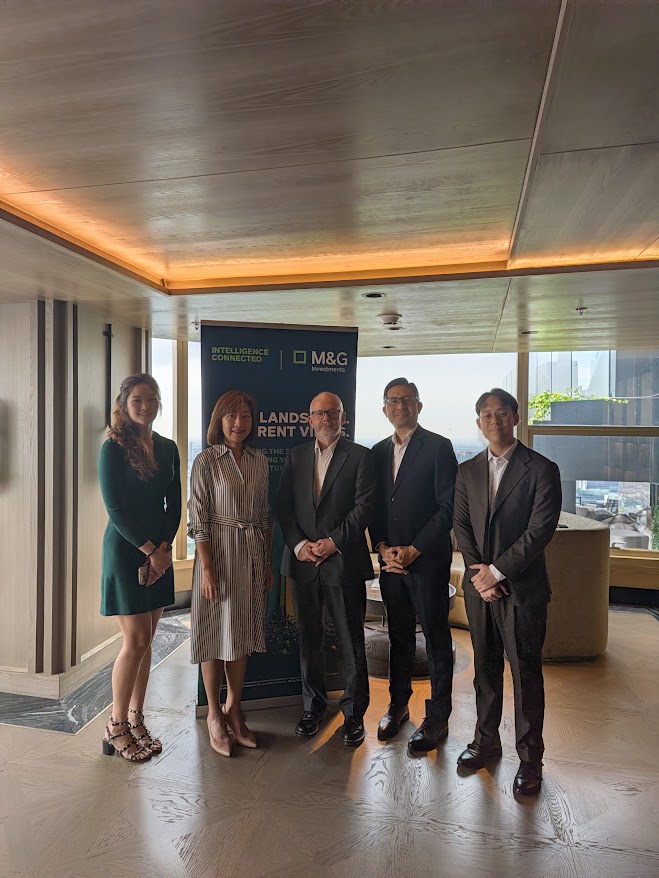
Alongside the World Bank meeting in Bangkok, M&G Investments - an ILC Partner - brought together a group of senior investors: asset managers, fixed income specialists, institutional allocators from across Asia to talk not about interest rates or bond markets but demography.
I was delighted to be invited to speak.
Near the end of the lunch, one of the investors said that while ageing was compelling, he couldn’t see what was investable.
It is the right question because arguably, there is no silver economy sitting alongside the real economy.
There is an economy and in most of Asia, it is increasingly dominated by people in their fifties, sixties and beyond.
As we age, we do not necessarily want different things to younger people. We want what everyone wants: good housing, reliable transport, technology that works, financial products that make sense, interesting places to travel and things to do.
We might want products and services to be inclusively designed and easy to use – younger adults do too – but we do not suddenly lose a desire for purpose or beauty or distraction.
So, the investment opportunity is not a parallel economy for older people. Rather, it is that the mainstream economy has a new dominant consumer group – one that has not been served well and continues to be undervalued.
It is obvious to point out, but the debate highlighted that the starting points for Asian economies differ enormously. Japan has already got old and South Korea is deep into rapid population ageing. China is on a fast trajectory.
Southeast Asia – Indonesia, the Philippines, Vietnam – is still at an earlier stage of the same transition, but moving quickly.
Policy is following. Singapore has built strong mandatory savings structures. Malaysia has the EPF (mandatory federal savings). These give their capital markets a degree of stability.
Thailand is ageing fast but with a weaker savings base. The Philippines has limited retirement infrastructure.
These policy mechanisms matter not just for healthy, happy long lives, but also for individuals and organisations interested in investing in ageing.
But while economies differ, the one pretty consistent trend we see across the world is that we are living longer – but not necessarily healthier.
ILC’s Healthy Ageing and Prevention Index – which ranks 153 countries across life span, health span, work span and other metrics – highlights the evidence.
Japan leads the world on both life expectancy and healthy life expectancy. Japanese people live, on average, to 84.8 years. Their healthy life expectancy – the point beyond which chronic illness and disability begin to constrain daily life – is 74.4 years. A gap of more than ten years.
South Korea tells almost the same story: 84.0 years of life, 73.3 years of healthy life. Singapore: 83.1 and 74.1. These are Asia’s best-performing countries on healthy ageing.
In December, ILC publishes the third wave of the Index, comparing outcomes across 153 countries. I won’t break our embargo but the findings will not make for comfortable reading on how we have adapted (failed to) our world to long lives.
We talked about climate change and pollution. Bangkok’s air quality last week was – as those who had travelled from Singapore were quick to point out – rather better than what they had left behind.
Nobody should take much comfort from that comparison. Air pollution is a meaningful drag on healthy ageing: on lung function, on cardiovascular health, on the years we remain productive. Our Index measures environmental performance alongside health outcomes for a reason, and some economies seem to have understood this.
The scale and speed with which Beijing removed petrol vehicles from its streets was not purely environmental. It was, at least in part, a public health and productivity calculation. Clean air and longer healthy lives are not separate agendas. Climate, environment and longevity are bound together – and any serious strategy for one has to reckon with the others.
Across parts of Asia, the working life remains artificially short – and our own data shows just how short. ILC’s Healthy Ageing and Prevention Index measures work span as one of its six core metrics: the expected number of (15-65) years a person spends economically active.
None of Japan, South Korea, China, Singapore or Thailand feature in the top five globally on this measure. South Korea’s mandatory retirement system means that formal exit from employment often comes in the mid-to-late fifties, after which many older workers fall into low-paid, insecure work to survive. South Korea has the highest rate of old-age income poverty in the OECD.
The result, across Asia as around the world, is that we work for around 30 years of a life that now stretches well beyond 80. The maths does not hold. It just about worked in the high-growth decades when large young populations supported relatively small numbers of older people. That era is over.
Mixed-age workforces outperform age-segregated ones in productivity, in reliability, in resilience. Policy and practice have not caught up.
Which brings us back to the economy that isn’t called the silver economy.
ILC’s earlier research – soon to be updated – found that even back in 2015, spending by older households across the G20 amounted to almost USD 10 trillion, more than the combined GDP of Japan, Australia, Canada and Brazil. Workers aged 50 and over were already earning every third dollar in the G20 economy. The direction of travel since then has only accelerated.
China’s ambition for what it calls the silver economy, worth a projected 30 trillion yuan by 2035, is less about building a niche and more about reshaping the mainstream. It is a recognition that the whole economy needs to adapt.
Tourism, financial services, housing, technology, retail – the question for every sector is not “do we have an older people’s product?” It is “are we designed for the consumer group that now drives most of our demand?”
That is the opportunity for investment. Every sector. Every asset class – property, infrastructure, retail, tourism, healthcare, financial products – will need to be reshaped by a structural shift in who the dominant consumer, worker and saver is.
The investor who is treating longevity as a theme to allocate to is looking at it the wrong way around. The question is not where to find the longevity opportunity. It is where, in your existing portfolio, you have not yet asked what demographic change means for demand.
Asset managers, banks and insurers sit at the intersection of all three shifts that ageing drives: how we work, how we stay healthy, and how we spend and save. The financial services sector is not a bystander to long lives.
The question is not whether Asia’s demographics are changing. They are. The question is whether we are building the institutions, the products and the policy frameworks to turn that change into a dividend rather than a deficit.
David Sinclair
Chief Executive
David has worked in policy and research on ageing and demographic change for over 20 years. He is a recognised expert on longevity, with particular interests in older consumers, active ageing, financial services, adult vaccination and the role of technology in an ageing society. He has deep knowledge of UK and global ageing issues, spanning health and care, pensions, housing, transport and consumption. David regularly presents internationally on longevity and demographic change and has published widely on topics including transport, technology, health and consumer markets. David is an international advisor to the Sau Po Centre on Ageing at the University of Hong Kong and a member of the external advisory board for the University of Surrey Centre of Excellence on Ageing. He has worked with the pan-European AGE Platform for 15 years and is a former vice-chair of the government’s Consumer Expert Group for Digital Switchover. Prior to joining the ILC, David was head of policy at Help the Aged, leading a team of policy advisers, and has held senior policy and public affairs roles across the voluntary sector.
