
Spending review 2025 – how the Chancellor might signal progress
6 Jun, 2025
This will be one of the toughest Spending Reviews faced by a Chancellor since Gordon Brown kicked off the process in the late 1990s. But it’s also a chance for the Government to prove it’s serious about tackling the challenges – and seizing the opportunities – of an ageing population. In this short paper, Ben Franklin, ILC’s Deputy Chief Executive, explores what moves might show it means business.
Background
The 2025 Spending Review comes at a critical moment for this Labour Government, against the backdrop of disappointing local election results, the rise of the Reform party and deepening geopolitical crises. With many public services still at breaking point, heightened demand for defence expenditure and the government having ruled out significant tax rises, the departmental spending choices are incredibly tough.
An ageing population combined with stagnating health, compounds this outlook resulting in higher government expenditure on healthcare and welfare. It has been estimated that public spending will need to rise by 1.6% a year in real terms between now and 2030 just to stand still as demand continues to rise.
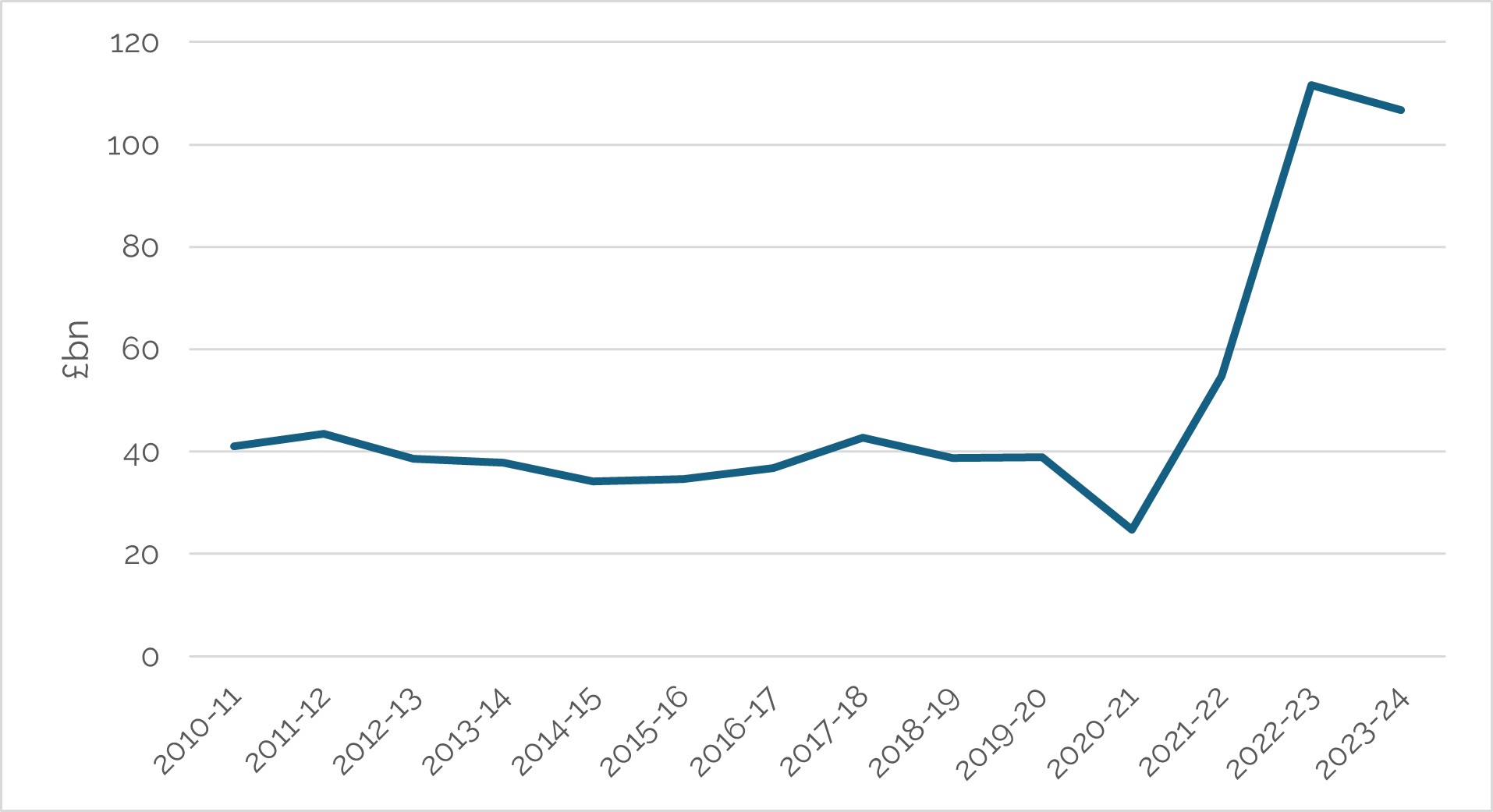
In 2024-2025 alone, the OBR expects debt interest spending to total £104.9bn, equivalent to 3.7% of GDP and 8.2% of total public spending. This is why public service productivity and reform will be such key themes over the course of this Parliament, and we would hope to see more concrete plans at the Spending Review on how the government intends to deliver on these related objectives to ensure an effective and sustainable public realm.
Chart 1: Primary receipts and spending by age
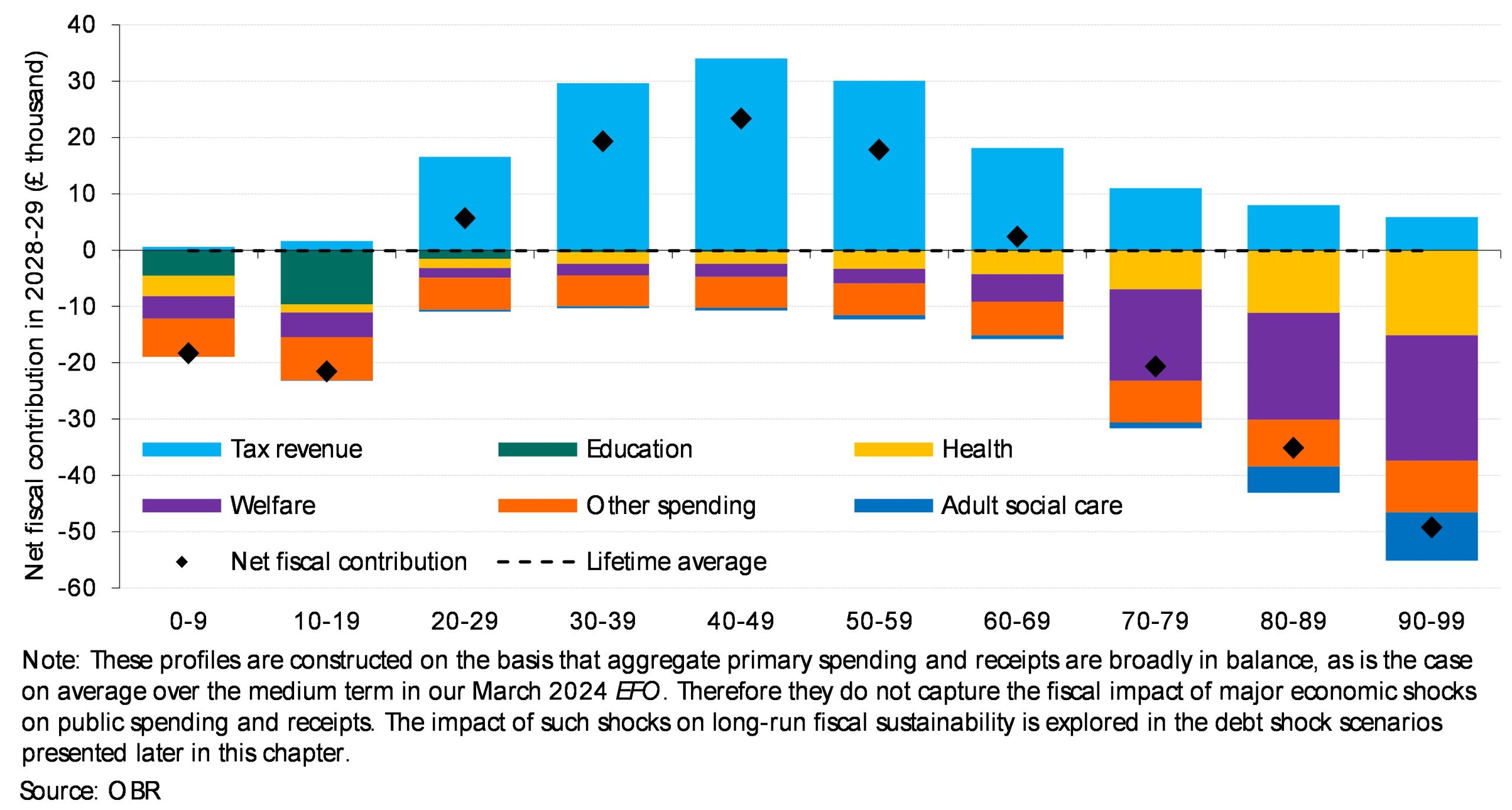
Chart 2: Central government net debt interest
Source: HMT and OBR
Health - prevention, public health and productivity.
The biggest driver of public spending is healthcare. The choices governments of all stripes make here go a long way in determining our future path of financial sustainability and the severity of financial constraints on other public services. Ageing is not the most important driver of future health spending, with the “income effect”, wage growth in other sectors, the prevalence of chronic conditions and the rate of technological change all critical determinants.
With tax rises ruled out, it’s important that headline growth in healthcare expenditure doesn’t dwarf and crowd out all other government expenditure. For this reason, we would welcome a modest rather than substantial real terms increase in healthcare spending – keeping it below 2% per annum. While the government may feel healthcare spending needs to rise faster than the 1.2% spending increase earmarked for public services as a whole, it is vital that there is resource for welfare, education, local government and social care funding – all of which are also health creating. A more generous settlement for healthcare than this would imply impossibly hard spending cuts elsewhere.
In our view, the headline rate of spending growth is less important than the extent to which the Spending Review paves the way towards preventative and greater community-based health provision for the people and places who need it most. This is the perennial problem in healthcare, given political pressure to bring down waiting lists in the acute sector, but earlier diagnosis and treatment in the community and linking with other forms of community support including through social prescribing can improve health outcomes. In this regard, it will also be important for the NHS to move towards ringfencing a proportion of its budget for preventative healthcare as ILC has previously called for. Germany for instance, allocates 7.8% of its healthcare budget for prevention, but the UK has no target. While we may have to wait until the 10-year plan for greater detail, the Spending Review could help signal this broad direction of travel.
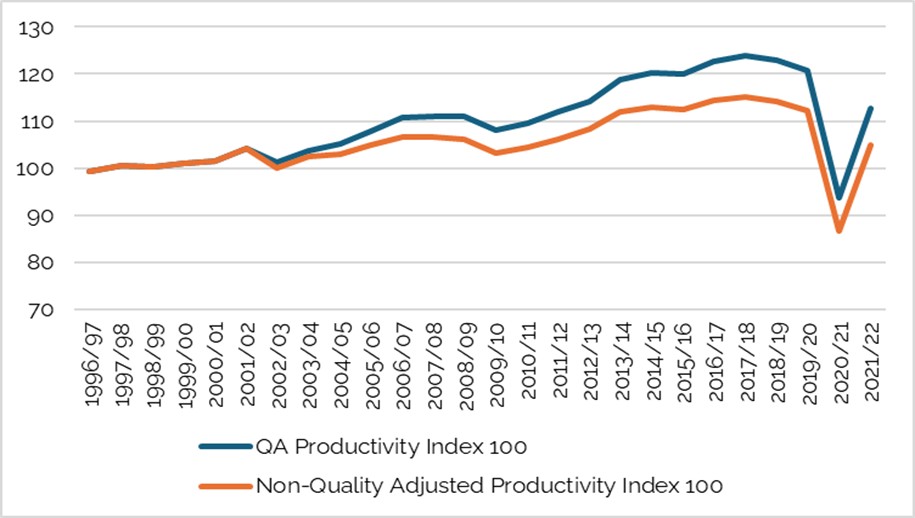
Improving prevention and addressing health inequalities will also be important in improving NHS productivity, which remains below its pre-pandemic level. There are many likely causes of the NHS’ productivity problem, but one key factor is that patients are sicker and coming to hospital with more complex needs, particularly in areas of higher deprivation.
Chart 3. Public service healthcare quality and non-quality adjusted productivity
Source: ILC analysis of ONS data
We also know that spending on the local authority public health grant is more efficient than NHS spending – generating better health at lower cost. Might we finally see this relative efficiency acknowledged through a more generous settlement at the Spending Review?
Local government and social care funding
The Government’s plans for public service reform and innovation are largely dependent on the ability and capacity of local government and strategic authorities to find new ways of delivering public services across their geographic footprints. The Spending Review will need to be supportive of such innovation and not leave councils on their knees struggling to simply deliver statutory services like bin collection and social care. National government can play an enabling role in this context – through, for instance, further fiscal devolution – in order to support local areas design their own place-based interventions. We now know for instance, that Sure Start was highly cost effective leading to substantial long term health gains – particularly when focused on the most deprived neighbourhoods.
The state of local government finances will have profound implications for the delivery of social care whose business models will be yet further stretched by recent changes to migration policy. While there is a valid argument that social care needs to reduce its reliance on cheaper overseas workers, there are serious short-term risks that the changes will result in less supply of care and more pressures on expensive acute healthcare.
Currently, over half of requests for local government funded social care in England result in no support, advice or signposting. While the future of social care has been deferred to the Casey Review, perhaps the Spending Review can provide some indication that social care – a sector employing 1.5 million people – remains part of the Treasury’s in-tray for this Parliament.
One area where it would be good to see progress is sectoral bargaining across the care sector – which was proposed in the 2024 Employment Bill. But increased wages in the sector would likely push up the cost of delivering care which would be borne by local authorities and private individuals. Ideally then, the Government would show it is simultaneously serious about meeting rising demand for care on the one hand, with proper pay and recruitment for the workforce on the other. Without additional investment, it is hard to see how government can square this circle.
Welfare and active labour market policy
The Government has shifted from carrot to stick when it comes to public policy on health and work. Its Get Britain Working White paper in November implied that government viewed poor working-age health as a very real cause of people leaving the workforce early and that it was only by addressing poor health that we could improve labour supply. But by March 2025 the stance appeared to have hardened – the Pathways to Work consultation argued the rise in health related benefits was less about addressing genuine health needs and more a reflection of the greater generosity of health-related benefits. Reduce the generosity of these benefits, the theory goes, and more people will shift into work.
ILC has a unique perspective on this issue, having led work on the numbers of people forced out of work by a combination of ill health, caring responsibilities and forced redundancy before between the ages of 50 and State Pension Age. This number has risen from 1 to 1.65 million over the last decade and is involuntary – i.e. these people would prefer to be in work than out of it. And we know that the longer someone is out of work, the harder it is for them to get back. Our hope, therefore, is that the Spending Review might signal a shift to more active labour market policy. This might include for instance, additional powers and resource for local job centres to reach out and support older workers back into employment, or to carve out a greater role for occupational, mental and public health support in preventing labour market exits from happening in the first place. A bit more carrot is needed to ensure fewer people are left behind as health related benefits are redesigned and conditionality tightens.
Ensuring good quality work is the other side of the coin. Fair pay and good working conditions were amongst the boldest of Labour’s manifesto commitments, so we might hope to see further signalling on flexible working, collective bargaining and enforcement against employers flouting the rules.
Intergenerational fairness
The Spending Review will be one to watch for intergenerational fairness on welfare policy and poverty – with ongoing rumours of announcements on the Winter Fuel Allowance and the two-child benefit cap.
After facing a large political backlash for abolishing the Winter Fuel Allowance in autumn 2024, the Labour government appears to be about to U turn - but should they? With 96% of wealth sitting with people over 40, there is a strong case for better targeted welfare policies at older ages rather than universal benefits which many now don’t need.
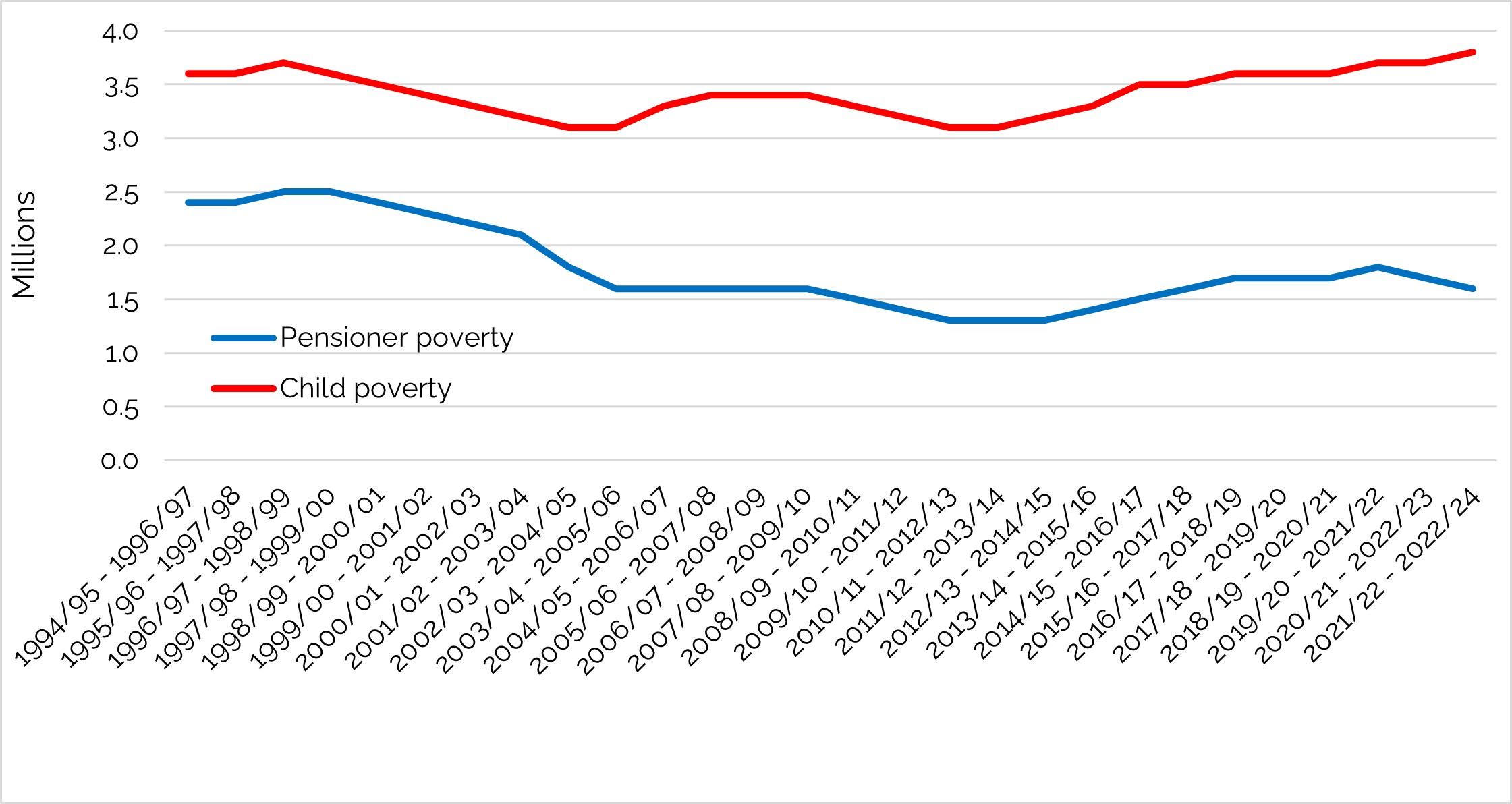
Over the last two decades, welfare policy for those over pensionable age has been more generously uprated than for those of working age, and child poverty has continued to rise while pensioner poverty has, for the most part, fallen. The tougher welfare regime for younger adults has not only driven rising child poverty but has also contributed to the UK’s rapidly falling fertility – with fertility falling furthest in the most deprived parts of the country since 2010. The two child benefit cap has been particularly disastrous for children’s life chances and abolishing it would bring an estimated 490,000 children out of poverty.
While we might have to wait for the child poverty strategy for further detail, it would be good to see some welcome adjustment to the size of the disparity between working age and pensioner benefits, helping to deliver a fall in the numbers of people in poverty over the course of the parliament.
Chart 4: Pensioner and child poverty (relative low income after housing costs)
Source: ILC analysis of DWP Households Below Average Income, 1994/5 – 2023/4.
Industrial strategy – capital investment
One of the highlights of the Autumn Budget 2024 was the front loading of capital investment during the parliament – planned to rise by 11.6% this year. To enable this, Reeves’ made a welcome change to the fiscal rules ensuring more wriggle room to borrow to invest while keeping a lid on day to day spending. The UK has long been devoid of public and private investment relative to our European peers which has been a severe constraint on growth. If this Labour government can start to shift us towards a higher investment, higher productivity economy, that would be a substantial legacy.
Chart 5: Total investment as % of GDP: G7 countries
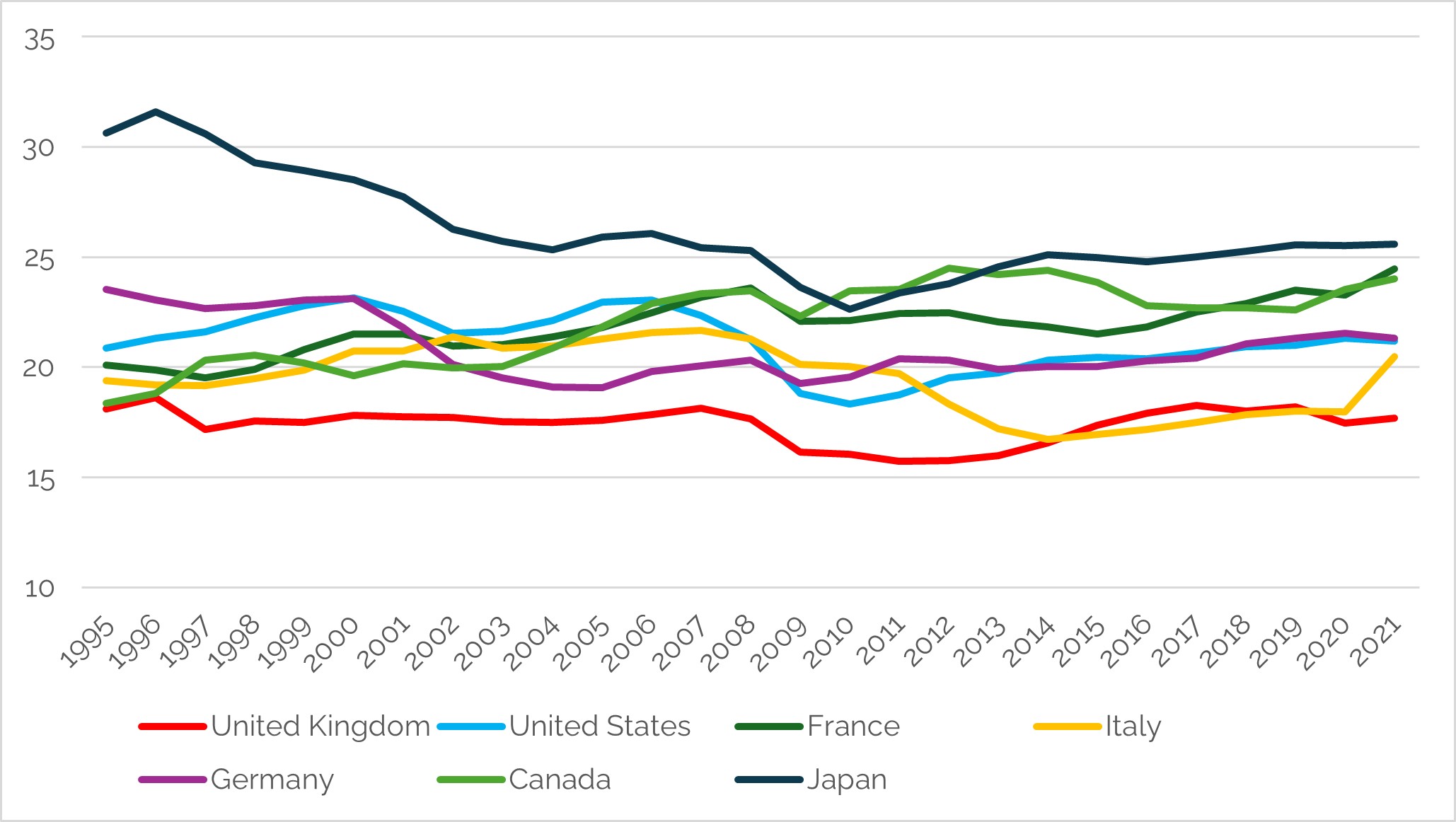
Source: ILC analysis of IFS data
Chart 6: Government investment as % of GDP: G7 countries
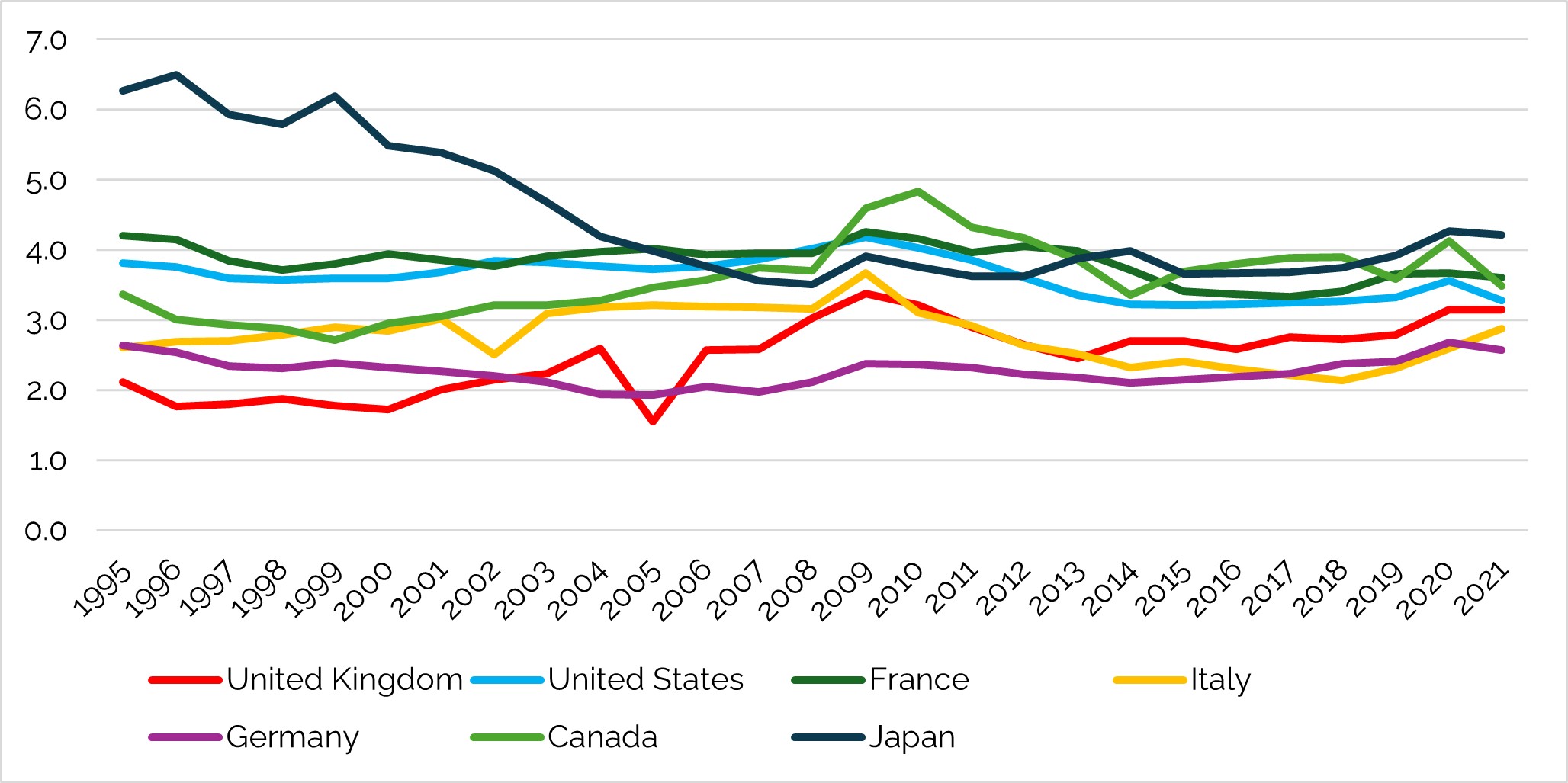
Source: ILC analysis of IFS data
The question then for the Spending Review, is what projects and where this investment takes place. The longevity economy – i.e. the products, services and infrastructure enabling healthier longer lives – should play an important role. In this context, modern industrial strategy therefore means supporting high value add industries such as drugs and healthcare technology companies locate and grow in the UK, it means building and co-locating new public transport, high street and housing developments to enable longer working lives and more active older citizens. And it means supporting investment in the foundational economy such as social care and retail where millions of us work.
Our hope is that the Spending Review outlines how the new investment could be directed at some, or all, of these areas, helping to enable meaningful economic activity across the UK. With this in mind, it’s positive that Government has already announced £15bn of new investment in local transport systems – focusing on local buses and trams – particularly in regions with which have had historically low levels of investment and infrastructure.
Overall, then, this is going to be a tough Spending Review for all of us, but it also might offer glimmers of progress on community driven health prevention, public service and welfare reform to support more people in work, and signal that the Government is serious about investing in the necessary infrastructure to support economic opportunity for all people and places.
Ben Franklin
Deputy Chief Executive, ILC
Ben oversees major policy projects and programmes of work for ILC. He is an expert on the intersection of economic and social policy and previously ran the think tank Centre for Progressive Policy, doing groundbreaking work on spatial inequality and inclusive growth.
He has advised national and local leaders on how to address the drivers of economic inequality, and his work has been featured across all national news outlets.
Ben has specific expertise in the economic impacts of demographic change, having led research projects on older workers, retirement income adequacy and the macroeconomic impacts of ageing in a previous stint at ILC.
As well as working in think tanks, Ben has worked in the Treasury, Financial Conduct Authority and in the insurance industry.