- ABOUT
- GUANGZHOU DIARY - DAY ONE
- GUANGZHOU DIARY - DAY TWO
- GUANGZHOU DIARY - DAY THREE
- GUANGZHOU DIARY - DAY FOUR
- GUANGZHOU DIARY - DAY FIVE
- MEDIA COVERAGE
- GET IN TOUCH
About
The ILC was part of a small London delegation led by the Greater London Authority that travelled to Guangzhou for a structured five-day exchange on the silver economy, cultural industries, urban renewal and healthy ageing. The visit formed part of the World Cities Culture Forum Leadership Exchange Programme (LEP), an initiative supported by Bloomberg Philanthropies that enables cities to explore shared challenges through peer learning.
The exchange had its origins two years earlier at a World Cities Culture Forum event in Dubai. During that meeting, Julieta Cuneo, Head of Policy and Research for the Greater London Authority's 24 Hour London programme, and Sunny Yao from the Guangzhou Academy of Social Sciences discovered a shared interest in an area where Guangzhou was already leading the way – the intersection of the silver economy with evening and night-time culture. By the end of the event they had decided to submit a joint bid for the Leadership Exchange Programme. At the time it felt like an ambitious idea that might never quite happen. Two years later, it had become a reality.
Held from 15-19 June 2026, the Guangzhou-London Leadership Exchange was jointly organised by the Guangzhou Academy of Social Sciences, the World Cities Culture Forum and partners in Guangzhou. Guangzhou is the first, and currently the only, Chinese city to participate in the programme. Over five days, delegates from London met government leaders, researchers, businesses, cultural organisations and community groups to explore a central question: how can cities develop thriving silver economies? The programme examined topics including the role of culture in healthy ageing, community-based services for older people, smart ageing and urban innovation.
The World Cities Culture Forum is the leading global network of more than 40 creative cities, placing culture at the heart of city planning and investment. Founded by the Deputy Mayor for Culture, Creative Industries and 24 Hour London, Justine Simons, and supported by the Mayor of London, the network brings cities together to share ideas, exchange knowledge and collaborate through programmes such as the Leadership Exchange Programme.
In order to capture the extent of the incredible programme we've included some of the daily reflections posted on social media at the end of each of the days and combined these with a report of the visit compiled by Guangzhou Academy of Social Sciences to produce a five day diary via the tabs below.
This short film captures some of the places we visited and the ideas we brought back to London. The video was produced by the Guangzhou Academy of Social Sciences as part of the World Cities Culture Forum Leadership Exchange Programme. Our thanks go to all the organisations, speakers and participants who made the exchange possible.
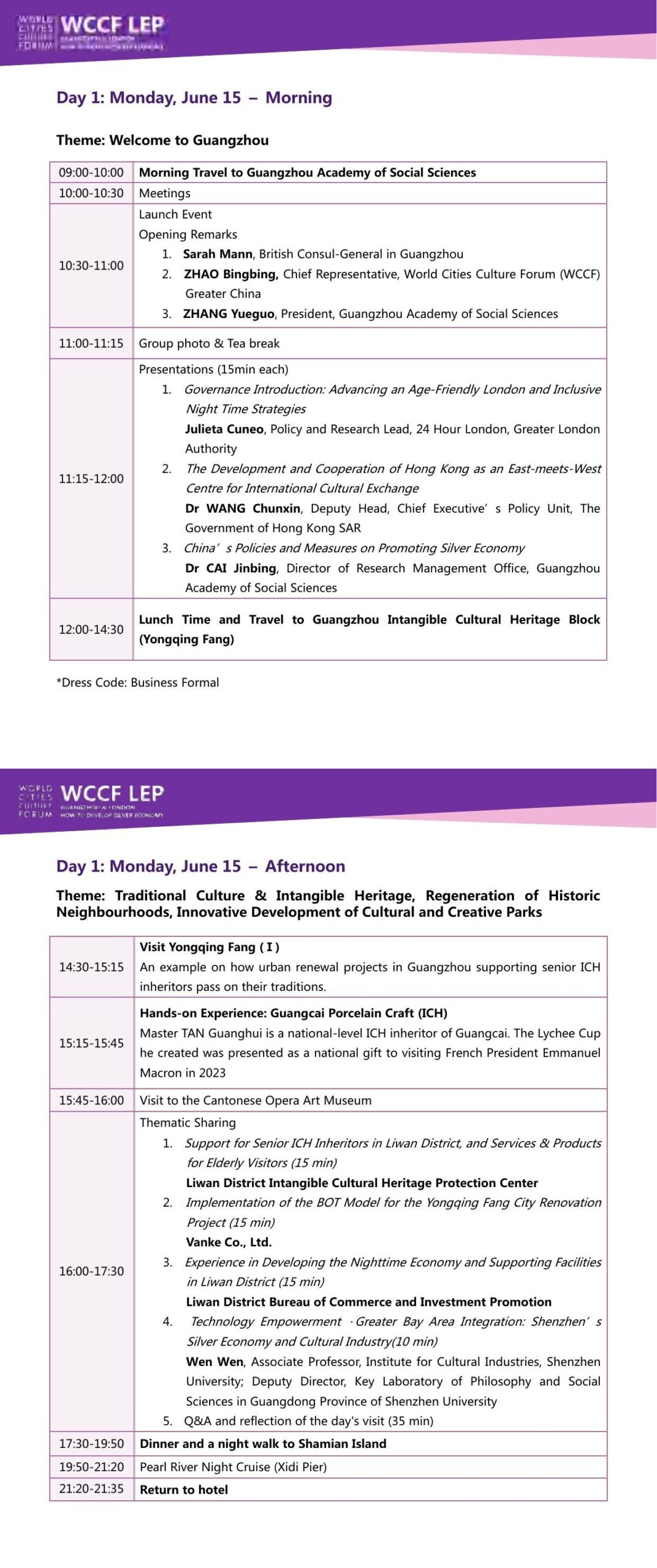
Day 1 – Monday 15 June: Welcome to Guangzhou
We've had a warm welcome from our hosts at the Guangzhou Academy of Social Sciences, who on our arrival on Sunday evening took us for a spectacular dinner and then to see Cantonese Opera. It was a brilliant start.
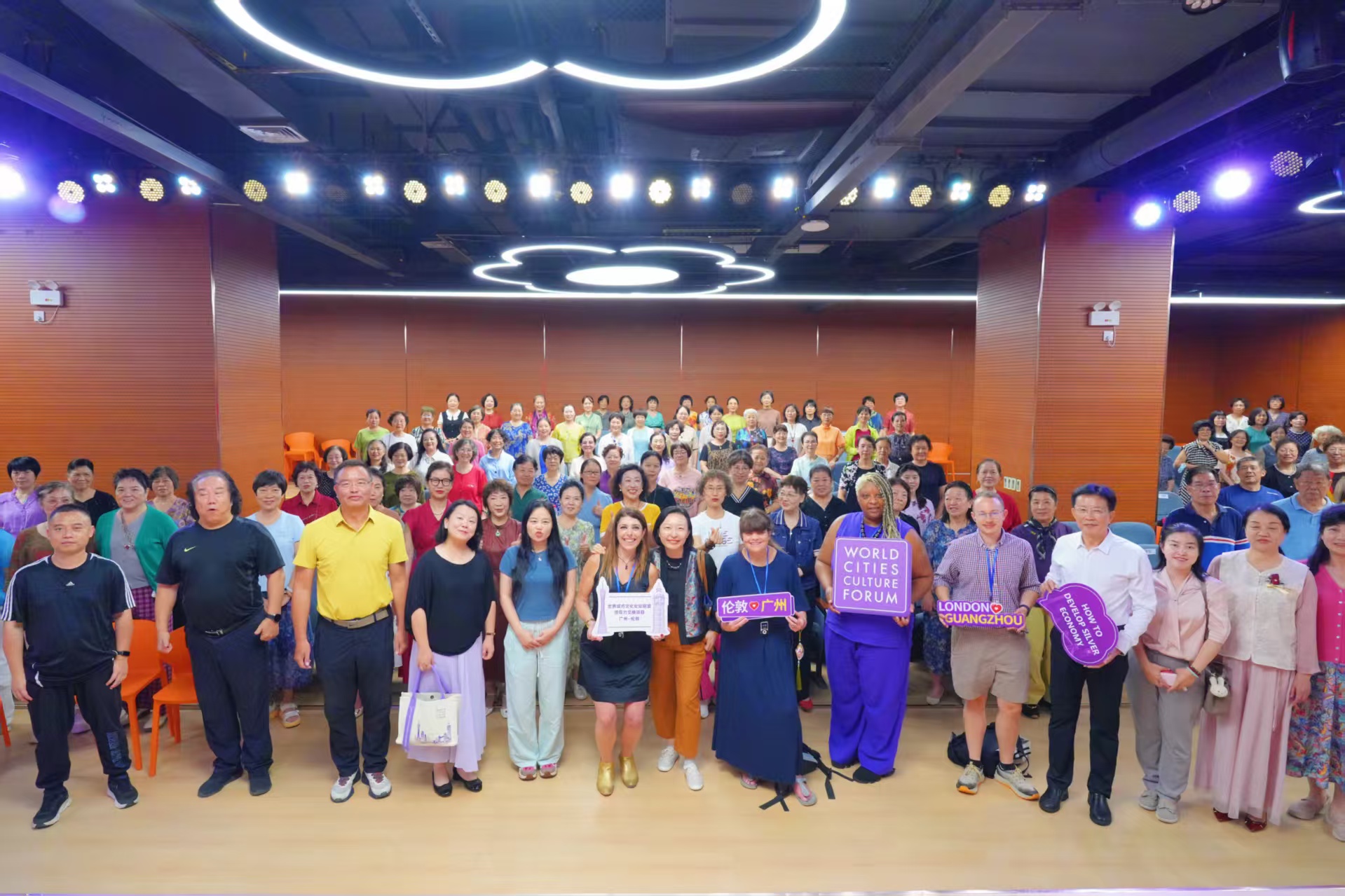
On the morning of June 15th, the project launch ceremony was held at the Guangzhou Academy of Social Sciences. Zhang Yueguo, President of the Guangzhou Academy of Social Sciences, pointed out in his speech that Guangzhou, with its 2240-year history, carries both a profound cultural heritage and the vibrant vitality of modern development, serving as an important window for observing China's development and progress. He emphasized that "civilizations become more vibrant through exchange, and cities progress through mutual learning," hoping that both sides would use this project as a link to learn from each other and empower one another.
British Consul General in Guangzhou, Sarah Mann (Meng Shiran), stated that healthy aging is a common challenge facing both the UK and China, presenting both governance challenges and opportunities for industrial innovation and improved livelihoods. Zhao Bingbing, Chief Representative of WCCF Greater China, introduced that the Leadership Exchange Program is hailed as a "relay race" of global city experience exchange, having previously helped many cities successfully translate and implement development experiences. This collaboration between Guangzhou and London marks the first time the program has conducted offline visits among its member cities in China, a milestone achievement.
The opening session also set the scene for the week ahead. Julieta Cuneo, Head of Policy and Research for the Greater London Authority's 24 Hour London programme, shared London's experience of building an age-friendly city and developing an inclusive night-time economy. Dr Wang Chunxin, Deputy Head of the Chief Executive's Policy Unit of the Hong Kong SAR Government, outlined Hong Kong's approach to strengthening cultural exchange and developing its silver economy. Dr Cai Jinbing, Director of the Research Department at the Guangzhou Academy of Social Sciences, provided an overview of China's national silver economy strategy, highlighting Guangzhou as one of the country's leading cities in this field.
Zhao Bingbing, Chief Representative of the World Cities Culture Forum in Greater China, described the Leadership Exchange Programme as a way for cities to learn directly from one another and put successful ideas into practice. She noted that the Guangzhou-London exchange was the first time the programme had brought member cities together for an in-person exchange in China which was "a milestone achievement".
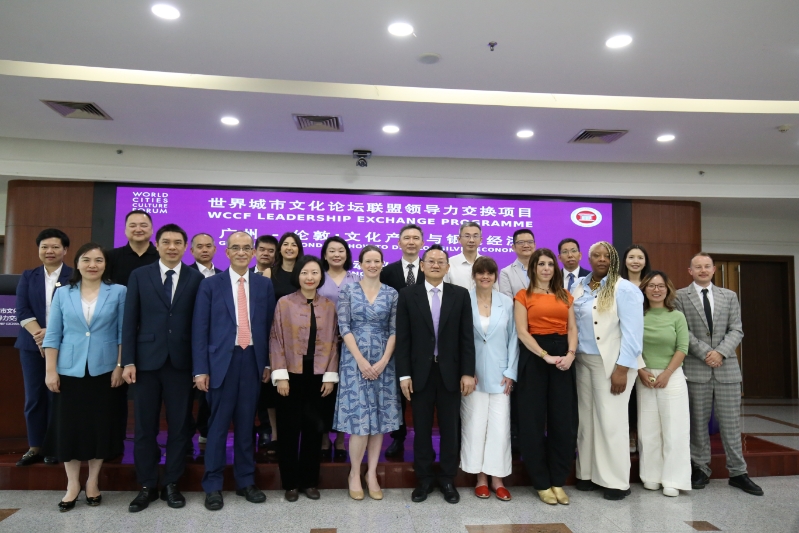
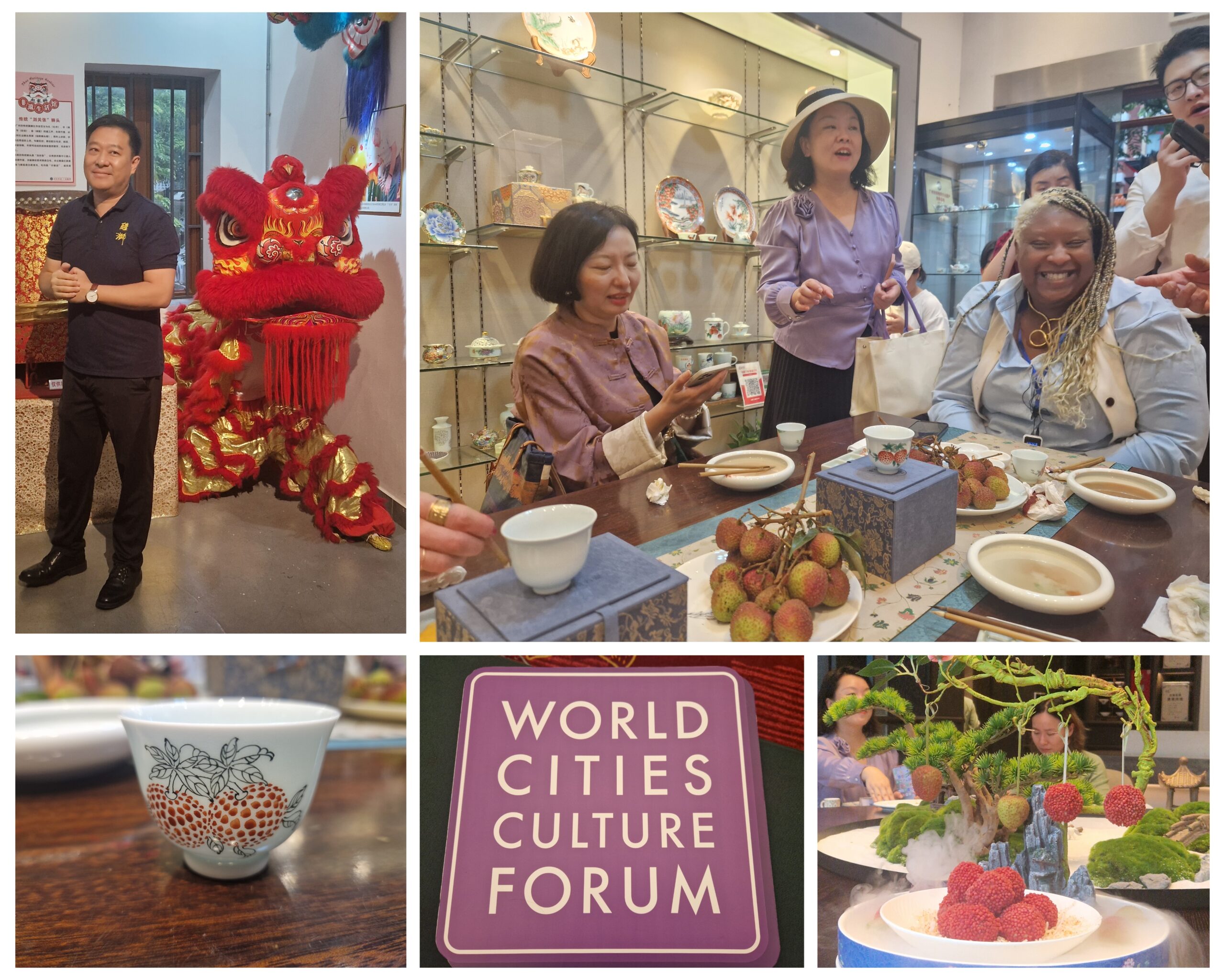
In less than 48 hours Guangzhou had already given us plenty to think about: a free evening of Cantonese opera, the city's Intangible Cultural Heritage Protection Centre, traditional crafts being passed from one generation to the next and Liwan – a historic neighbourhood where heritage-led regeneration has helped create a thriving evening economy. We even had the chance to make Guangcai porcelain under the guidance of Master Tan Guanghui, a nationally recognised craftsperson whose Lychee Cup was presented as a state gift to French President Emmanuel Macron in 2023. Culture here feels less like an amenity and more like a living part of everyday life.
Our visit to Yongqing Fang showed how this approach has been put into practice. Rather than replacing the past, the district has embraced a model of "restoring the old as it was" while adapting historic buildings for new uses. More than 80 heritage buildings have been preserved and are now home to studios for traditional crafts including Guangcai porcelain and Guang embroidery. The Liwan District Intangible Cultural Heritage Protection Centre explained how preserving these skills is also helping to grow the silver economy by creating opportunities for older craftspeople to teach, mentor and continue practising their craft, while making traditional culture accessible to new generations.
In London, our over-60 population is the fastest-growing demographic, and the London Nightlife Taskforce has heard a clear call for more age-inclusive evening and night-time opportunities that support wellbeing, belonging and connection.
We were also given Rokid AI glasses for the trip. Suddenly we could listen and read – and automatically translate in real time. Although we also benefited from the fantastic simultaneous translation from an excellent and skillful interpretor.
An incredible day was finished off with a wonderful evening Pearl River cruise from Xidi Pier, after a fabulous dinner.
The time-lapse video was taken by Jacob Bayliss (GLA). Diary entries adapted from a report of the visit compiled by Guangzhou Academy of Social Sciences as well as LinkedIn posts by Julieta Cuneo (GLA) and Emily Evans (ILC-UK), June 2026.
Day 2 – Tuesday 16 June: Silver Creators
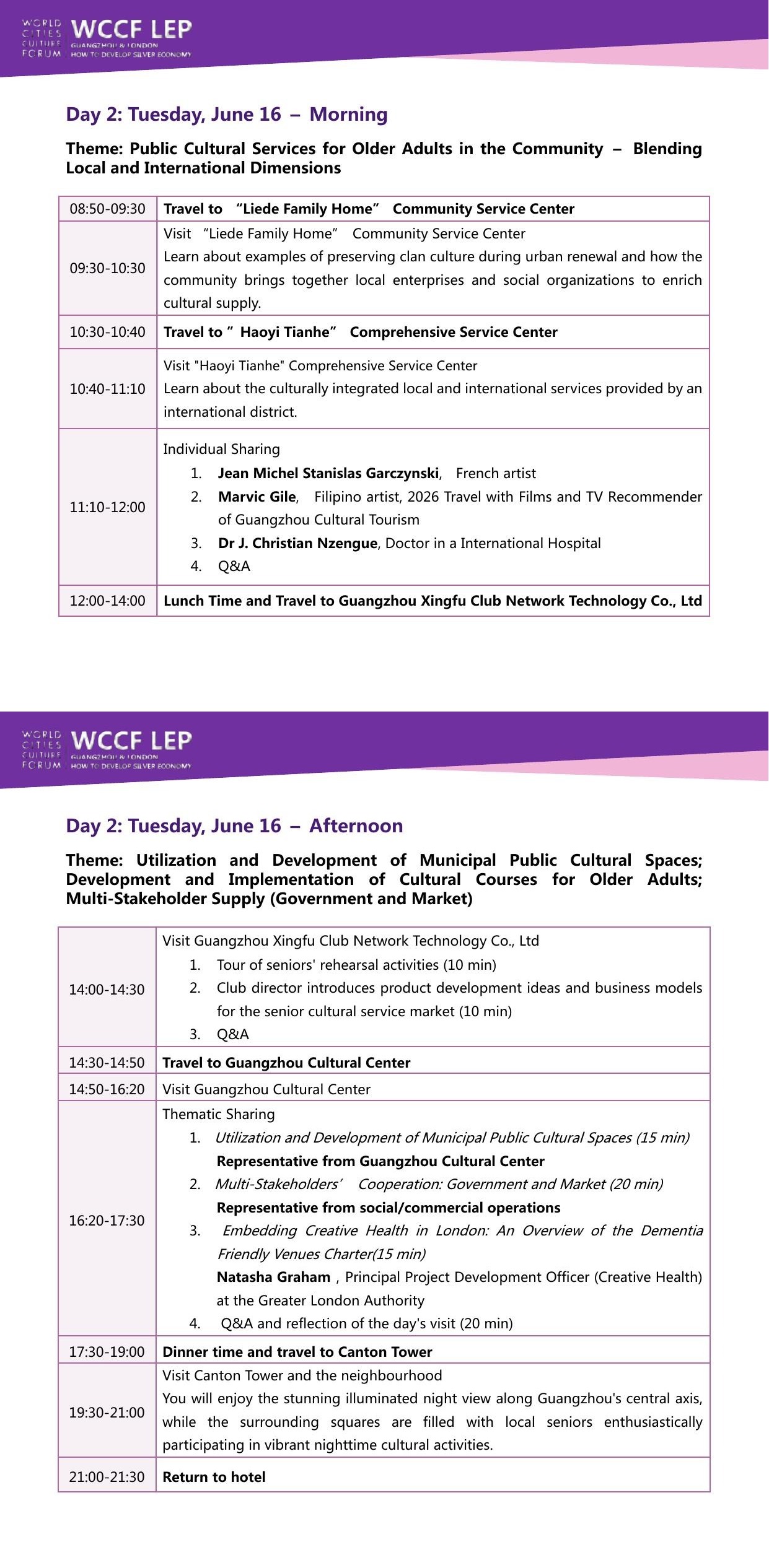
Today was all about proactive ageing – seeing older people not as audiences, but as artists, volunteers, teachers and creators.
On another activity-packed day curated by the Guangzhou Academy of Social Sciences, we visited community and cultural centres where older residents weren't simply taking part in activities but designing and leading them. At the Liede Renjia Community Service Centre we saw how health services, social support, cultural activities and volunteering are brought together under one roof. The centre also introduced us to older residents and expatriates who described how culture and community participation had helped them build connections and find purpose.
Later, at the Guangzhou Cultural Centre, we learnt about its "Most Beautiful Sunset Glow" programme, which offers free arts courses, traditional craft workshops and volunteering opportunities for older people. Discussions focused on making cultural venues more age-friendly and using culture to support healthy ageing and the silver economy.
The day ended at Xingfu Club, an "open university for retirees", where older people were leading dance classes, organising activities, volunteering, performing in a 1,000-member choir and proposing new courses based on their own interests and expertise. It was a powerful reminder that later life can be a period of contribution as much as consumption.
Back in 2019, Lewisham Council hosted Age Against the Machine – a three-week Festival of Creative Ageing celebrating older people as artists across almost 300 events as part of the Mayor of London's Borough of Culture programme. It was also featured through the World Cities Culture Forum. In Guangzhou, we saw many of the same ideas taken even further. Creativity, culture and participation are not treated as optional extras in later life. They are recognised as fundamental to health, wellbeing, connection and purpose.
One conversation stayed with us. We asked our hosts at Xingfu Club how they identify older people's needs. Their answer was simple: "The needs are not to be found. What older people need is someone to talk to, someone who listens to them." They described later life not as a period of withdrawal but as a second life – one defined by contribution, creativity and connection. As they put it: "When the elders are happy, the city is happy."
Diary entries adapted from a report of the visit compiled by Guangzhou Academy of Social Sciences as well as LinkedIn posts by Julieta Cuneo (Greater London Authority) and Emily Evans (ILC-UK), June 2026.
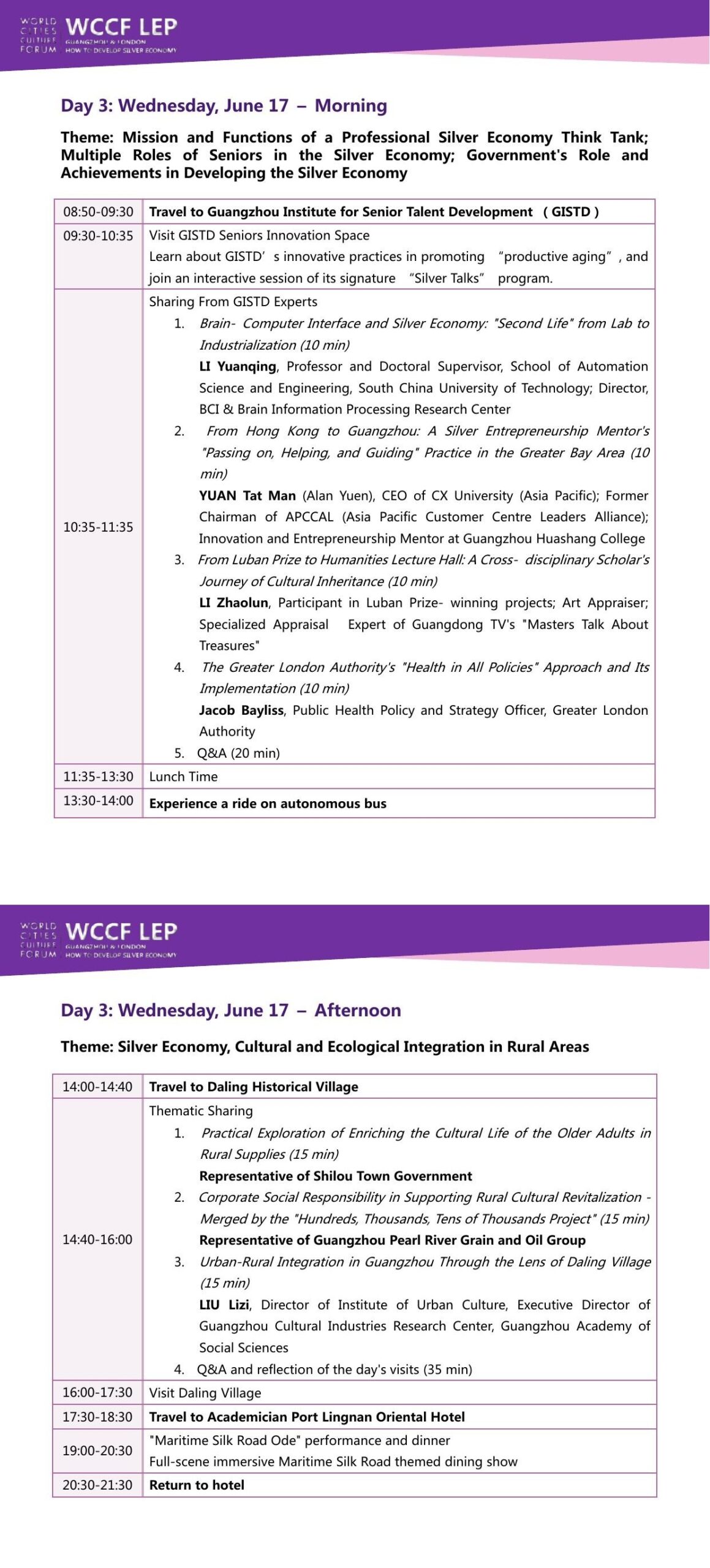
Day 3 – Wednesday 17 June: Silver Producers (of Value)
Today's theme shifted from proactive to productive ageing – the untapped social, economic and cultural value of the silver economy.
We began at the Guangzhou Yuewei Silver-Hair Vitality Research Institute and Silver-Hair Innovation Space, exploring the theme "Active Ageing, Shared Value". The centre combines technology, health and culture to support active ageing, and we experienced AI-assisted meditation, Tai Chi and cloisonné enamel workshops alongside demonstrations of its age-friendly services. Discussions with Silver-Hair Think Tank expert Li Zhaolun, Dr Yuan Dawen from Hong Kong and researchers from the South China University of Technology explored how cities can help older people remain active contributors to society. The model complements the work of the Guangzhou Institute for Senior Talent Development (GISTD), where retired professionals are supported to continue contributing as mentors, consultants, teachers and innovators, connecting their expertise with younger people, businesses and community projects.
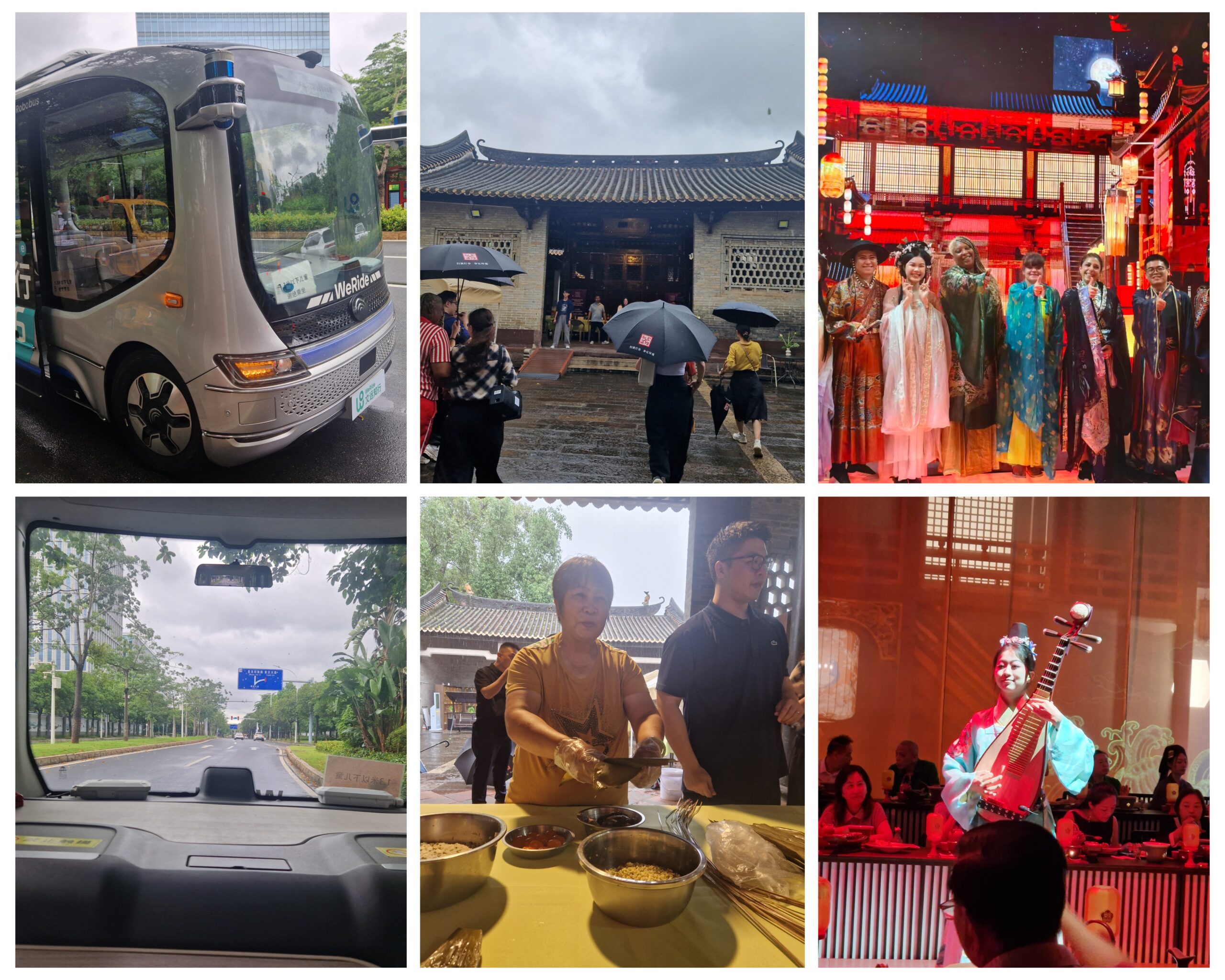
Later, in Daling Village, discussions focused on how culture can support both rural regeneration and the growth of the silver economy. Natasha Graham, Chief Project Development Officer in the Greater London Authority's Creative Economy team, reflected that many places struggle to balance preservation with development, but Daling had achieved a particularly rare balance by protecting its historic character while planning for the future. She also highlighted its potential to develop a vibrant night-time cultural economy. We explored the ancient village, learnt to make zongzi – traditional sticky rice dumplings wrapped in bamboo leaves that are closely associated with the Dragon Boat Festival – and travelled between visits on an autonomous bus.
The day also prompted discussion about London's own cultural economy. Most of the DJs we first danced to in the early 2000s are now in their 60s. So too are many of the lighting designers, sound engineers, promoters, technicians and venue operators who built those scenes. How do we better connect that experience and cultural memory with the next generation? Creating more opportunities for older and younger people who share the same passions could strengthen skills, creativity and belonging.
The day ended with an immersive Maritime Silk Road-themed dinner at the Academician Port Lingnan Oriental Hotel.
Diary entries adapted from a report of the visit compiled by Guangzhou Academy of Social Sciences as well as LinkedIn posts by Julieta Cuneo (Greater London Authority) and Emily Evans (ILC-UK), June 2026.
Day 4 – Thursday 18 June: Silver Infrastructure
Today was the most technology-focused day of the exchange.
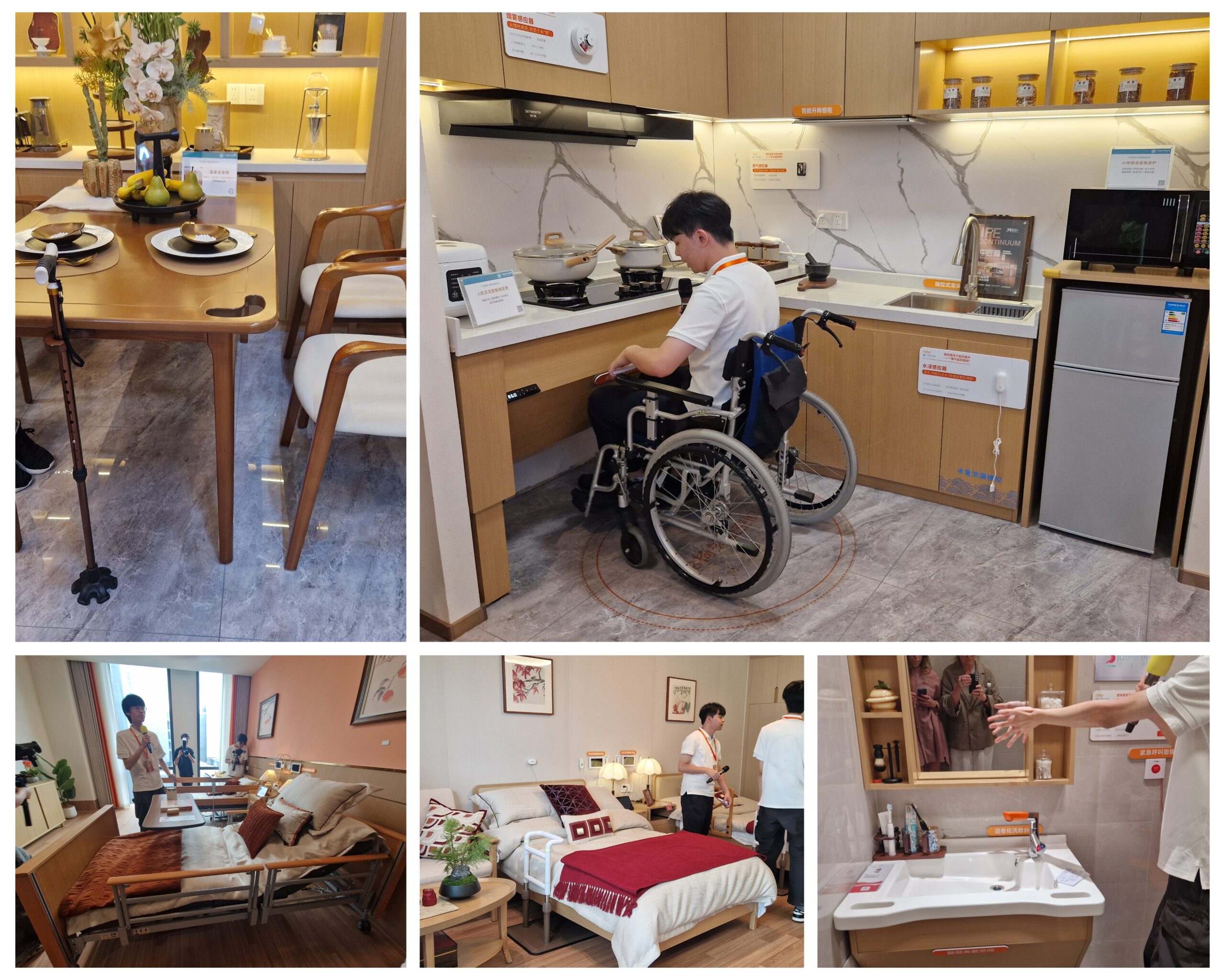
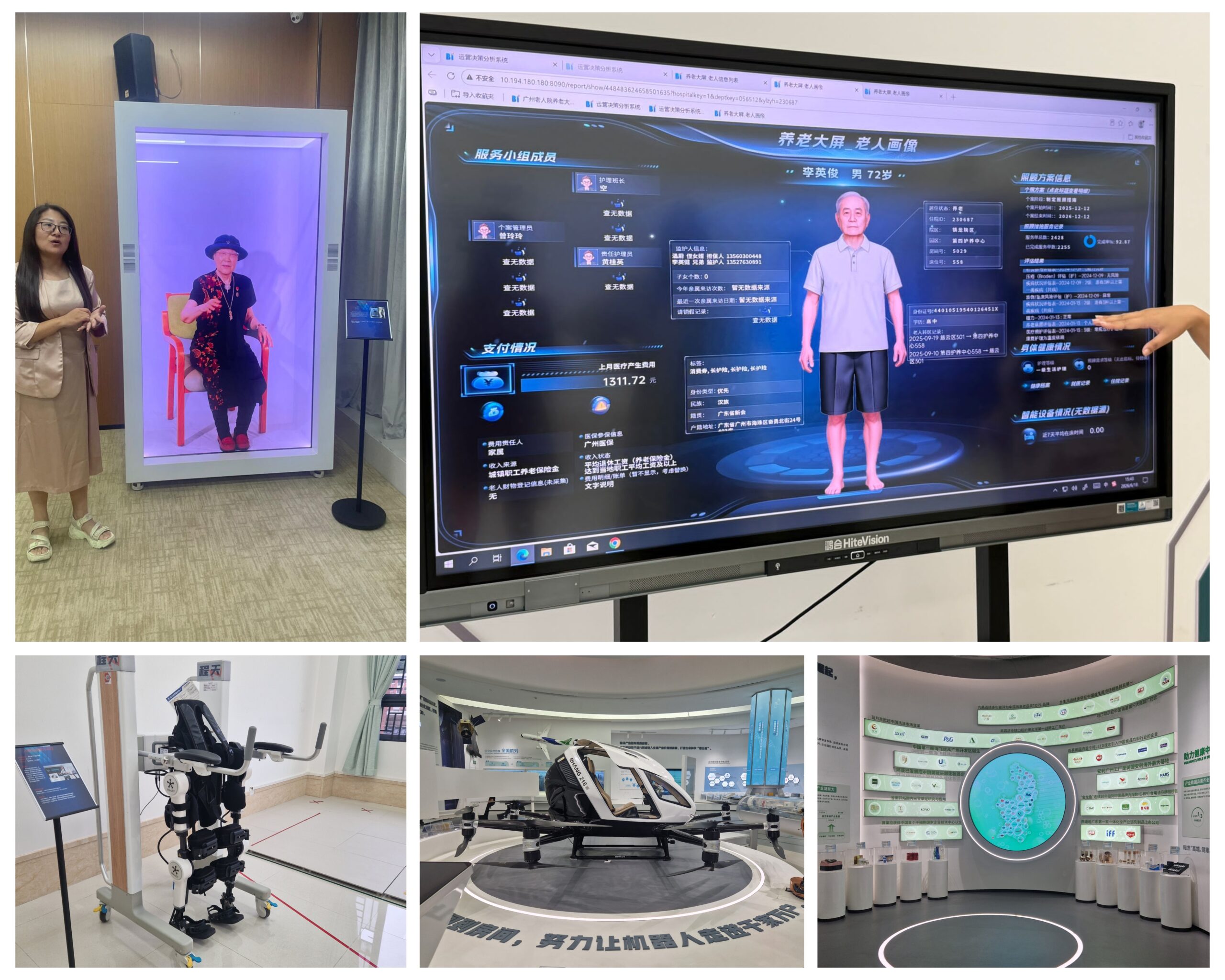
We visited the Silver Economy Smart Science Popularisation Museum, where homes, communities and care settings demonstrate how technology can help people live independently for longer. Smart furniture, robotics and healthcare equipment are designed not simply to support care, but to extend healthy, independent living.
The morning also provided an opportunity to compare approaches in Guangzhou and London. Jacob Bayliss from the Greater London Authority outlined London's work to create a more age-friendly city through its wider health and wellbeing agenda, highlighting the importance of designing places that enable people to remain active, connected and independent throughout later life. The discussion illustrated that while the technologies may differ, both cities are working towards many of the same goals.
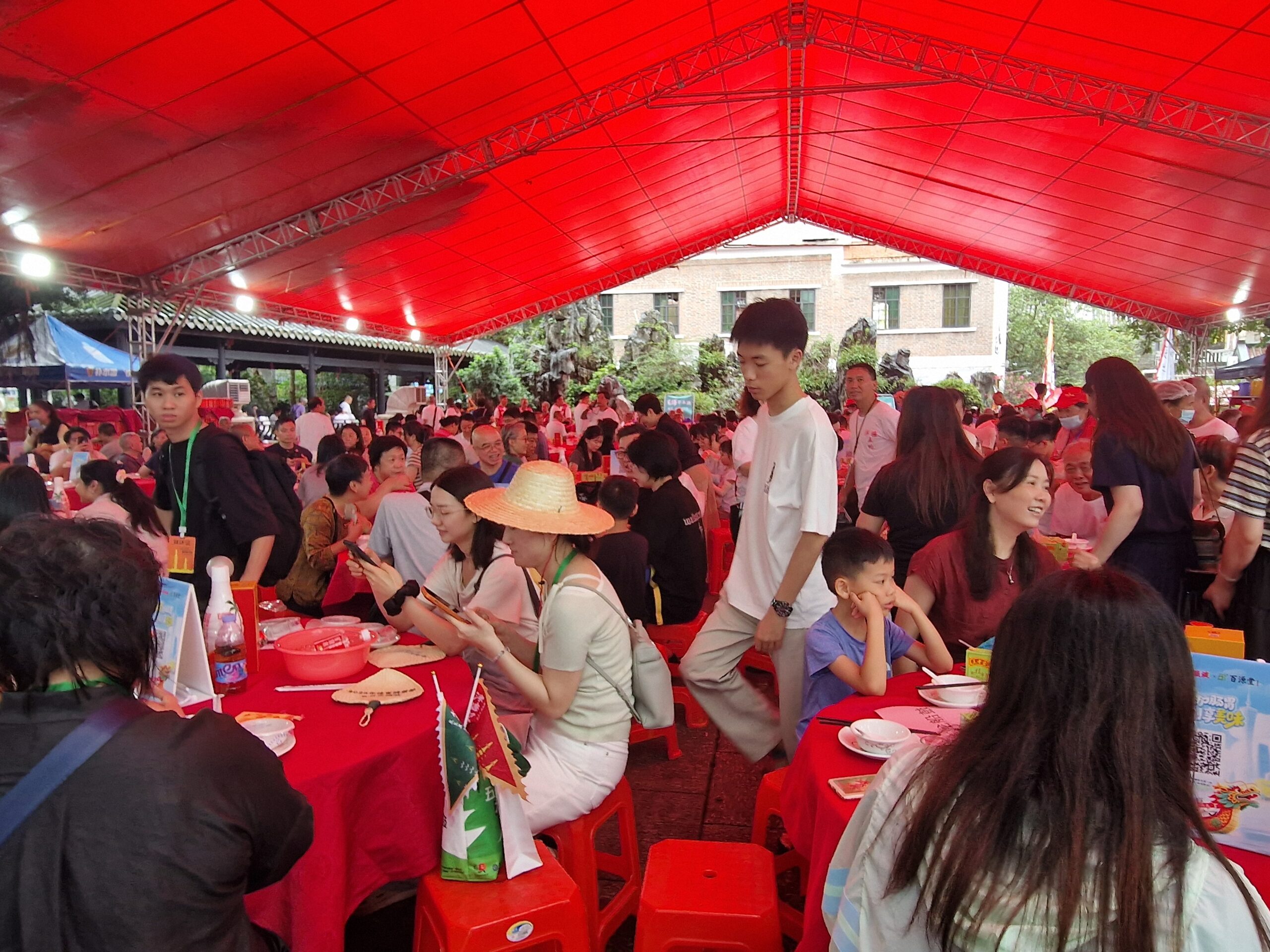
We then visited the Xuellei Fragrance Museum, recognised as the world's largest perfume museum in 2025, before we travelled to Guangzhou No. 2 Nursing Home and the Guangzhou Silver Economy Public Laboratory. There, researchers demonstrated how digital twins, created from residents' health data, could help identify potential health risks earlier. The laboratory brings together concept development, product testing, standards, certification and commercialisation, helping new ideas move more quickly from research into practice. We also learnt about Guangzhou's "257" strategy for developing the silver economy and its ambition to build an ecosystem spanning the whole life course.
During the afternoon discussions, Emily Evans from the International Longevity Centre UK reflected on one of the biggest differences between the UK and China. She noted that China's family-based approach to supporting older people, rooted in Confucian traditions of intergenerational responsibility, offers valuable lessons for countries such as the UK as they consider how best to respond to population ageing.
Despite all the technology, one message kept emerging: the importance of cultural and creative activity in bringing people together and preventing physical and mental decline. Crafts, cards, mahjong, calligraphy and Tai Chi are all popular, but music and dancing come out on top. Both venues we visited had music corners and rooms full of instruments, choirs and dance classes. China's Square Dances – where middle-aged and retired women take over public squares to dance together in the evening – came up in today's presentation as both a public good and an engine of silver consumption.
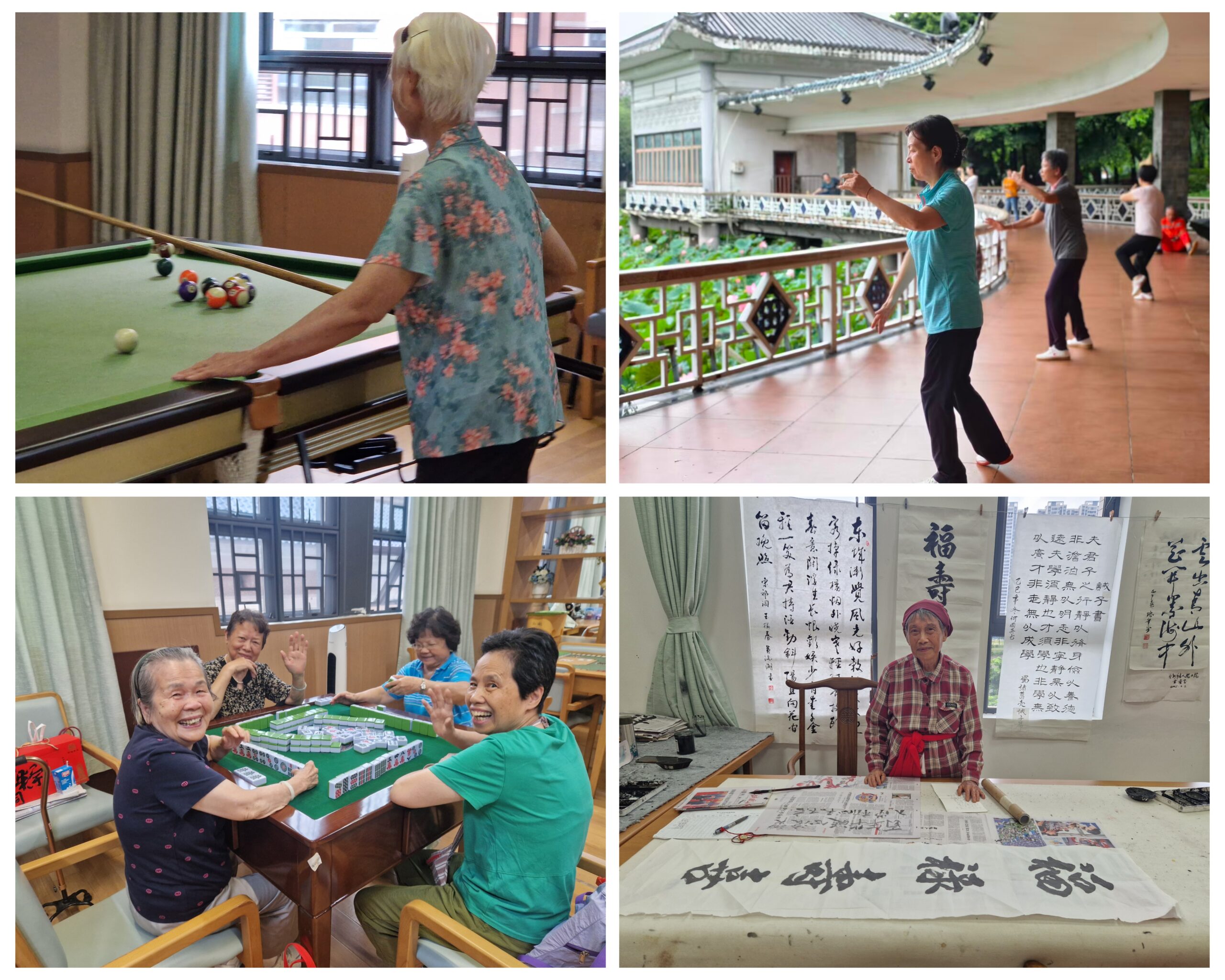
Despite the emphasis on technology, the strongest impression was how much importance Guangzhou places on culture. At both venues, music rooms, choirs, dance classes, calligraphy, Tai Chi, mahjong and craft activities were treated as essential parts of healthy ageing rather than optional extras. China's evening square dances, where thousands of middle-aged and older people gather in public spaces to dance together, were presented not only as a public health intervention but also as a driver of the silver economy.
That struck a chord with our own experience in London. The Music Is Medicine project, led by Broadwick with Professor Paul Dolan, used biometric data collected at Drumsheds to measure the effects of dancing on health and wellbeing. The findings were clear: dancefloors can improve mood, strengthen social connection and provide meaningful physical activity.
The day reinforced an important point. Age-friendly cities need good housing, transport and healthcare. They also need social infrastructure – places, activities and shared experiences that bring people together.
The evening ended with a Traditional Chinese Medicine health and culture experience over dinner.
Diary entries adapted from LinkedIn posts by Julieta Cuneo (Greater London Authority) and Emily Evans (ILC-UK), June 2026.
Day 5 – Friday 19 June 2026: the day of the Dragon Boat Fesitival
We wrapped up a week none of us could have imagined. We came to Guangzhou to learn about culture and the silver economy. We left with new friendships, fresh ideas and a shared understanding that this exchange was only the beginning.
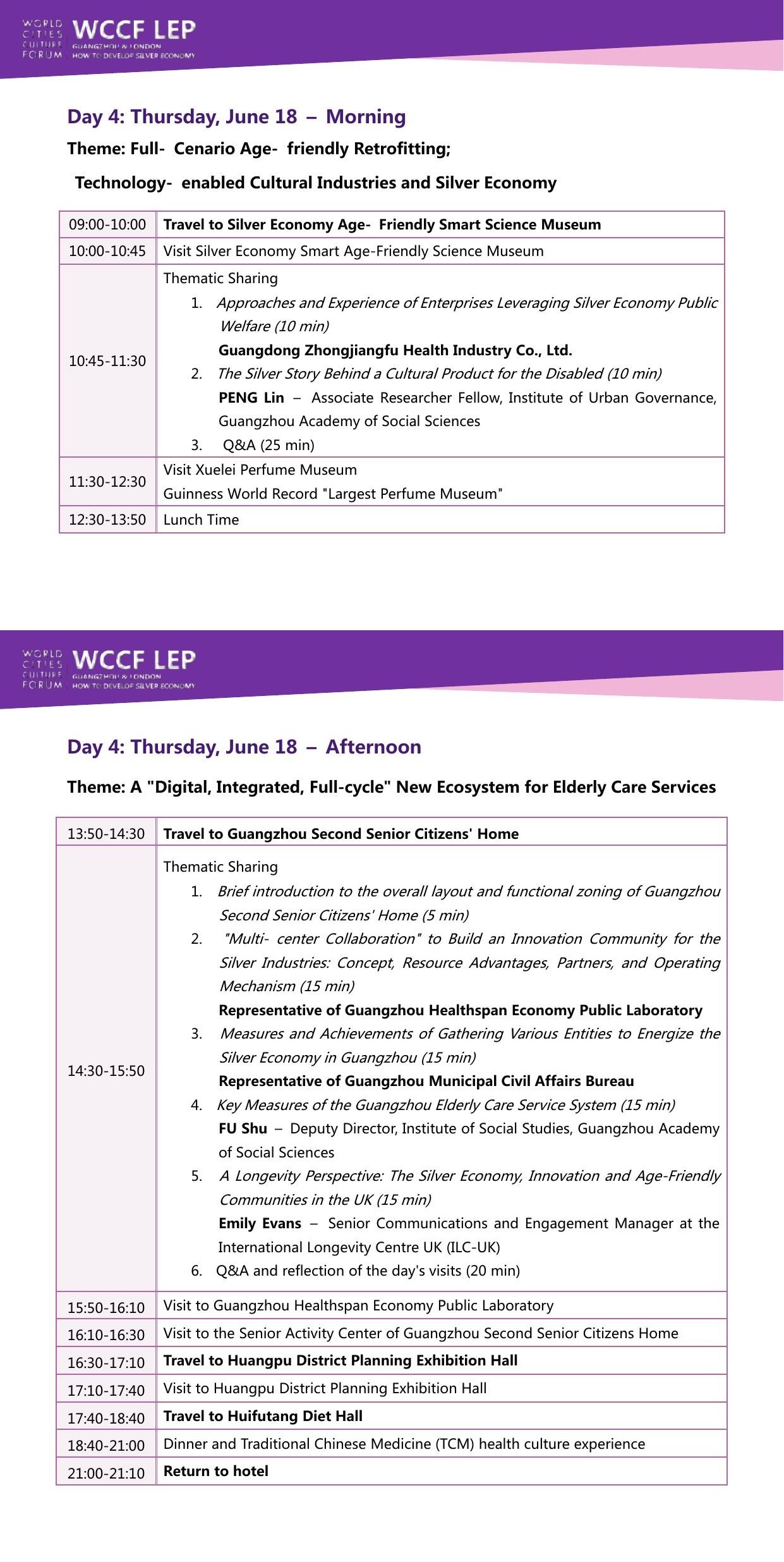
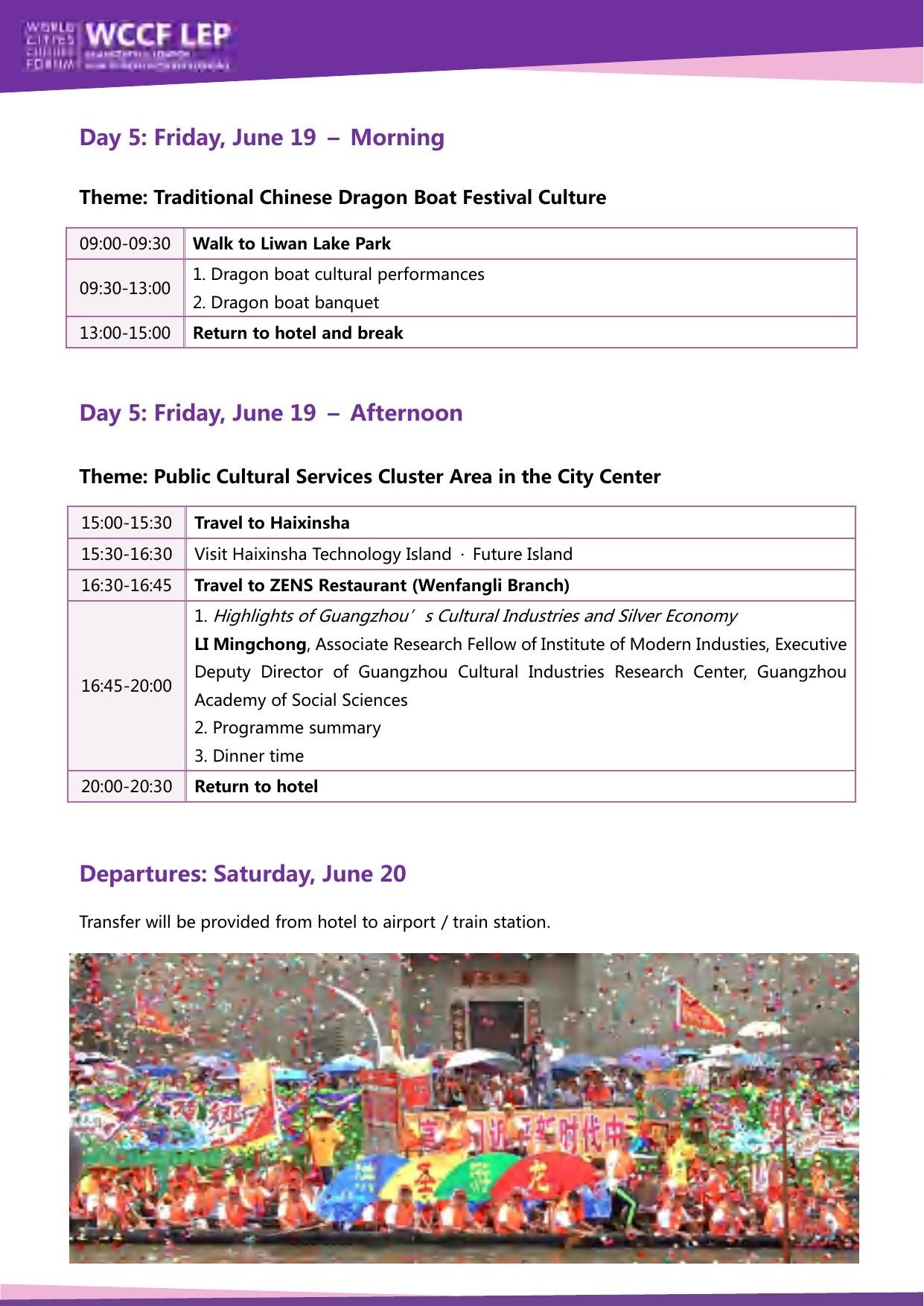
Our final day coincided with the Dragon Boat Festival. In Pantang, Liwan District, we watched the 594-year-old Yanbu Dragon Boat Team brave the rain to visit their "sworn brothers" from Pantang, continuing a tradition that has endured for centuries. Twenty-seven dragon boats from 17 neighbouring communities gathered on Liwan Lake before hundreds of local families came together for a dragon boat banquet. We sampled Cantonese specialities, learnt about the traditions behind the festival and even took to the water ourselves, experiencing first-hand the teamwork and coordination that dragon boat racing demands.
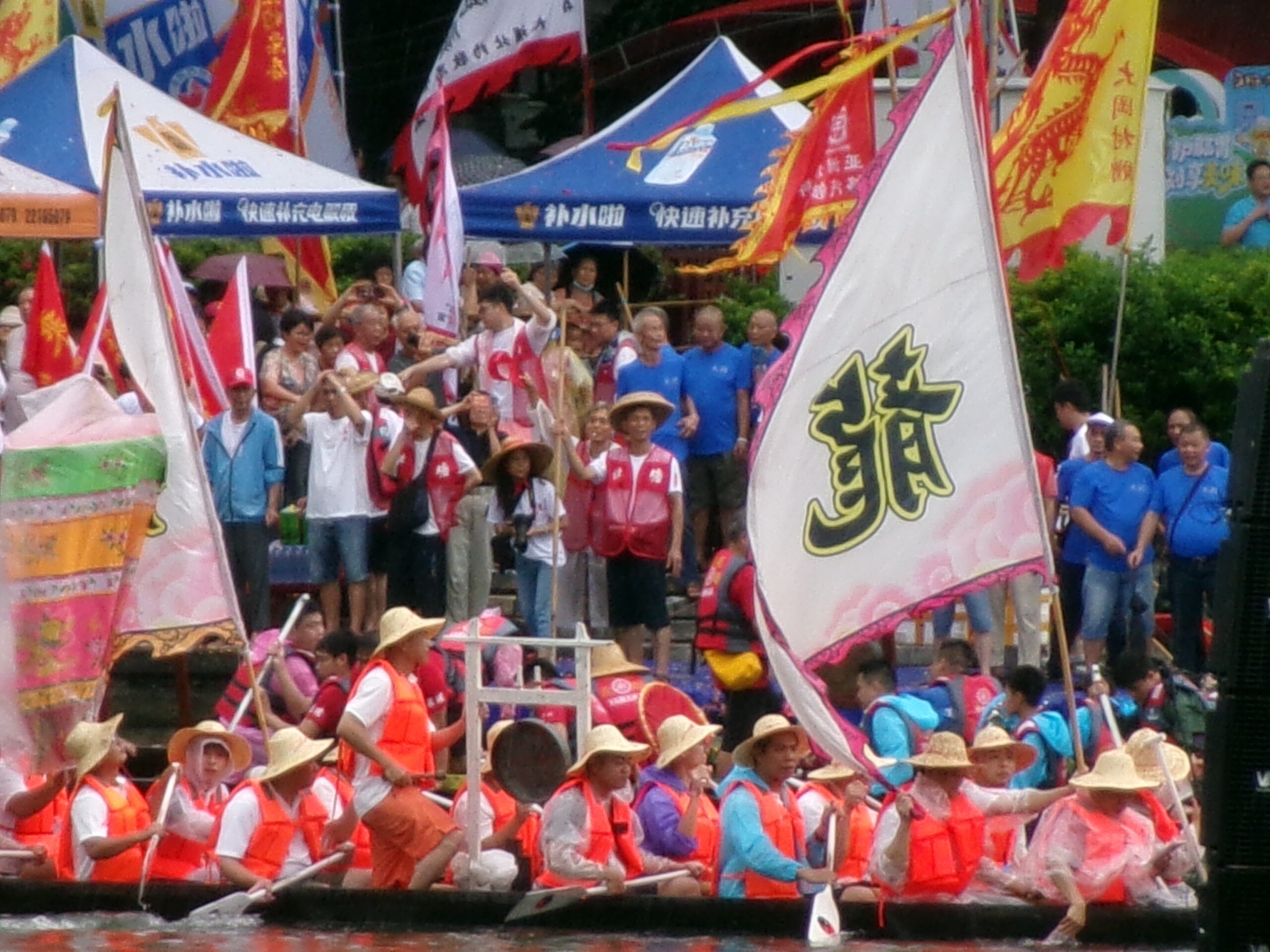
Food had been a constant throughout the exchange. Every shared meal became another opportunity to understand Cantonese culture, hospitality and community. The Dragon Boat Festival brought all of those themes together in one unforgettable celebration.
One message came through repeatedly during the week. Older people are not simply recipients of services. They are a source of knowledge, creativity and experience, and one of the greatest untapped assets our cities possess. In the UK, we often talk about ageing through the lens of public services, health and inequality. In Guangzhou, ageing was consistently framed as an opportunity for economic development, cultural participation and innovation. That difference in perspective was one of the most valuable lessons of the exchange.
As Justine Simons, London's Deputy Mayor for Culture, often says, culture is the golden thread that runs through everything good about cities. Guangzhou showed us that it can also connect generations, strengthen communities and support healthy ageing. Perhaps most importantly, it can build bridges between cities.
Neither London nor Guangzhou has all the answers. Both are responding to profound demographic change in different ways, and both have much to learn from the other. The silver economy was described during our final session as "the trend of our time". After five days in Guangzhou, it is hard to disagree.
Our thanks go to the World Cities Culture Forum, Bloomberg Philanthropies, the Guangzhou Academy of Social Sciences, Bingbing Zhao, Maryam Ja'far Shariff and everyone from the Greater London Authority and the International Longevity Centre UK who made this remarkable exchange possible.
Diary entries adapted from a report of the visit cby Guangzhou Academy of Social Sciencesthe LinkedIn posts by Julieta Cuneo (Greater London Authority) and Emily Evans (ILC-UK), June 2026.
Media coverage of the five day visit
The visit generated a fair amount of local media interest. Here's a selection of some of the coverage.
Guangzhou Broadcasting Network (GZBN)
We want to hear from you
If you would like to get involved in this project or have any questions, please contact Emily Evans.