
Deliver in the UK’s worst-off places – or the next election will be out of reach
3 Nov, 2025
Ahead of the 2025 Budget, the International Longevity Centre (ILC) has published new analysis of its UK Better Lives Index, showing that Labour’s dominant 2024 electoral performance relied heavily on strong support from the UK’s worst-off areas.
With The Treasury hoping to find around £40bn through a mix of tax rises and spending cuts, it must ensure that living standards in struggling areas are protected. Unless the Government is seen to be delivering better lives in these places, it risks electoral collapse – locally and ultimately nationally.
The ILC’s UK Better Lives Index ranks local authorities according to how well places are delivering better lives from birth to adulthood and older age.
New ILC analysis linking the Index to the 2024 General Election results reveals:
- More than 80% of local authorities in the bottom quintile (worst performing areas) elected Labour MPs in 2024. These include places such as Tameside, Barnsley and County Durham.
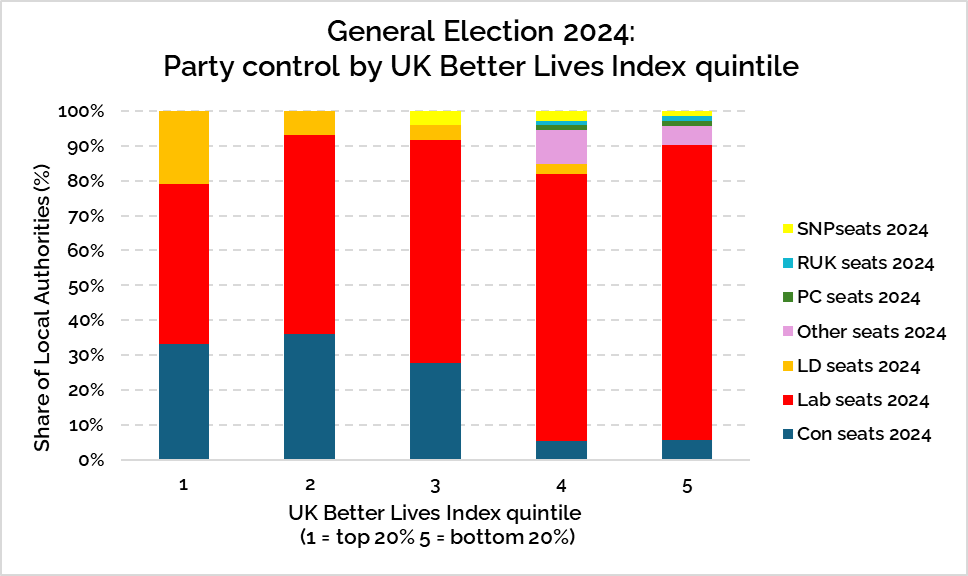
- Nealy 75% of areas in the fourth quintile elected Labour MPs – including areas such as Amber Valley, Barking and Dagenham, and Cumberland.
- By comparison, only 45% of local authorities in the top quintile (the best-performing areas) – including Rushmoor and Wandsworth saw the election of predominantly Labour MPs.
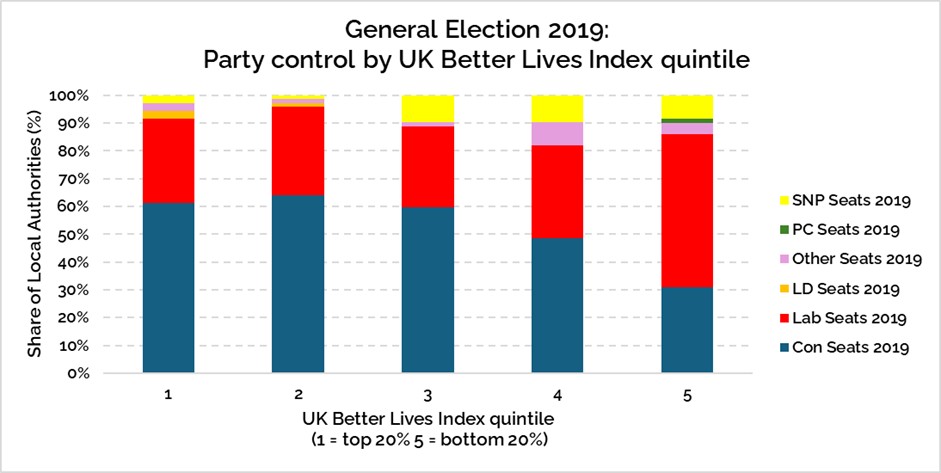
- The bottom two quintiles, while already more Labour-leaning than affluent areas in 2019, saw a sharp further shift towards Labour by 2024 – with Labour’s share rising from around 60% to over 80% in the lowest wellbeing quintile, and from roughly 30% to nearly 75% in the second lowest quintile.
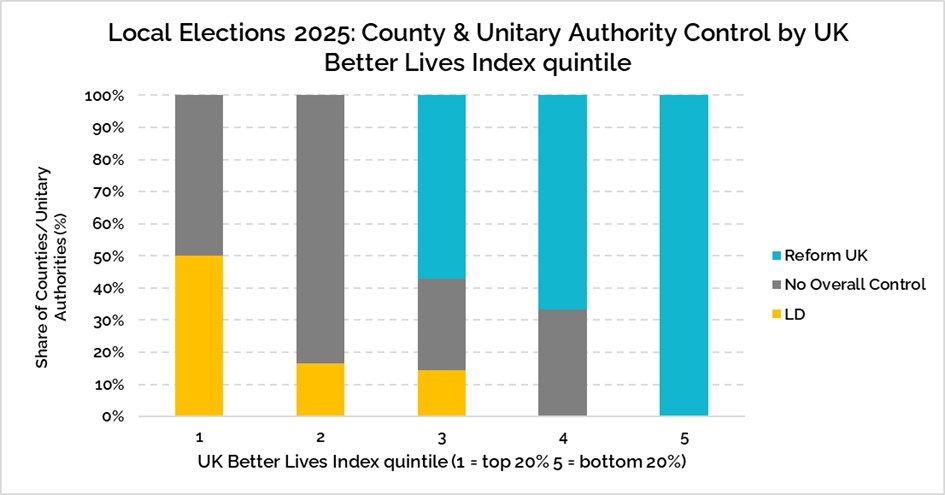
However, in the most recent local elections, Reform UK gained control of 100% of councils ranked in the bottom quintile (places like Doncaster and North & West Northamptonshire). These are the very areas that voted Labour in both 2019 and 2024.
The ILC argues that short-term or symbolic regeneration projects will not be enough. While “Pride in Place” initiatives represent a good start, they are necessary but not sufficient. The government must now be laser focused on delivery in the hardest-hit places – ensuring that growth, health and opportunity are genuinely shared. That means:
- Universal services that reach everyone, but with more support where it’s needed most, and
- A cross-government approach that connects industrial strategy, skills, and health policy, to drive inclusive growth across every region.
This joined-up delivery model – linking economic and social policy at a local level – will be critical to securing better lives, rebuilding trust, and sustaining electoral support.
People in struggling areas have had enough of broken promises. They are pragmatic and impatient for change – less interested in who runs government and more focused on who delivers results. The next election will be decided by whether voters in these areas feel their lives are tangibly better.
Ben Franklin, ILC’s Deputy Chief Executive, commented,
“Labour’s success in 2024 was built on the hopes of people in areas that have been struggling for decades. If those hopes aren’t met with real improvements in living standards, health and opportunity, the political map could shift again just as dramatically. The message from these areas is simple: “Deliver better lives, or wave goodbye to my vote.””
Ends
Contact
ILC - Press@ilcuk.org.uk or 07736124096. Spokespeople are available on request.
Notes
The ILC’s new UK Better Lives Index brings together robust, UK-wide data to show the best and worst places to be born, grow up and grow old. It reveals how place continues to shape health, opportunity and ageing – and where change is most urgently needed.
On Monday 3 November the ILC will be launching its interactive online tool which you can access here: https://ilcuk.org.uk/uk-better-lives-index/
We previously published initial findings and a short working paper summarising our approach to constructing the Index and showing how our findings relate to key policy priorities including: supply side growth and older workers, the Industrial Strategy and the NHS 10-Year Health Plan.
See the key findings and download the paper here: Introducing the UK Better Lives Index - ILCUK
Method Note:
Three datasets — constituencies (General Elections 2024), UK Better Lives Index, and counties/unitary authorities (Local Elections 2025) — were aligned using ONS lookup tables linking overlapping boundaries.
Constituency results were aggregated to local authorities by counting party wins to identify the dominant party per area, with shared constituencies counted in each relevant authority. District-level authorities were then grouped to parent counties or unitary authorities, averaging their UK Better Lives Index scores to create comparable upper-tier indicators.