Asia-Pacific is ageing – how can vaccination support these economies?
21 Aug, 2026
Ahead of the launch of ILC’s new Atlas alongside the APEC Health Working Group in Dalian on 22 August, Patrick Swain looks at how pneumococcal vaccination across the Asia-Pacific region varies across different age cohorts and why adult vaccination is vital for healthy ageing.
For over a decade, ILC has been at the forefront of the debate on vaccination. Our research has highlighted the social, economic and health benefits of adult vaccination, especially influenza (flu) vaccination:
- Investing in adult flu vaccination improves life span and a country’s global ranking on our Healthy Ageing and Prevention Index[1]
- Countries where more older people are vaccinated against the flu have higher employment rates for those aged 65 to 69 and higher consumption rates for those aged 60 and over[2]
We also know that vaccines play an important role in protecting people throughout the life course: infant vaccination programmes help the very youngest in society during their first weeks of life, while respiratory vaccination has proven effective at reducing hospitalisations for flu and pneumonia, as well as reducing the risk of heart attacks, in older adults.[3]
Vaccination is critical for people of all ages, yet our latest research on pneumococcal vaccination across the Asia-Pacific has highlighted once again that an imbalance remains.
In our revised Pneumococcal Vaccination Atlas, which now includes the 21 economies across Asia-Pacific, we find that infant vaccination recommendations, coverage and funding are stronger than those for at-risk groups and older adults.
This should come as no surprise: our initial Atlas findings across 42 European countries showed a similar picture. But what’s more concerning is how pronounced this is across Asia-Pacific compared to Europe. A comparison between the two regions suggests that despite strong recommendations in Asia-Pacific economies, this isn’t backed up by strong coverage rates or funding:
Coverage
| Population group | Asia-Pacific coverage (average) | Europe coverage (average) |
| Infants | 85% | 89% |
| At-risk groups | 20% | 34% |
| Older adults | 44% | 37% |
At-risk coverage is based on data from just three Asia-Pacific economies, underlining how little is currently known about coverage for this group.
Funding
| Population group | Asia-Pacific (share fully funded) | Europe (share fully funded) |
| Infants | 81% | 95% |
| At-risk groups | 19% | 67% |
| Older adults | 43% | 62% |
The starkest gap is in funding for at-risk groups: at just 19%, Asia-Pacific economies fund less than a third of the share that Europe does (67%) – a 48-point gap, and the widest of any measure in the Atlas.
For a region of Asia-Pacific's* economic size – $67.7 trillion, or 61% of global GDP[4] – protecting people’s health is an economic necessity, especially given its ageing population. Since its inception in 1989, the region’s population has grown from 2.3 billion to 3 billion today (a 30% increase). In that time, the share of older adults aged 65 and over has increased from 148 million to 439 million – a 197% increase. By 2029, there will be more older adults than children (aged 15 and under) across the region.[5]
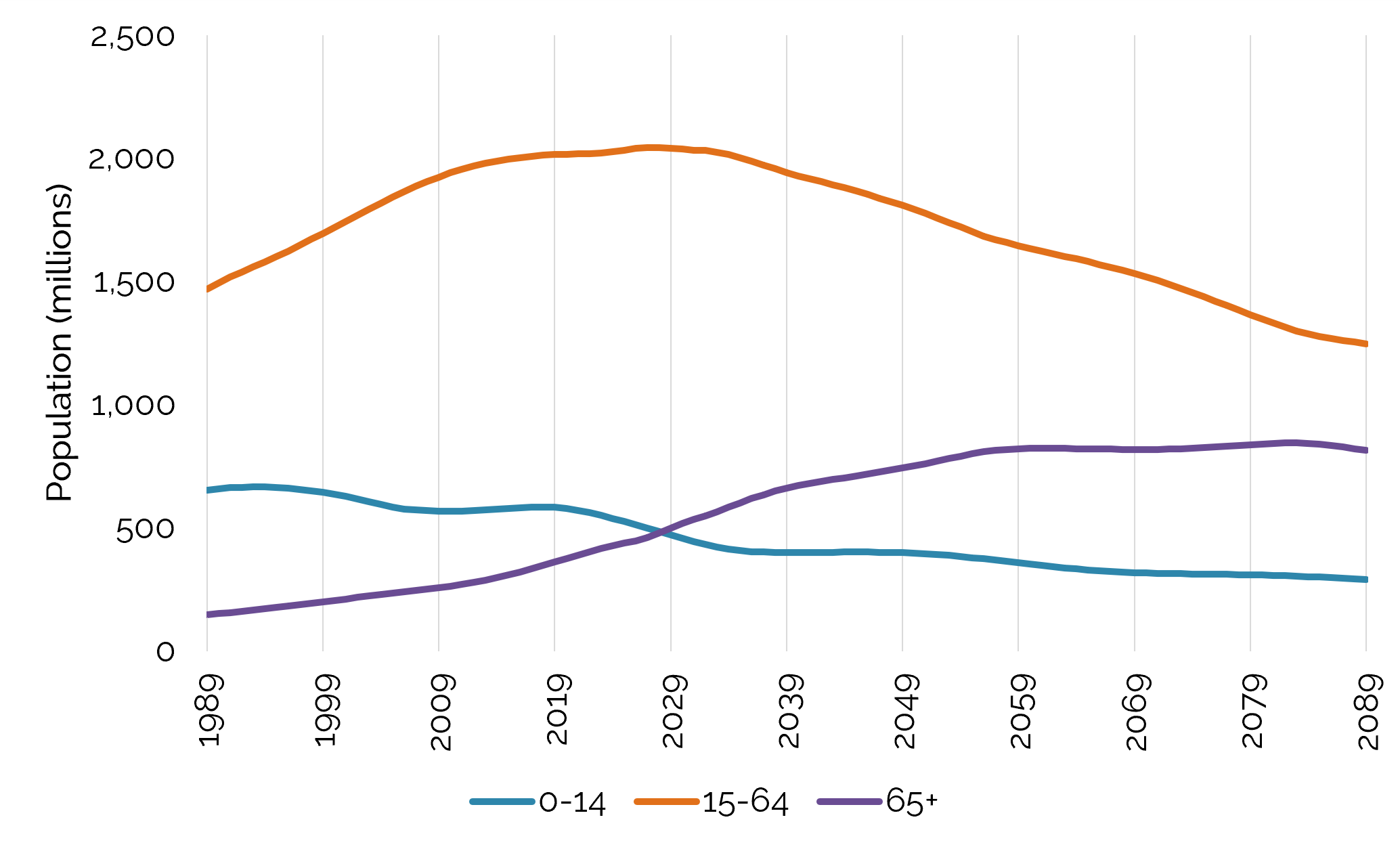
The working-age population (15–64) of these 21 economies will begin to decline in the 2030s whilst their over-65 population will begin to climb.
This ageing population is now living longer, too. Economies such as Japan, Singapore and South Korea currently have life expectancies that hover around the mid-80s[6] and are expected to reach the 90s later this century. Our latest research also shows why vaccination from a young age is important, with evidence that higher pneumococcal vaccination coverage is linked to higher life expectancy.
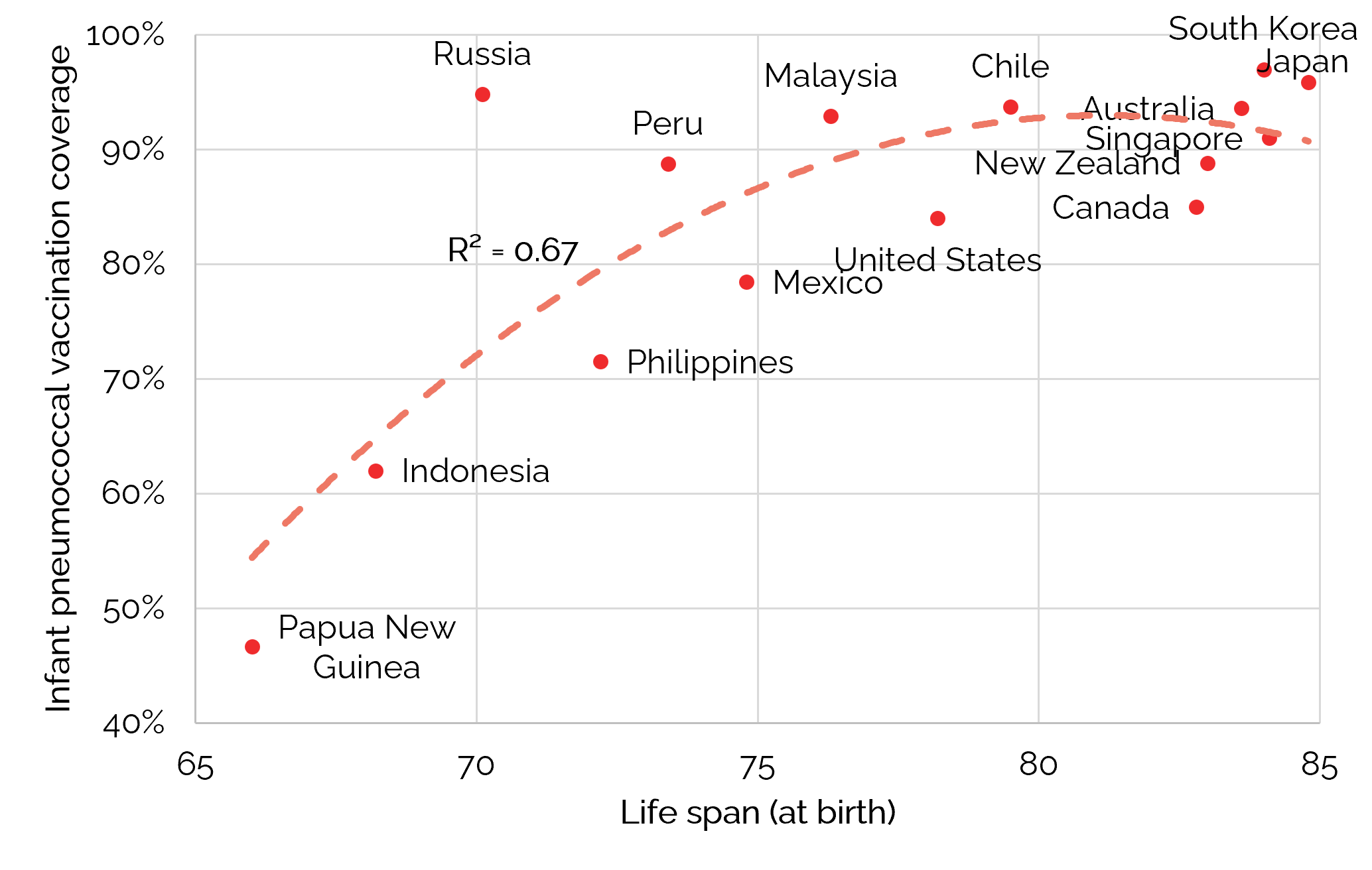
Asia-Pacific economies with higher infant pneumococcal vaccination coverage also tend to have longer life expectancy at birth. This doesn’t prove that vaccination causes longer lives, but it’s a reminder of the role vaccination can play in supporting healthy ageing across the life course. Infant vaccination is also a public health blueprint for vaccinating older adults: pneumonia deaths among under-5s in the Asia-Pacific region have fallen from 607,000 in 1980 to 42,000 in 2023. But that same success has not been replicated for older adults: those aged 70 and over accounted for 70% of pneumonia deaths in 2023 – 407,000 deaths, up sharply from 113,000 in 1980.[7] Increasing adult vaccination is therefore not only doable, but vital to protect population health and support healthy ageing.
The 21 economies are almost as likely to recommend pneumococcal vaccination for at-risk groups and older adults (81%) as they are for infants (90%) – but the support for vaccinating adult populations remains scarce, as recommendations rarely translate into funding: only nine economies fully fund vaccination programmes for older adults, and just four do so for at-risk groups.
This is even though economies that fully fund older adult programmes tend to see higher-than-average coverage: six of the nine fully-funding economies report coverage above the 44% average. Two further economies, the Philippines and the US, also report above-average coverage despite not fully funding older adult vaccination, likely reflecting their own more targeted approaches to funding support.
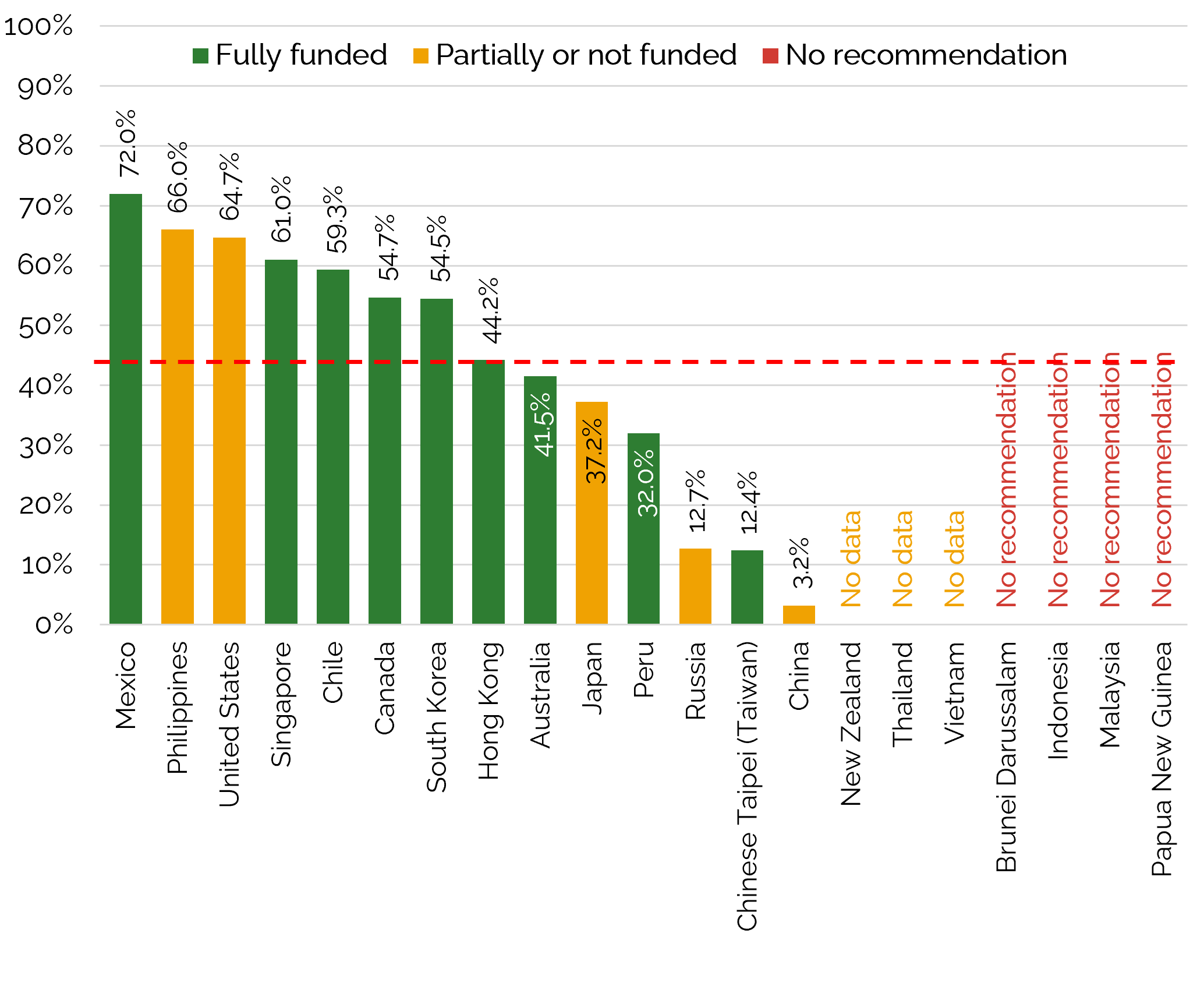
Asia-Pacific economies that fund adult pneumococcal vaccination are more likely to see the coverage gains that come with it. The broad recommendations and funding for infant pneumococcal vaccination demonstrate that there’s no shortage of infrastructure to deliver adult vaccination, too. Getting vaccines into people’s arms is what matters – and access to vaccination services is vital to achieve this.
One way of expanding access to adult vaccination services would be through community pharmacies. Pharmacists are already playing an active role in delivering vaccination services to people of all ages, but the potential to deliver pneumococcal vaccination to at-risk groups and older adults is yet to be recognised.
To achieve greater pneumococcal vaccination coverage and to ensure adults age well for longer, economies across Asia-Pacific must do three things:
- Fully fund pneumococcal vaccination programmes: Pneumococcal vaccination should be reimbursed for all age groups to ensure equitable access. Canada, for example, offers free vaccination to all three groups and has vaccination coverage rates above the Asia-Pacific average for at-risk groups and older adults, and is in line with the average for infants (85%).
- Track pneumococcal vaccination coverage across all age groups: Only three economies have reliable coverage data for at-risk groups – far fewer than for infants (16 of 21) or older adults (14 of 21). Asia-Pacific economies should record coverage figures for all three groups to help identify coverage gaps and where to focus vaccination efforts.
- Invest in life course vaccination: Investing in life course vaccination keeps people in good health for longer, extending to older adults the same approach that already works for infants. This investment should also come with better support for vaccination delivery, ensuring that people across the Asia-Pacific region can access vaccination services in local settings, such as community pharmacies.
With an increasing number of over-65s and a growing share of pneumonia deaths being attributed to older adults across the region, vaccination is the best way to help Asia-Pacific’s ageing population live well for longer. We know that vaccination works: the success of infant vaccination shows what’s possible. Now, these economies should roll out comprehensive pneumococcal vaccination programmes that support people of all ages and stages of life.
*$67.7 trillion figure equates to the collective economic size of the 21 economies that make up APEC.
[1] https://ilcuk.org.uk/preventionindex/
[2] https://ilcuk.org.uk/healthequalswealth/
[3] https://www.thelancet.com/article/S0140-6736(25)01742-8/abstract
[4] https://www.apec.org/publications/2025/10/apec-in-charts-2025
[5]https://population.un.org/dataportal/data/indicators/70/locations/36,96,124,152,156,344,158,360,392,458,484,554,598,604,608,410,643,702,764,840,704/start/1989/end/2089/table/pivotbylocation?df=d92a06bc-5134-4945-a5aa-0192bb04848a

Patrick Swain
Head of Partnerships and External Relations