Adult pneumococcal vaccination coverage falling short of the mark in Asia-Pacific, new findings suggest
21 Aug, 2026
Pneumococcal vaccination coverage among at-risk groups and older adults across the Asia-Pacific region is far below that needed to protect these clinically vulnerable groups, according to new findings by the International Longevity Centre UK (ILC).
Pneumococcal vaccination has been a public health success for under-5s, whose pneumonia deaths in the Asia-Pacific region fell from 607,000 in 1980 to 42,000 in 2023. But as the region's population ages, that same success has not been replicated for older adults: those aged 70 and over accounted for 70% of pneumonia deaths in 2023 – 407,000 deaths, up sharply from 113,000 in 1980.
Ahead of its launch at the Asia-Pacific Economic Cooperation (APEC) Health Working Group in Dalian, China, ILC’s new Pneumococcal Vaccination Atlas shows that across 21 economies in the Asia-Pacific region:
- While 85% of infants have been vaccinated, less than half (44%) of older adults and only 20% of at-risk groups have had the pneumococcal vaccination. The at-risk figure is based on just three economies with usable data, underlining how little is currently known about coverage for this group.
- Asia-Pacific economies are almost as likely to recommend pneumococcal vaccination for at-risk groups and older adults (81%) as they are for infants (90%) – but recommendations rarely translate into funding. Only 19% of economies fully fund vaccination for at-risk groups, and 43% for older adults, leaving clinically vulnerable people to pay out of pocket or go without.
- At-risk groups are disproportionately affected by out-of-pocket costs – only four economies (Canada, Chile, Chinese Taipei (Taiwan), and Mexico) provide free vaccination to those with underlying health conditions, compared to nine for older adults, and 17 for infants.
To support healthy ageing across Asia-Pacific, ILC recommends that these economies should:
- Fully fund pneumococcal vaccination programmes: Each of the 21 economies should reimburse all life course groups for pneumococcal vaccination to ensure equitable access to this preventative health intervention.
- Report their vaccination coverage rates to identify gaps: Current coverage data is strong for infants but is very low for clinical risk groups – only three economies had reputable data on coverage figures for these groups.
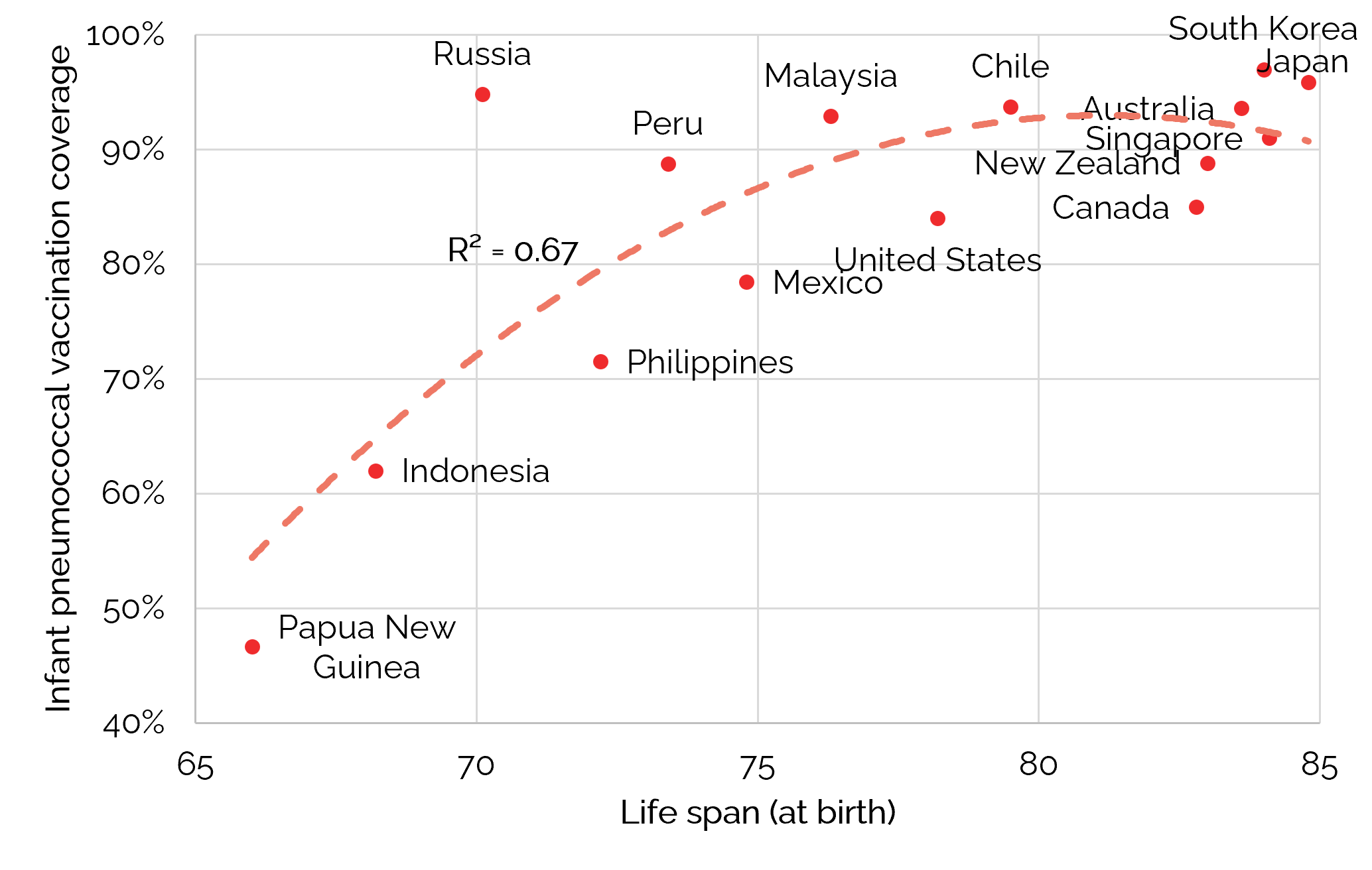
- Invest in life course vaccination to support healthy ageing: Economies with higher infant pneumococcal vaccination coverage also have greater life expectancy rates. Investing in vaccination helps people of all ages live well for longer.
David Sinclair, ILC Chief Executive, says:
“There’s no point in having amazing vaccines if we're not getting them into people's arms. This means reimbursement and recommendations, yes – but access is just as important. We need to make it as easy as possible for people across the region to get vaccinated, wherever they live and whatever their circumstances.
As health leaders from across APEC meet in Dalian this week, our new Pneumococcal Vaccination Atlas shows them exactly where the gaps are – and gives them the evidence they need to close them."
Ends
Notes
Pneumococcal vaccination is used to prevent invasive pneumococcal disease (IPD) and related infections, such as pneumonia. Pneumonia can cause IPD.
Life expectancy and infant coverage rates have been compared using life span (at birth) data from the ILC's Healthy Ageing and Prevention Index with coverage rates from economies that recommend and report infant pneumococcal vaccination (see graph below).
Graph: Infant pneumococcal vaccination coverage (WHO, 2025) versus life expectancy at birth (Healthy Ageing and Prevention Index, 2022)
Public funding for pneumococcal vaccination in Asia-Pacific
| Economy | Infants | At-risk groups | Older adults |
| Australia | Fully funded | Not fully funded* | Fully funded |
| Canada | Fully funded | Fully funded | Fully funded |
| Chile | Fully funded | Fully funded | Fully funded |
| Hong Kong SAR | Fully funded | Not fully funded* | Fully funded |
| Indonesia | Fully funded | Not fully funded* | Not fully funded* |
| Japan | Fully funded | Not fully funded* | Not fully funded* |
| Malaysia | Fully funded | Not fully funded* | Not fully funded* |
| Mexico | Fully funded | Fully funded | Fully funded |
| New Zealand | Fully funded | Not fully funded* | Not fully funded* |
| Papua New Guinea | Fully funded | Not fully funded* | Not fully funded* |
| Peru | Fully funded | Not fully funded* | Fully funded |
| Philippines | Fully funded | Not fully funded* | Not fully funded* |
| Russia | Fully funded | Not fully funded* | Not fully funded* |
| Singapore | Fully funded | Not fully funded* | Fully funded |
| South Korea | Fully funded | Not fully funded* | Fully funded |
| Chinese Taipei (Taiwan) | Fully funded | Fully funded | Fully funded |
| United States | Fully funded | Not fully funded* | Not fully funded* |
| Total fully funded | 17 | 4 | 9 |
* ‘Not fully funded’ includes partial or no funding
Source: Pneumococcal Vaccination Atlas, www.pneumoniaatlas.org/ap-atlas